Trump’s Shifting Image
During his second term, President Donald Trump adopted policies and rhetoric that once would have reinforced the image of him as hostile towards Muslims. However, that label no longer holds the same impact. Despite inflammatory language and restrictive immigration policies, Trump has built closer relationships with some Muslim-majority governments, while simultaneously going to war with another. This complexity is reflected in his increased support from Muslim voters compared to his first term.
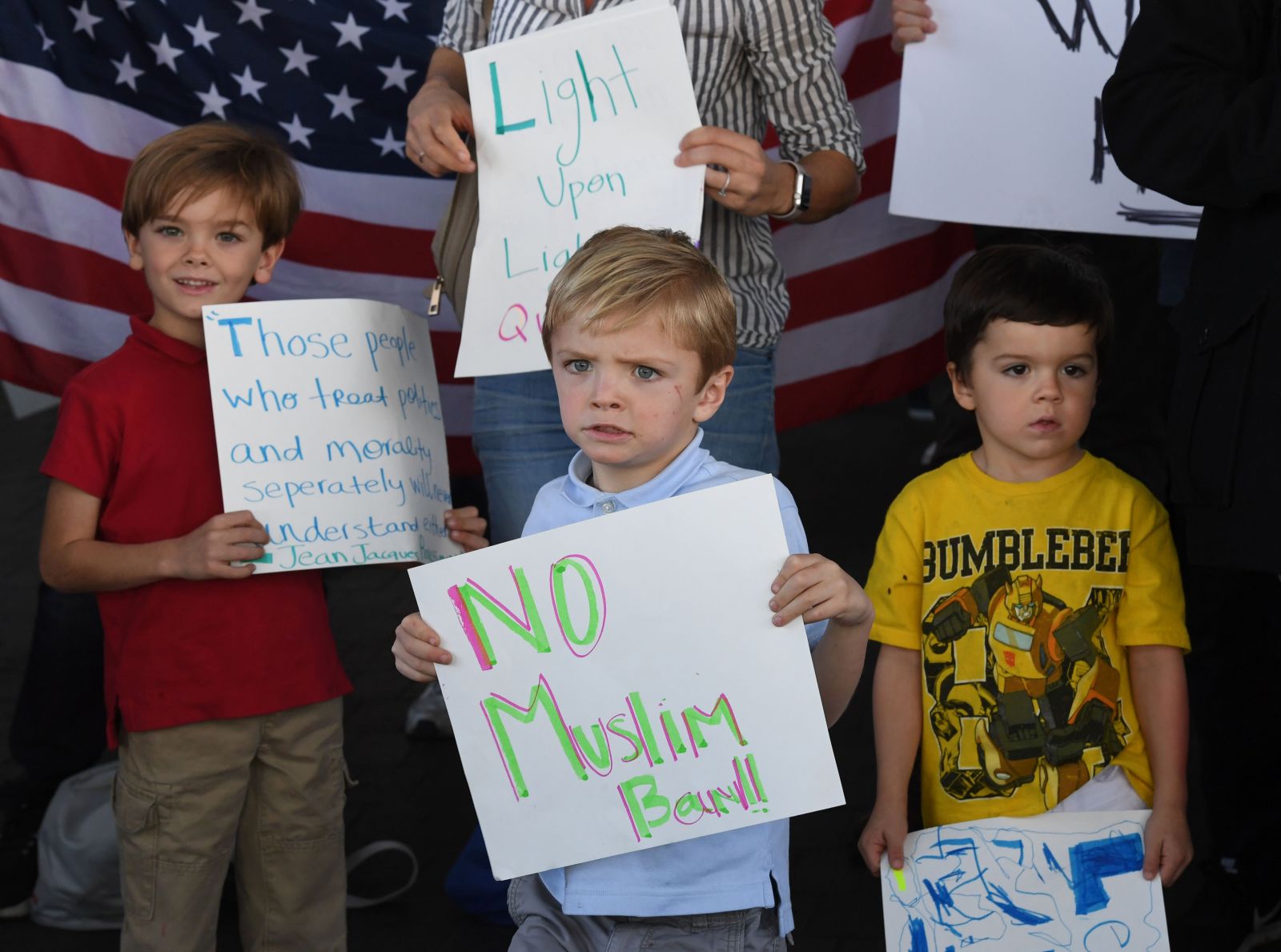
Previously, Trump faced harsh criticism after advocating for a ban on Muslims entering the U.S. in 2015, followed by restrictions from Muslim-majority countries. While he claimed these measures aimed at terrorism, they were perceived by many as religiously motivated. The Democratic Party rallied intensely against Trump’s travel ban.
Yet, nine years later, the political atmosphere around Trump has evolved. While he provides critics with ample material, the dynamics surrounding him are different. His political coalition has changed, making the accusations less straightforward.
Continued Controversies and Policies
Trump’s administration maintained its strict stance on immigration. Following a shooting incident in Washington, D.C., involving an Afghan national, immigration restrictions were tightened further. By January 2025, entry was fully restricted from 19 countries, with partial restrictions on 20 more. Inflaming tensions, Trump’s rhetoric continued to provoke, as seen through derogatory comments and social media posts.
In February 2025, American and Israeli forces executed major strikes on Iran, killing Supreme Leader Ali Khamenei along with other officials. This marked the most significant use of force against a Muslim-majority country in years. While Democrats labeled the actions unconstitutional, the focus shifted to the separation of powers rather than religious conflict. Muslim advocacy groups noted increased incidents of discrimination, reflecting heightened grievances. The Islamophobia Index saw a rise, particularly among specific demographics.
Shift in Political Language
Legislative responses indicate a shift in terminology. While the Democrats continue to press for anti-discrimination legislation in immigration, references to Islamophobia have decreased. Representative Judy Chu’s NO BAN Act faced fluctuating support, yet maintained focus on broader discrimination.
Republicans, by contrast, have specified their positions, often more explicitly dealing with religious exclusion. This reflects a nuanced understanding of the political landscape in comparison to the vivid reactions provoked in earlier years.
Muslim Voter Dynamics
Electoral behavior presents another complexity. While Muslim voters are generally more Democratic, the assumption of a simple anti-Trump stance doesn’t hold. In 2024, Trump received a notable share of Muslim votes. The shifting vote patterns, including in Dearborn and Michigan, illustrate diverse political perspectives within the community.
Foreign Relations and Internal Politics
Trump’s engagements with Muslim-majority countries complicate perceptions. His administration bolstered economic ties with places like Saudi Arabia and Qatar, contrasting sharply with military actions in Iran. These mixed foreign policy approaches challenge the narrative of Trump as solely anti-Muslim.
While foreign relationships don’t directly affect domestic policies, they do contribute to the overall narrative shaping Trump’s image. His approach signifies the complexity behind his international and domestic relations.
Sentiment and Language Evolution
Public interest and language surrounding Trump’s policies may reveal underlying political fatigue rather than changing attitudes. Terms like “travel ban” retain relevance, despite less association with religion than at Trump’s outset. While accusations of Islamophobia persist, the rhetoric around them reflects less dramatic polarization.
Google Trends and sentiment indices demonstrate ongoing interest in the policies, suggesting familiarity rather than acceptance. Muslim organizations continue to challenge Trump’s policies, indicating sustained reminders of perceived bias.
Future Political Implications
Upcoming elections may further test these dynamics. Should Muslim voters shift against Republican stances, the argument that Trump’s policies resonate with his first-term rhetoric could gain traction. The field remains dynamic, with electoral outcomes potentially reshaping associations between parties and Muslim communities.
Ultimately, while the accusation of Islamophobia remains valid concerning some of Trump’s policies, it does not fully encapsulate the complex relationship between Trump and Muslim Americans. Political realities have evolved, altering the landscape of accusations and support.
Leave a Reply