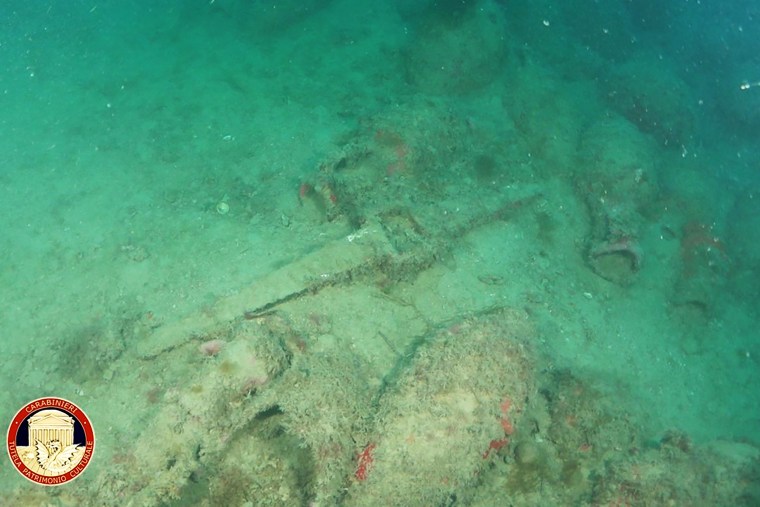
Giacomo de Mola, part of the team that discovered a historic shipwreck, expressed immense awe. He shared on Facebook, “It’s hard to explain what it feels like to think that we’re among the first humans, after nearly twenty centuries, to see that place again.” The shipwreck revealed hundreds of clay jars, known as amphorae, with lead anchor stocks and various artifacts confirming the significance of the find.
According to de Mola, these artifacts could originate from different regions of the ancient world. He hypothesized that they might include North African amphorae and Neo-Punic amphora. Simon Stoddart, an archaeology professor at the University of Cambridge, noted that this discovery could significantly aid experts in reconstructing trading routes and developing an ancient risk map of the Mediterranean.
Experts have dated the ship to the first or second century. The Italian Ministry of Culture, along with archaeologists, plan to compare this shipwreck with previous findings across the Mediterranean. Stoddart, who learned of the discovery through a report to NBC News, praised the depth of this find. He acknowledged it as both remarkable and rare.
Stoddart emphasized the challenges involved in recording and retrieving materials from the vessel. He pointed out the need for specialist equipment and brief visits due to the depths involved. “Recording and retrieving materials ethically requires careful preparation,” he stated.
Preservation efforts are underway, as documented by the Italian Ministry of Culture. The police intend to further document the site. They aim to identify “appropriate protective measures” to safeguard the artifacts and eventually make them available to the public.
De Mola expressed the personal significance of this discovery. “This time, we didn’t just find a shipwreck. We found a piece of our history,” he reflected, emphasizing the cultural and historical weight of the find.
Leave a Reply