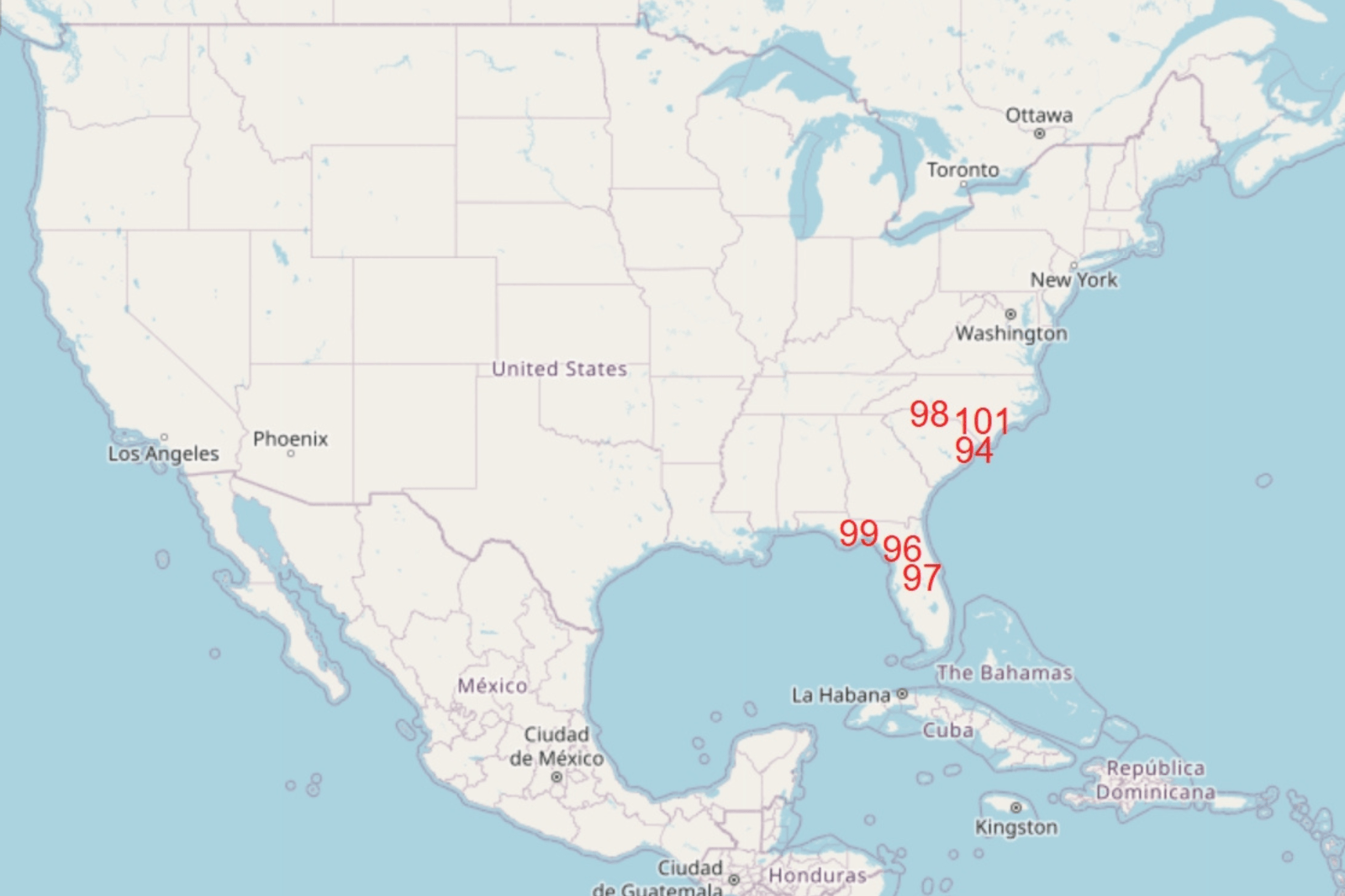
A significant heat dome is predicted to intensify over the South and Southeast this weekend. This will push temperatures into the upper 90s and triple digits, putting many daily temperature records at risk. The National Weather Service (NWS) Weather Prediction Center forecasts suggest that multiple cities might challenge or tie daily high-temperature records.
The developing heat wave has already prompted Extreme Heat Warnings, Heat Advisories, and other alerts across the central, southern, and eastern United States. Forecasters are warning of potentially hazardous heat index values with limited overnight relief.
While above-normal temperatures are expected across the nation, the Southeast and Gulf Coast states are most at risk. The intense heat combined with tropical humidity might push temperatures and heat indexes to the levels of the hottest summer days. According to the NWS, “A heatwave has begun to settle in from the central/southern Plains east through the Southeast as an upper-high strengthens overhead.” Forecast highs in the upper 90s to low 100s, combined with high humidity, are expected to lead to heat indices ranging from 105 to 115 degrees. Some areas may see their hottest temperatures so far this year or even in the past few years.
High Maximum and Minimum Temperature Records
At least nine high maximum temperatures are expected to be broken this weekend, with several others challenged. A record high maximum temperature is the highest air temperature recorded at a location on a specific calendar date. Many more record high minimum temperatures, which is the warmest overnight low temperature recorded for a specific date, are expected to be broken.
Friday Temperature Records at Risk
Forecasters state several climate stations across the Southeast and Florida could challenge or surpass daily record highs on Friday. In Fayetteville, North Carolina, temperatures are forecast to reach 101 degrees, potentially exceeding the 100-degree record set in 1918. Myrtle Beach, South Carolina, may hit 94 degrees, topping the 93-degree record from 1997.
Other at-risk areas include Charlotte, North Carolina (98 degrees forecast, tying a 1925 record), Gainesville, Florida (96 degrees compared to a 97-degree 2023 record), Orlando, Florida (97 degrees versus a 98-degree 2007 record), and Tallahassee, Florida (99 degrees versus a 100-degree 2023 record).
Saturday Temperature Records at Risk
The heat is expected to spread further on Saturday, threatening record highs from the Southern Plains to the Southeast. Charleston, South Carolina, might reach 98 degrees, surpassing its 2023 record of 96 degrees. Savannah, Georgia, could tie a 1918 record of 100 degrees.
Elsewhere, Borger, Texas, is forecast to hit 102 degrees, eclipsing the 101-degree record set last year. Other areas facing potential record-breaking temperatures include Gulfport, Mississippi (98 degrees versus a 99-degree record), Little Rock, Arkansas (103 degrees versus a 104-degree record), and Bryson City, North Carolina.
Sunday Temperature Records at Risk
Dangerous heat is expected to continue on Sunday. Locations near the Gulf Coast and Lower Mississippi Valley are forecast to approach or tie daily records. Baton Rouge and New Orleans in Louisiana are both forecast to match their existing daily records of 99 and 98 degrees, respectively.
Additional records threatened include Greenville and Greenwood, Mississippi, with forecast highs of 103 degrees, and Hattiesburg, Mississippi, coming within a degree of a 1951 record. Across Florida, Lakeland and Winter Haven are also forecast to approach record territory during this prolonged heat event.
Extreme Heat: How to Stay Safe
Health officials recommend limiting strenuous outdoor activities during the hottest parts of the day. Stay in air-conditioned buildings whenever possible and drink plenty of water, even if you don’t feel thirsty. People should wear lightweight, light-colored clothing, check on older adults, young children, and neighbors who might be vulnerable to heat-related illnesses, and never leave people or pets in parked vehicles.
With unusually warm overnight temperatures expected, residents are advised to use cooling centers or other air-conditioned spaces if their homes remain hot at night.
Leave a Reply