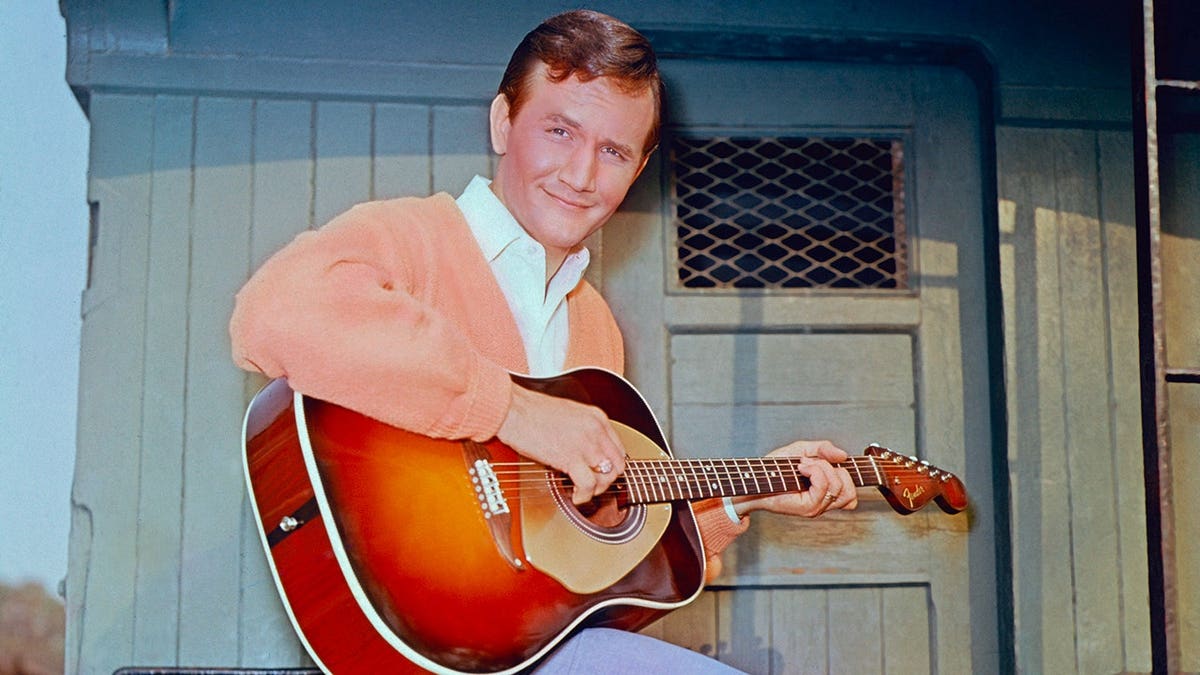
Roger Miller, a renowned figure in country music, made significant contributions to the genre. His son, Dean Miller, recently revealed the reasons behind his father’s decision to join the Army as a teenager during an interview on the “Drifting Cowboy” podcast.
Dean described how Roger grew up on a farm without electricity and would travel to Amarillo, Texas on weekends to perform at a nightclub. Roger was eager to break into the music industry but felt lost about how to pursue his dreams. According to Dean, Roger, in desperation, decided to steal equipment and a guitar from the club, hoping this would help him succeed in show business.
After the theft, Roger turned himself in to the authorities the following day. The club owner, who was friends with Roger, wrote a letter to the judge asking for leniency, emphasizing Roger’s ignorance and inherent good nature. Given a choice between jail and joining the Army, Roger opted for military service.
In the Army, Roger was deployed to Korea during the Korean War, which he referred to as the “Korea Clash of ’52.” Despite the difficult experiences in Korea, where he often sought shelter under a jeep, this period ultimately played a transformative role in his music career. Roger met influential people in music during his service, which facilitated his move to Nashville.
Roger Miller’s career was marked by numerous successes. He won 11 Grammy Awards between 1965 and 1966 and received a total of 18 nominations. His notable works include “Dang Me,” “Chug-A-Lug,” and “King of the Road.” Additionally, he wrote the score for the Broadway musical “Big River” and the soundtrack for Disney’s “Robin Hood.” Roger was inducted into the Country Music Hall of Fame in 1995, three years after his passing.
Kacey Musgraves, another celebrated figure in country music, recognized Roger Miller as an icon. She highlighted his humor and the depth of his songwriting, pointing to his achievements across various platforms, including Broadway and Disney.
Roger Miller passed away in October 1992 at 56 due to lung cancer. His contributions continue to influence and inspire musicians today.
Leave a Reply