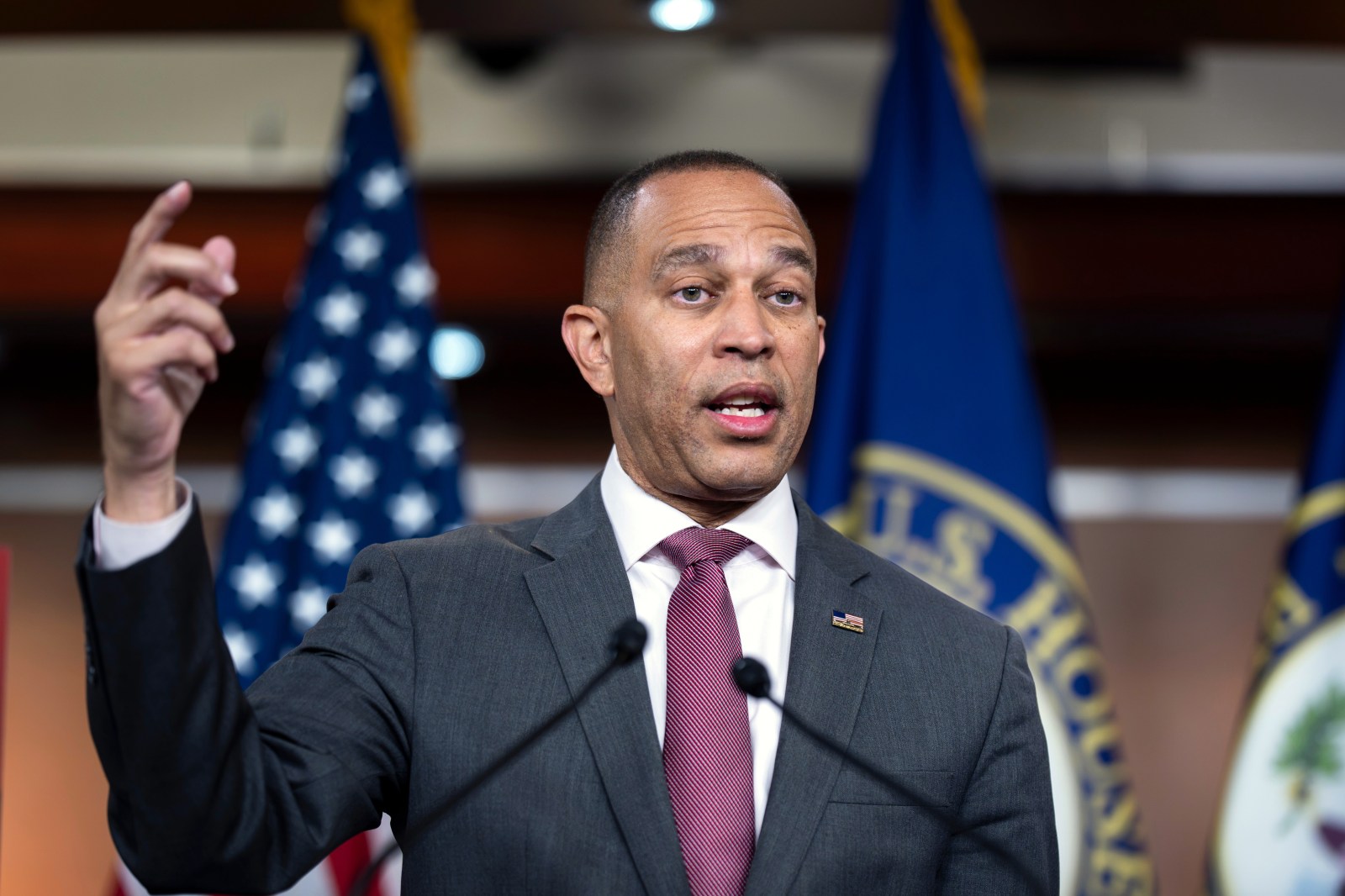
House Minority Leader Hakeem Jeffries recently clarified his position on Medicare for All and the Democratic Socialists of America (DSA) during an appearance on NBC News’ Meet the Press. Jeffries, representing New York, announced he does not support Medicare for All, a single-payer healthcare proposal he had once co-sponsored before taking on a leadership role. “It’s not legislation that I currently am cosponsoring or that I support,” he stated.
Policy Positions and Party Direction
Medicare for All is a significant focus for the progressive segment of the Democratic Party, notably advocated by figures like independent Senator Bernie Sanders. Jeffries’ current stance illustrates his centrist approach, setting him apart from progressive and democratic socialist perspectives gaining traction in certain primaries. He emphasized the Democratic caucus is diverse, including progressives, moderates, and Blue Dog Democrats, while disassociating himself from the DSA agenda, as articulated by the organization itself. Jeffries stressed the need to prioritize reducing costs for essentials like groceries, gas, housing, and healthcare.
The congressman also dismissed the notion of dismantling Immigration and Customs Enforcement (ICE), though he advocates for significant reform. He explained the need for just and humane immigration enforcement, criticizing ICE’s current state. Earlier proposals from Jeffries and Senate Minority Leader Chuck Schumer aimed at reforming ICE include banning face coverings for agents, mandating ID visibility, limiting enforcement near schools and churches, enhancing body-camera usage, and tightening use-of-force guidelines.
Looking forward, Jeffries expects Democrats to regain the House majority in the upcoming midterms, with the goal of securing at least 218 seats. He argued a Democratic-led Congress would work to make life more affordable for Americans, highlighting the struggles of families “working hard” yet “barely surviving.”
Democratic National Committee’s Stance on ICE
Jeffries’ comments came just after the Democratic National Committee (DNC) endorsed a resolution to push lawmakers to dissolve ICE. However, a larger group supported a reform-oriented resolution. DNC Chair Ken Martin pointed out that party positions are officially set at the national convention every four years. He remarked that Democrats, regardless of their stance on abolishing or reforming ICE, oppose the current federal approach to border and immigration enforcement.
In response, the White House, through spokeswoman Lauren Bis, criticized the resolution for abolition by stating, “Extreme radical Democrats want to abolish ICE and defund the police…Instead of trying to abolish ICE, Democrats should be thanking ICE law enforcement officers.” Bis argued President Trump’s efforts have led to the lowest murder rate in 125 years.
Jeffries Shifts Stance on Medicare for All
Medicare for All proposes a government-managed, single-payer healthcare system to cover all Americans, replacing most private insurance. Advocates say it ensures universal coverage, cuts out-of-pocket expenses, and curtails private insurance administrative costs. Critics point to the possible need for substantial tax hikes and disruption of existing employer-provided insurance.
While Jeffries co-sponsored past versions from 2013 to 2021, he abstained from supporting recent ones since becoming the Democratic leader. On Meet the Press, Jeffries affirmed, “No, as you indicated, I haven’t cosponsored the Medicare for All legislation that has been introduced over the last several years.” He advocated for reversing Medicaid cuts by Republicans and strengthening Affordable Care Act tax credits, which he claims benefit millions of Americans.
Ro Khanna Breaks with Jeffries on Medicare for All
Conversely, Representative Ro Khanna, a California Democrat, expressed his disagreement with Jeffries on Medicare for All during the same show. He described it as “arguably the most important priority,” citing a Yale study showing potential $1 trillion cost savings. Khanna explained that rising health insurance costs deeply affect workers’ average income, potentially mitigated by adopting Medicare for All.
Khanna acknowledged differing views while advocating for a House vote, asserting a majority of Democrats would endorse the measure. He argued it could save money and increase wages, addressing what he calls a major economic barrier for working families.
Leave a Reply