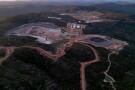
Introduction: In the global quest for essential rare earths, Brazil is emerging as a critical player alongside China. These minerals are vital for various technologies, from smartphones to green energy solutions, and Brazil’s rising status may benefit countries like the United States and Australia.
Brazil’s Rare Earth Potential:
Brazil is Latin America’s largest nation and ranks second only to China in rare earth reserves. The country has seen a wave of foreign capital investments. Nearly 42% of the 2,727 rare earth exploration permits are linked to foreign firms. Of the top 20 companies pursuing these permits, 11 have foreign backing, mainly from Australia, the U.S., and Canada. Data from Brazil’s National Mining Agency highlights a surge in exploration applications, with a significant increase in recent years.
Environmental Concerns:
Mining near the Amazon rainforest poses environmental risks and impacts Indigenous communities. Many permit applications are near or within protected areas and Indigenous territories. Mining could release toxic substances and cause deforestation. These environmental concerns are prompting Indigenous activists and community leaders to voice opposition.
Impact on International Relations:
Brazil’s rare earth wealth has implications for its relationship with the U.S., a longstanding trade partner, and China, with whom ties have tightened in recent times. Brazilian think tank co-founder Robert Muggah notes that Brazil’s position affects global dynamics in resource nationalism and supply chain diversification.
Pressure from the U.S. and Australia:
With China restricting rare earth exports, U.S. and Australian firms have intensified their efforts in Brazil. The U.S. Department of Commerce has pledged financial support for ventures like Serra Verde Mining, Brazil’s sole commercial rare earth producer, now owned by entities in which the U.S. government holds a stake.
Concerns Over Fast-Tracking Mining Projects:
Efforts to facilitate faster mining approvals by Brazil’s Ministry of Mines and Energy have been discussed to streamline strategic projects. However, the potential environmental impact remains a concern for communities.
Foreign Interest and Investments:
Australia leads rare earth exploration permits in Brazil, followed by the U.S. Canadian companies are also active but face challenges due to local resistance. The Brazilian Mining Institute highlights the high stakes involved, as only a fraction of mineral exploration projects become profitable mines.
China’s Aspirations:
Chinese interest in Brazil’s rare earths hasn’t translated into applications for exploration permits, yet strategic business moves suggest future involvement. Despite China’s extensive reserves, Brazil’s position keeps evolving as trade and investment policies develop.
Brazil’s Strategic Legislation:
Legislation is pending to regulate foreign investments and ensure technology transfer. Brazil aims to retain control over the processing and transformation of its resources, promoting national benefits.
The AP and Reporter Brasil collaborated on this analysis. The AP’s environmental coverage receives support from private foundations and follows AP’s standards.
Leave a Reply