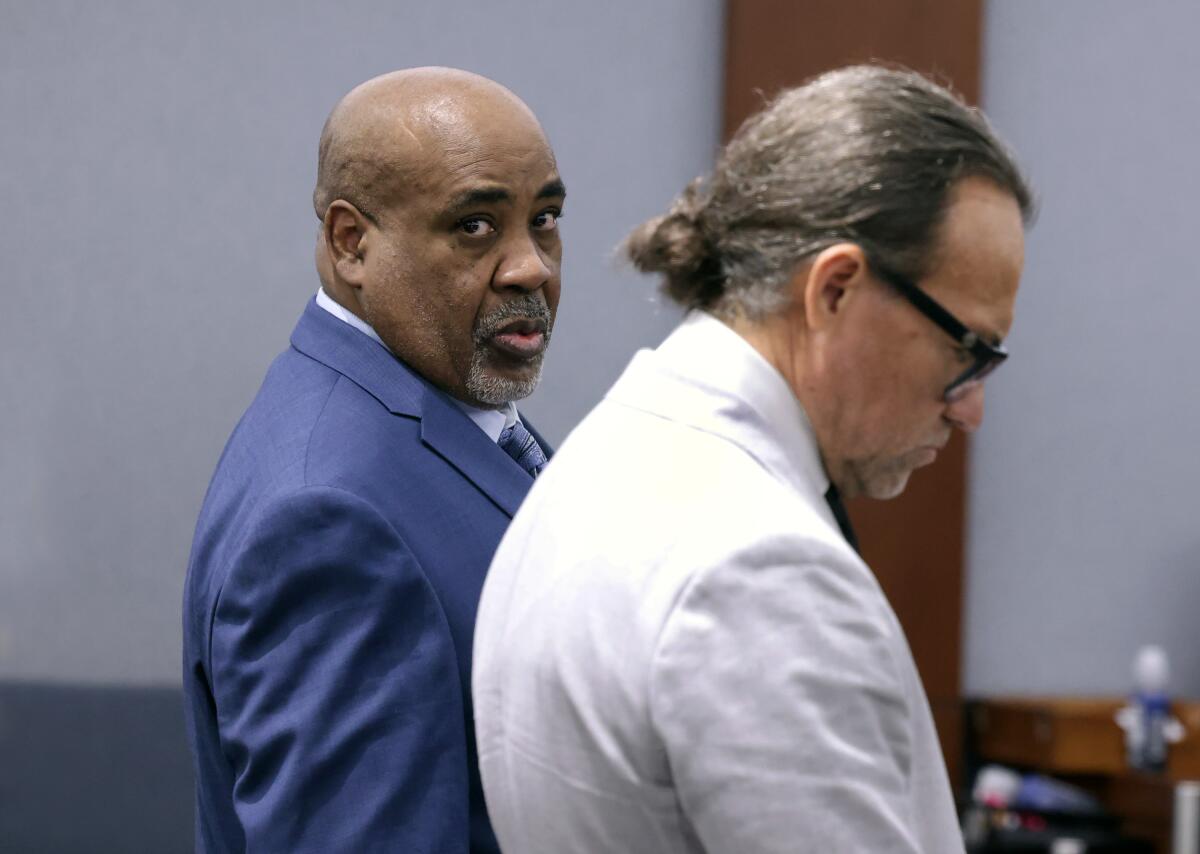
In a courtroom in Las Vegas, a group of older men gather to relive a violent past. They were once central figures in a gang war that ended many lives, including that of rapper Tupac Shakur. Now, they confront those days again as the trial over Shakur’s murder brings old conflicts to light.
Duane Davis is on trial for his alleged role in the murder of Tupac Shakur, who was killed on the Las Vegas Strip in 1996. The case remained cold for decades, maintaining a cloud over the rift between the East Coast and West Coast rappers, and the infamous Crips and Bloods gangs.
Background of the Conflict
The tensions escalated on September 7, 1996, with the shooting of Shakur. Prosecutors claim the incident stemmed from a feud involving the Southside Crips, led by Davis, and the Mob Piru gang linked to Death Row Records, the label with which Shakur was affiliated. That night in Las Vegas, Shakur and his entourage had reportedly attacked Davis’ nephew, Orlando Anderson, following a previous incident where Anderson stole a Death Row chain.
James McDonald, also known as Mob James, told the court that participating in gang life inevitably led to violence. He was associated with Death Row Records’ head Marion ‘Suge’ Knight, who was with Shakur during the shooting.
Prosecution and Witnesses
Prosecutors argue that Davis orchestrated the murder, but Davis denies the charges. The trial revisits Los Angeles gang wars that erupted after Shakur’s death, where numerous lives were lost. ‘We all fell victim to it because we allowed ourselves to be part of it,’ McDonald testified, reflecting on his past involvement.
Although not an eyewitness to the murder, McDonald offered insights into the gang disputes that led to Shakur’s death. The prosecution used his testimony to illustrate the environment of rivalry and violence, treating him as a hostile witness.
Through a 2008 interview with an LAPD federal task force, jurors heard Davis confessing to helping procure the weapon used in the shooting. Prosecutors played this account to strengthen their case against him.
Defense’s Argument
Michael Sanft, Davis’ attorney, countered that the evidence against his client was lacking. He argued that Davis’ previous statements regarding the case were not taken seriously by investigators due to credibility issues.
Reggie Wright Jr., once the security chief for Death Row and a former Compton police officer, recounted an encounter between Shakur and Christopher Wallace, known as Biggie Smalls, at the Soul Train Music Awards. Wright indicated that tensions were high even before the night of Shakur’s death.
Wright also testified that he contacted his father, a Compton police lieutenant, the night of the shooting, anticipating further violence in Compton as a repercussion of the altercation at the MGM Grand.
Leave a Reply