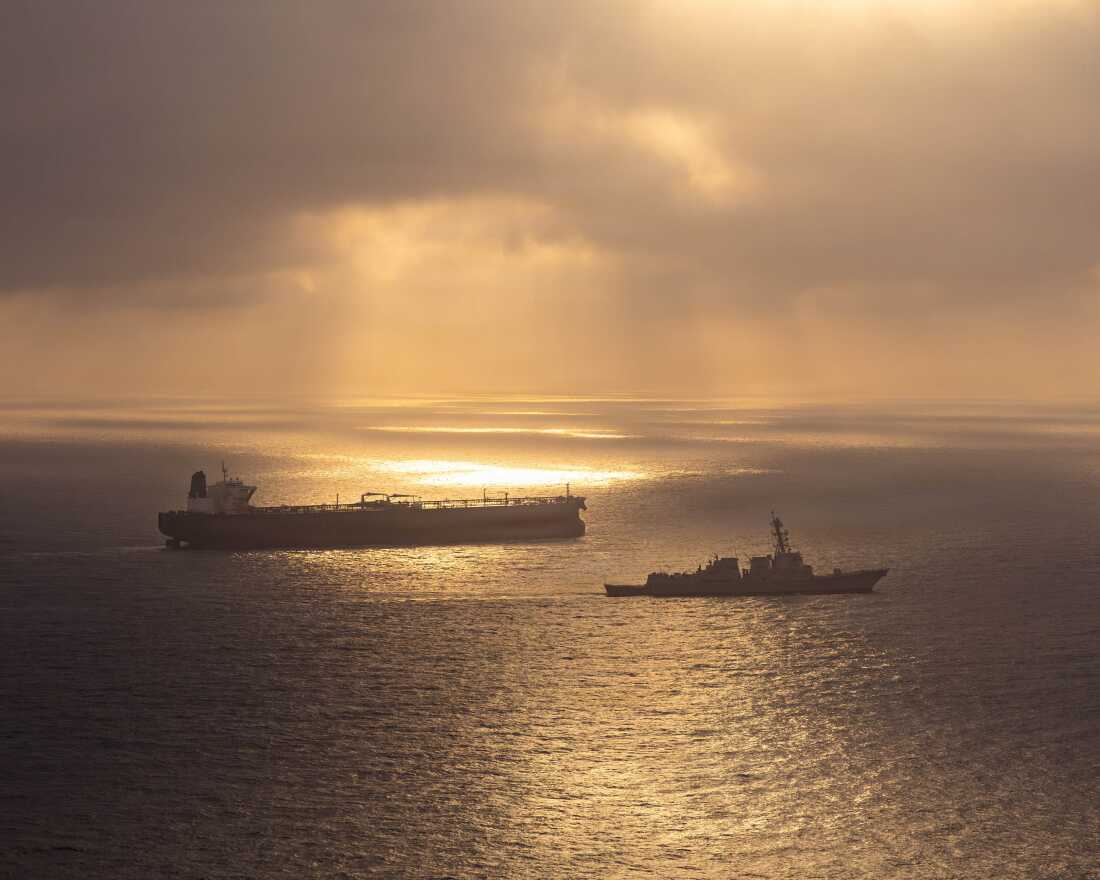
The USS Rafael Peralta, a U.S. Navy ship, recently participated in a maritime blockade against an Iranian-flagged ship on April 24. This action is part of ongoing tensions, with many families affected by a previous evacuation.
In a virtual town hall meeting in Norfolk, Va., families who evacuated from Bahrain six months ago expressed concerns. They have been living temporarily in hotels and short-term rentals. About 580 people joined the call, seeking clarity from Navy officials.
Vice Adm. Curt Renshaw, head of the Navy’s Fifth Fleet, acknowledged the difficulties faced. He admitted that the Navy is still adapting to the prolonged situation. The evacuation, ordered on March 2, was initially expected to be brief. However, the situation has developed into a more complex challenge.
“These are complex problems and the solutions have not been exactly obvious.” — Vice Adm. Curt Renshaw
The Navy faces the task of managing approximately 1,300 dependents who left Bahrain, not including sailors and civilian workers. Some families, like one Navy spouse with children, have relocated multiple times. Her husband remains in Bahrain, while she navigates difficulties in a new environment.
School is starting, leading to increased personal expenses for staying in one location. Some families feel isolated, lacking a military community nearby.
Seeking Long-term Solutions
The State Department plans to conclude the ordered departure, presenting a deadline for families. There are different guidelines for payments during evacuations, emphasizing safety and stability.
The Navy encouraged families to choose a permanent location while deciding on the future for those assigned to Bahrain, offering a housing allowance similar to other military families. Concerns remain about delayed decisions and increased personal expenses.
Many have not received items left in Bahrain. Additional costs for vehicles and clothing burdens families. Some civilian employees have been in Bahrain longer than typical Navy tours.
Questions about family members without U.S. visas remain unresolved. Vice Adm. Renshaw highlighted outdated regulations as contributing factors.
Bahrain serves as a critical supply hub. However, carriers and supply ships face risks, restricting use due to proximity to Iran. Mark Cancian, a military analyst, noted that the war might change base operations permanently.
Long-term Implications
Some families wish to return to Bahrain, but safety concerns persist. Cancian predicts conflict, characterized by a prolonged naval blockade, to continue.
As the U.S.-Iran war extends beyond midterm elections, military operations and family relocations remain in limbo.
Leave a Reply