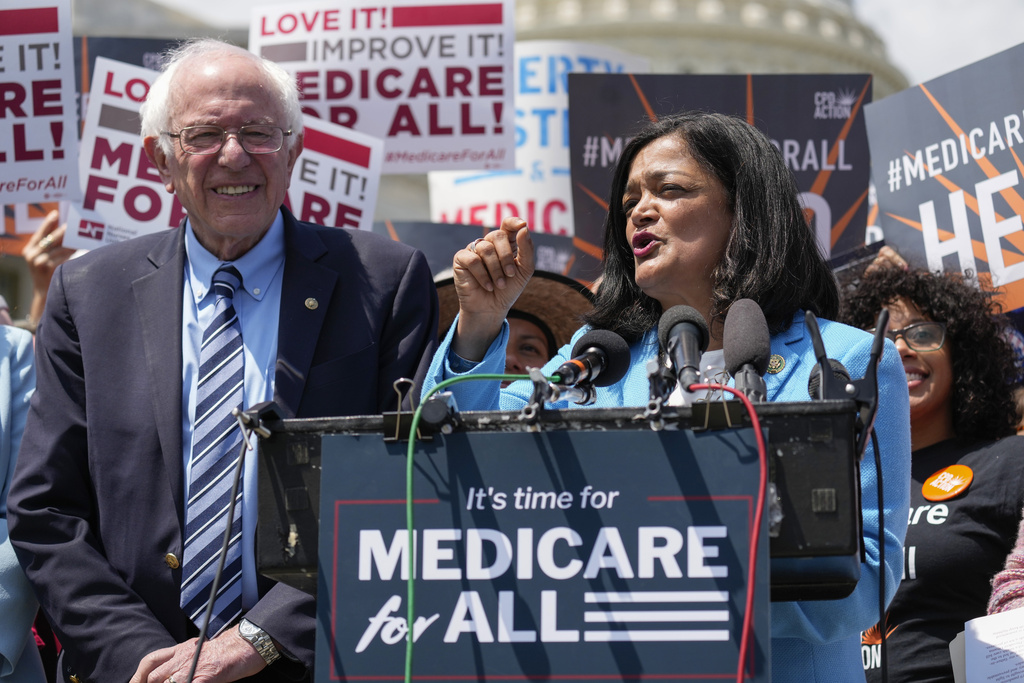
Rep. Pramila Jayapal from Washington and Sen. Bernie Sanders from Vermont have been vocal advocates for the ‘Medicare for All’ proposal. However, this plan prompts significant controversy regarding its marketing and potential impact on existing Medicare.
Sanders aims for a fundamental shift in the current healthcare system. He suggests replacing private health insurance and existing government programs such as Medicare with a new government-managed plan. This shift would mean higher taxes for taxpayers, removing the need for premiums, while the government covers all medical expenses.
Critics argue that under such systems, like the United Kingdom’s National Health Service, the government dictates available services and medicines. Bureaucratic decisions can influence patient access, diverging significantly from Medicare’s current operations.
Presently, Medicare offers various parts: Part A for hospital bills, Part B for doctor’s bills, Part C (Medicare Advantage), and Part D for prescriptions. Notably, Medicare Advantage is similar to employer-sponsored plans and holds popularity among seniors, with 55% choosing it over traditional Medicare.
Sanders’ strategy excludes private sector involvement. Unlike former President Obama’s promise during the Affordable Care Act, Sanders is explicit in his intention to discontinue current plans, including Medicare. A poll by NBC News reported 82% satisfaction with current healthcare plans, with an impressive 90% satisfaction rate among Medicare seniors.
A respondent said, “If you enjoy your current plan, prepare to lose it under ‘Medicare for All.'”
The United Kingdom’s NHS offers a cautionary tale. The British Social Attitudes survey reveals only a 26% satisfaction rate compared to the 90% satisfaction U.S. seniors experience with Medicare.
Though Medicare is a government program, cross-subsidization from private sectors helps maintain its viability. Private insurers typically pay higher rates, aiding healthcare providers to sustain services for Medicare beneficiaries.
It is a challenging balance when government budgets must cover various sectors like education and defense alongside healthcare. Political influence often determines available treatments, as observed in NHS concerns regarding potential layoffs and financial constraints.
For some, long waiting times in NHS emphasize the drawbacks of a fully government-run system. Currently, NHS aims for non-urgent treatment waits to be no longer than 18 weeks, a stark contrast to more immediate care in the U.S.
Ultimately, while Medicare for All presents an overhaul of American healthcare, contrasts with the NHS model highlight stark satisfaction differences. The politically connected may bypass these issues, leaving others to face longer waits and potentially limited access to care.
Leave a Reply