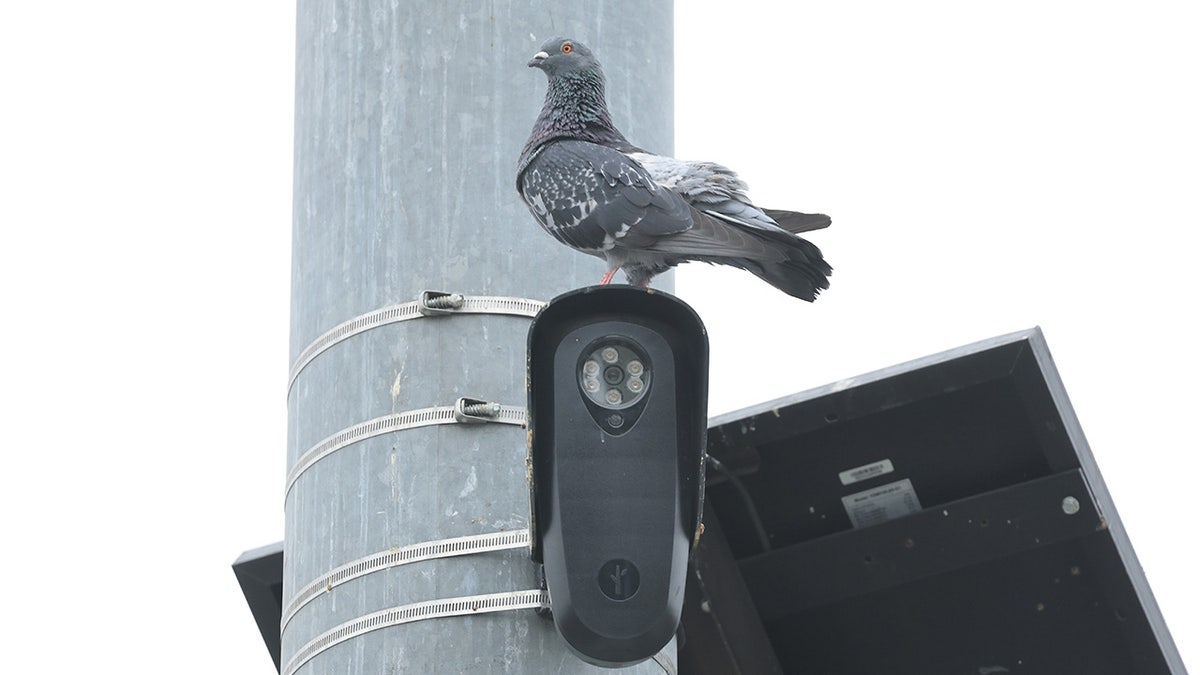
The national conversation on privacy has taken a new turn, bringing together voices across the political spectrum to address an increasingly pervasive technology. Automatic license plate reader (ALPR) companies are facing scrutiny as legislators debate the implications of advanced artificial intelligence (AI) in monitoring drivers.
Prominent among ALPR service providers is Flock Safety, which has drawn criticism for potential misuse of its technology. Congressman Greg Steube, R-Fla., voiced concerns over constant surveillance, stating, “We’re not the CCP, we’re not 1984, and Americans have rights.” His remarks follow a scandal in the Sarasota police department, where an officer misused Flock cameras to track a license plate over 300 times.
ALPRs capture and analyze vehicle data on public roads without explicit consent. While defenders highlight their usefulness in public safety, critics argue this represents an alarming expansion of surveillance. Rep. Keith Self, R-Texas, warns of AI-enhancing ALPR capabilities, enabling facial recognition and monitoring activities inside vehicles.
Concerns transcend party lines. Progressive Rep. Delia Ramirez, D-Ill., criticized tech companies profiting from surveillance, stating, “Congress must stop the ever-expanding surveillance state.” The debate has intensified as it enters the campaign trail ahead of the midterm elections, spotlighting ALPR technology as a significant issue of concern.
Amid protests against Flock cameras, candidates across the political spectrum express opposition to unchecked surveillance. Democrat Will Lawrence, running in Michigan’s 7th District, pledges to limit mass surveillance. Abdul El-Sayed, a candidate for Senate in Michigan, denounces surveillance in his campaign, warning against pervasive monitoring.
Efforts to legislate against abuse are underway, with lawmakers like Steube exploring national-level restrictions. This legislative push aims to address privacy concerns, as communities increasingly seek to sever ties with companies like Flock due to fears over misuse.
The discourse is not without defenders of ALPR technology. Flock Safety founder Garrett Langley emphasizes its crime-fighting potential while acknowledging the need for regulations against abuse. Advocates argue that benefits, such as solving crimes, outweigh the risks.
Senior fellow Rafael Mangual contends that instances of misuse are few compared to effective use cases, suggesting parallels to firearm regulations. Jim Pasco, of the National Fraternal Order of Police, highlights the necessity to regulate new police technology, cautioning against rash policy-making influenced by election cycles.
As legislative pushback mounts, the privacy conversation around ALPR technology continues to evolve, demanding careful consideration of both safety benefits and privacy risks.
Leave a Reply