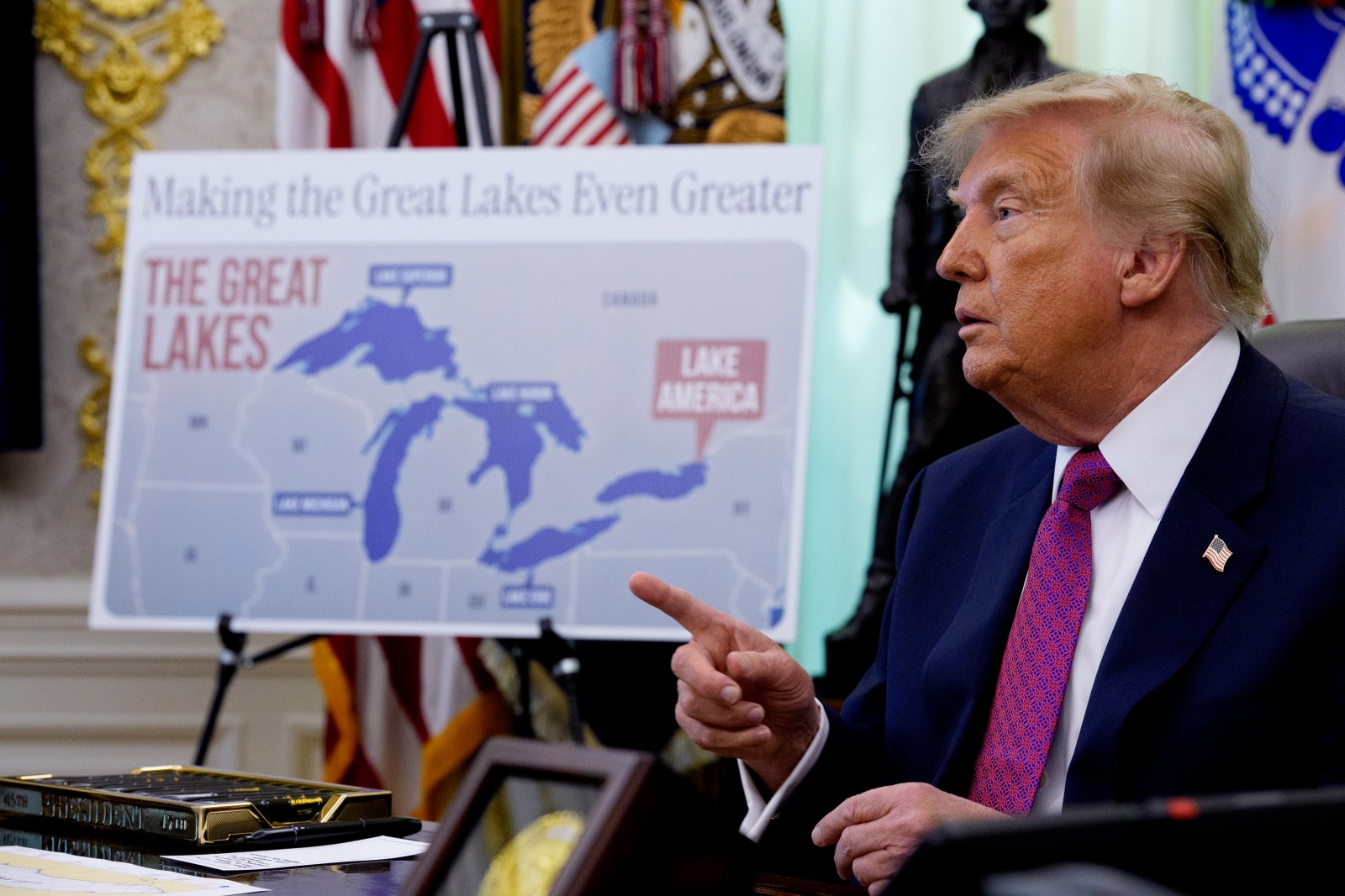
MapQuest has refused to rename Lake Ontario despite President Donald Trump’s directive to refer to it as “Lake America” for U.S. federal purposes. The mapping service announced its decision through a viral post on X, maintaining Lake Ontario’s name on its platform.
The company further engaged users by introducing a name generator, allowing them to rename the lake at their discretion. “We’re not changing the name of Lake Ontario. Name it whatever you want at your leisure,” MapQuest stated, sharing an image captioned “Lake Are We Doing This Again?”
As of Friday evening, the post had reached over 4.7 million views, sparking discussions about whether Google Maps would comply with Trump’s order.
Reason Behind Trump’s Renaming Decision
Trump issued an executive order renaming Lake Ontario as “Lake America” following the breakdown of trade talks between the U.S. and Canada. He described Canada as challenging in trade negotiations, stating, “They feel entitled and we can’t have that.”
In the order, Trump emphasized the lake’s role in American history, exploration, and defense. He outlined its significance in trade, agriculture, and energy, saying it serves a pivotal role in various sectors.
The U.S. Geological Survey (USGS) confirmed the lake’s new designation in its electronic documents, with the change reflected in the Geographic Names Information System (GNIS). Printed documents are expected to follow shortly. However, this order only impacts U.S. federal usage and does not mandate changes by Canada or private entities. This mirrors Trump’s earlier action renaming the Gulf of Mexico to the Gulf of America.
Public and Official Reactions to MapQuest’s Stand
MapQuest, established as the first commercial web mapping service in 1996, received mixed reactions online. Some applauded its stance, while others humorously commented on its renewed prominence.
Eric Trump reacted with disbelief at MapQuest’s continued existence, jokingly referencing the iPhone 3’s release as a presumed endpoint for the service. Users engaged with MapQuest’s name generator, creating their own creative lake titles.
Officials from both sides of the border criticized the renaming decision. Canadian Prime Minister Mark Carney highlighted the lake’s naming history, derived from the Wendat term “Ontari’io,” signifying the lake’s beauty and size. Carney insisted that the name should remain Lake Ontario.
New York Governor Kathy Hochul also dismissed the name change, stating that New York would not adopt it. The State Department humorously joined the conversation, joking about correcting their documentation mislabeled as Lake Ontario.
Will Google Maps Update the Name?
There is a precedent for Google updating names on its maps following changes in official U.S. government records. When the Gulf of Mexico was renamed Gulf of America, Google aligned its maps accordingly for American users.
With GNIS now reflecting the Lake America name, Google might update its maps to show the new designation within the U.S. As with the Gulf of Mexico case, this depends on Google’s practices and user location.
Newsweek has reached out to Google for clarification on whether it will adhere to the federal update in this situation.
To understand how previous changes were managed, Google began altering the Gulf of Mexico name on February 10, 2025. Following GNIS updates, U.S. users saw Gulf of America, while Mexican users continued to see Gulf of Mexico. Users from other regions saw both names, adhering to Google’s method of relying on official sources.
Leave a Reply