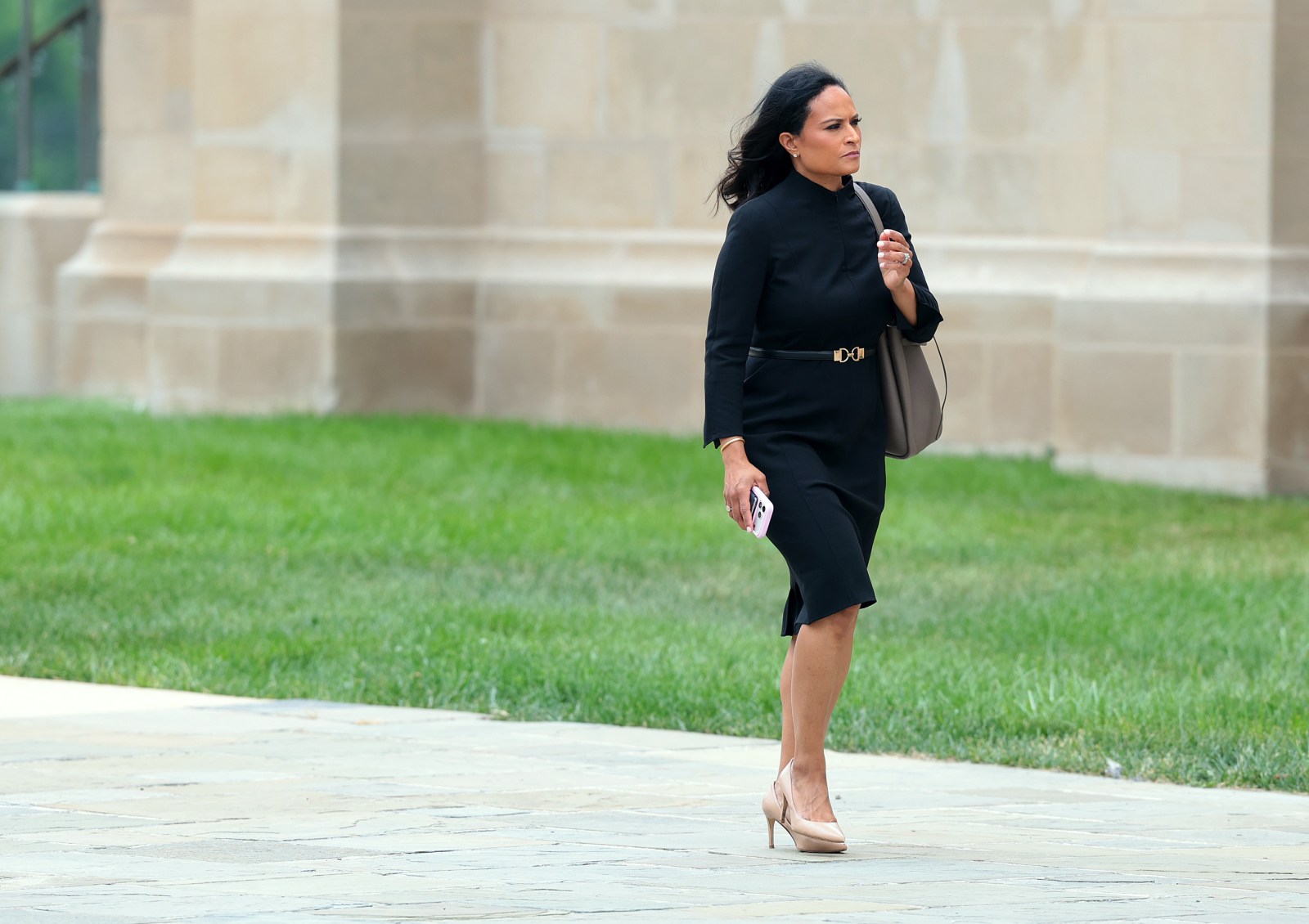
President Donald Trump recently criticized television journalist Kristen Welker and the “radical left” news media. He disapproved of their questioning his endorsement record, which he described as historically strong in politics. Trump’s comments surfaced on his social media platform, Truth Social, where he condemned Welker, moderator of NBC News’ Meet the Press, for suggesting he experienced “mixed results” in recent candidate endorsements.
Trump announced plans to report Welker to the Federal Communications Commission (FCC) for what he labeled as “purposeful inaccuracy” regarding her portrayal of his endorsement success. He emphasized the victorious outcomes of candidates like Darline Graham and Mike Mazzei as evidence of his strong record. The FCC, an independent body responsible for overseeing broadcast and radio sectors, is viewed by critics as increasingly politicized under Trump’s influence.
Newsweek contacted NBC News and the White House for comments via email.
Trump’s Endorsement Record
During Trump’s first term from 2017 to 2021, Ballotpedia tracked 305 endorsements. In 2026, Trump has already made 312 primary endorsements with a success rate of 97 percent as of early July. Historically, his endorsements have fared better in primaries than general elections. In 2018, his primary success stood at 95 percent, contrasting with a 59 percent success rate in the general elections.
Throughout various years, Trump’s endorsement success varied:
- 2019: 80 percent primary, 67 percent general election success.
- 2020: 97 percent primary, 79 percent general election success.
- 2021: 100 percent success in both, albeit with fewer endorsements.
- 2022: 93 percent primary, 84 percent general election success.
- 2023: 67 percent primary, 80 percent general election success—the lowest rate during his terms.
- 2024: Improvement with a 96 percent primary and 89 percent general election success.
- 2025: 100 percent primary but only 43 percent general election success from nine endorsements.
By August 5 of the current year, Trump endorsed 313 primary candidates achieving a 96 percent success rate. For 39 general election candidates, the election is yet to take place, leaving a zero percent rate in that category.
His recent noteworthy successes include Alabama’s Rhett Marques, Jerry Carl, and Gary Palmer, alongside Wisconsin’s Tom Tiffany in gubernatorial primaries. Yet, Trump faced a setback with Mike Lindell’s loss in Minnesota’s gubernatorial primary against Lisa Demuth.
Further successes followed: Byron Donalds and Ashley Moody in Florida’s gubernatorial and state Senate primaries, respectively, and Harriet Hageman in Wyoming’s state Senate. However, losses included Florida’s Cory Mills, Catalina Lauf, and Wyoming’s gubernatorial candidate Megan Degenfelder.
On August 25, Trump’s endorsed candidate, Mike Mazzei, claimed victory in Oklahoma’s gubernatorial runoff.
Comparing Presidential Endorsement Records
Comparisons with former President Joe Biden show fewer endorsements from Biden. In 2021, Biden endorsed three candidates with a 50 percent general election success rate. In 2022, for three primary and nine general election candidates, the success rates were 67 percent and 89 percent, respectively. The following year, Biden endorsed 24 general election candidates achieving a 71 percent success rate.
In 2024, Biden endorsed two primary candidates achieving a 100 percent success rate, as per Ballotpedia records. President Trump stands out for his prolific endorsements in U.S. politics. In contrast, Presidents like Barack Obama were more reserved with endorsements during their tenures. An exception is 2016, where Obama endorsed 150 state and federal candidates, an effort described by POLITICO as “unprecedented.”
Analyzing ‘Mixed Results’ in Trump’s Endorsement
Political science professor Justin Vaughn emphasized Trump as a significant individual endorser. Despite impressive records, his influence is not absolute, noted through state factors and candidate quality. Vaughn highlighted that gubernatorial races often emphasize local issues and candidate qualifications over high-profile endorsements.
Visiting professor Boleslaw Z. Kabala agreed that Trump’s backing remains a dominant force in Republican primaries. However, this influence has limitations evident in examples such as Mike Lindell’s loss to Lisa Demuth in Minnesota, where the latter ran a candidate-focused campaign rather than one against Trump.
While Trump’s endorsement remains vital, quality and local campaign dynamics illustrate its limitations, as seen in various primaries and notable nominations.
Leave a Reply