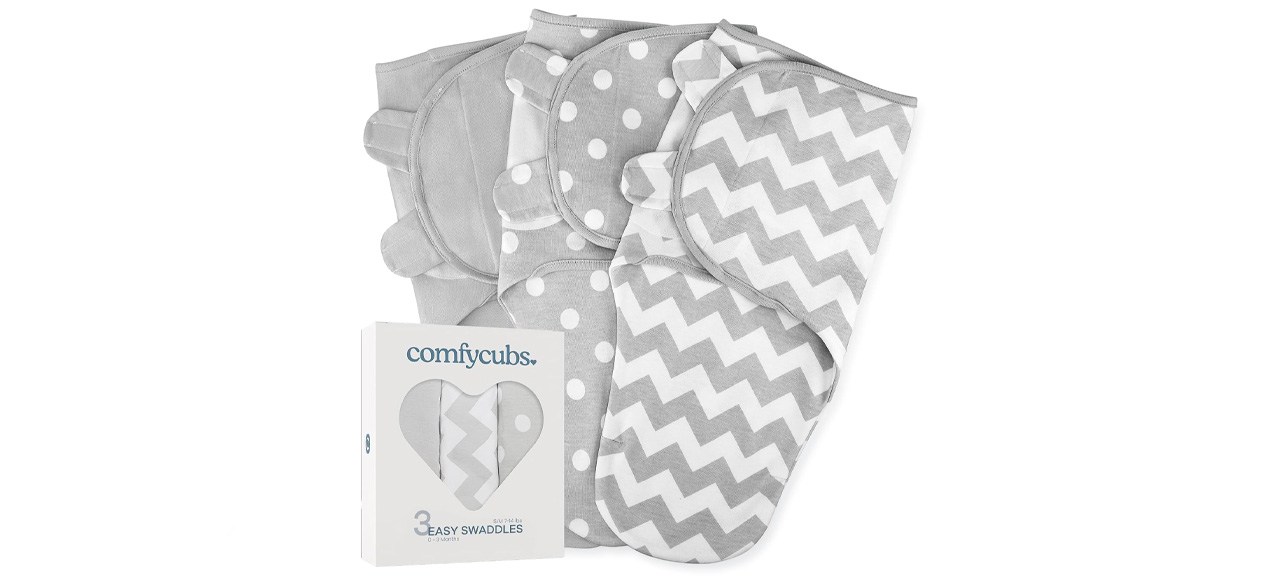
As advised by the American Association of Pediatrics, babies shouldn’t sleep with loose bedding in their cribs until at least 12 months old. This precaution leaves caregivers with two main options to keep their infants warm during sleep: swaddles or sleep sacks.
Swaddles
Swaddles offer a tight wrap to help infants sleep more soundly and are suited for young babies who can’t roll over independently.
Traditionally, swaddles are thin blankets designed to be wrapped and secured in a particular way around a baby. Modern swaddles often feature a fastening system that provides convenience and reduces the risk of improper securing.
Swaddles secure the arms, helping newborns sleep better. They typically cost between $5 and $15 each.
Pros
- Helps prevent waking due to reflexes: Newborns experience the Moro reflex, which may cause arm jerks and awakenings. Swaddles counter this by securing the arms.
- Mimics being held: The light pressure from swaddles simulates the nurturing feeling of being held, making babies feel safer and calmer.
- Affordable: Basic swaddle blankets are cost-effective, appealing to parents with budget constraints.
Cons
- Limited use: Swaddles are unsafe once babies can roll over on their own, usually around two months old, as babies need their arms free to reposition themselves.
- Learning challenges: Securing traditional swaddle blankets can be difficult, especially for parents of fussy infants.
- Not suitable for all babies: Some infants don’t like the confines of swaddling.
Recommended Swaddles
- Comfy Cubs Swaddle Blankets: These swaddles come in packs of three and include straps for easy use. Made from breathable 100% cotton, ensuring better temperature control.
- SwaddleMe Original Swaddle: Available in a range of colors, prints, and an organic cotton option. Well-crafted from soft 100% cotton.
Sleep Sacks
A sleep sack acts as a wearable sleeping bag, resembling a vest or romper with sleeves or arm holes. The bottom is a loose sack, allowing babies to stretch comfortably.
Sleep sacks are suitable from birth and accommodate infants up to 18 to 24 months. Costs range from $10 to $30.
Pros
- Safety: Designed to prevent the sack from covering a baby’s face or tangling the baby. Offers safe sleeping arrangements with freedom for arm movement.
- Long-term use: As babies can use their arms freely, sleep sacks are appropriate for developing children until they are up to 24 months old.
- No learning curve: Easy to put on and remove, with convenient access for diaper changes during nighttime.
Cons
- Need for different sizes: As babies grow, parents must purchase larger sizes.
- Minimal impact on sleep quality: Unlike swaddles, sleep sacks do not control startle reflexes or apply light pressure.
Recommended Sleep Sacks
- Burt’s Bees Baby Baby Beekeeper Wearable Blanket: A sleeveless design made from 100% cotton for mild nights, available in three sizes for babies up to 18 months.
- Simple Joys by Carter’s Baby Wearable Blankets: Crafted from microfleece with long sleeves, ideal for cold weather. Comes in packs of two with sizes for babies up to 9 months.
Conclusion
Swaddles and sleep sacks each have benefits and drawbacks. For newborns, trying swaddles is worthwhile. They can significantly enhance sleep for infants who enjoy swaddling. For older babies, sleep sacks are a safer alternative to loose blankets, which should be avoided for babies under 12 months. Consider buying a couple of each before committing, as preferences can vary.
Note: Prices may change based on time and publication. Visit BestReviews and sign up for their weekly newsletter for shopping tips and deals.
Leave a Reply