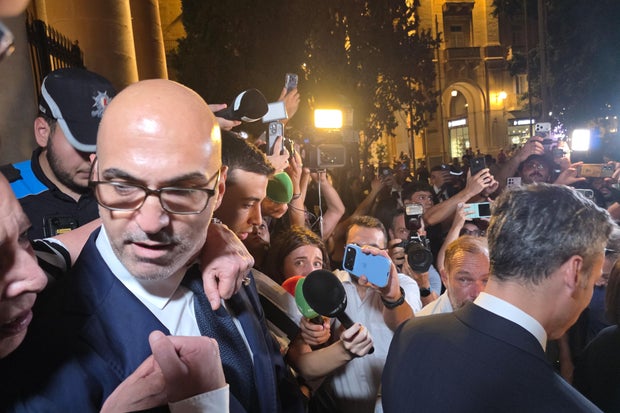
On Wednesday, a jury in Malta acquitted businessman Yorgen Fenech, who was accused of orchestrating the 2017 car bomb assassination of investigative journalist Daphne Caruana Galizia. The verdict has reignited demands for accountability within the Mediterranean nation.
Caruana Galizia’s killing sent shockwaves across Europe, leading to protests that resulted in the resignation of a prime minister. Fenech, a well-known businessman, was charged in 2021 with complicity and criminal conspiracy. Prosecutors alleged he ordered and financed the attack. However, Fenech pleaded not guilty, and the jury found him not guilty on both charges by an 8-1 vote.
His acquittal was met with jeers from the public outside the courthouse, and the opposition Nationalist Party organized a demonstration to demand justice. Fenech was the last of several individuals prosecuted in connection with the plot.
“She knew that the powerful people she was writing about were closing in on her,” Galizia’s son Paul told “60 Minutes” in 2018. “They were using every possible means to shut her down. She knew that, and that frightened her deeply.”
Caruana Galizia, 53, was killed by a car bomb on October 16, 2017. She had extensively reported on alleged corruption within Malta, particularly scrutinizing figures close to then-Prime Minister Joseph Muscat, whom she accused of offshore dealings exposed in the Panama Papers.
Despite denials from Muscat and his wife regarding involvement in such companies, Galizia faced over 40 libel suits at her death. Her relentless pursuit of truth earned her the moniker “one-woman WikiLeaks.”
An independent inquiry published in 2021 held the Maltese state responsible, citing a culture of impunity that allegedly permeated the highest levels of government. Although the inquiry didn’t find direct government involvement in Galizia’s murder, it criticized the environment that allowed her assassination.
The Prime Minister’s Resignation
Fenech, one of Malta’s wealthiest individuals, was associated with a consortium awarded a contentious power station contract by the government. His 2019 arrest while attempting to flee on his yacht led to mass protests and ultimately Muscat’s resignation.
Following his acquittal, Fenech’s departure from the courtroom was chaotic, as onlookers heckled him. His lawyer, Gianella De Marco, expressed satisfaction with the ruling, arguing that the jury dismissed the testimony of a key witness granted a presidential pardon.
Caruana Galizia’s children, leading the demand for justice, were present during the verdict but left without addressing the media. The family later stated on Facebook that the verdict denied Daphne the “justice she deserves.”
“Our country failed to protect Daphne,” the family’s statement read. “It owes it to her to prevent other lives being lost.”
The Nationalist Party organized a silent march, acknowledging the verdict but insisting on determining who ordered the assassination.
Although the government asserted its commitment to the investigation and support for justice, it acknowledged lengthy sentences already served by several people involved in Galizia’s murder.
Others Implicated in the Murder
In 2022, brothers George and Alfred Degiorgio admitted to executing the murder, receiving 40-year prison terms. Jamie Vella and Robert Agius received life sentences in 2025 for supplying the bomb used in the killing. Vincent Muscat, convicted in 2021, was sentenced to 15 years.
Tally driver Melvin Theuma, who confessed to being a middleman, was granted a presidential pardon for his testimony.
The assassination, revealing a troublesome culture, sparked calls for reforms in Malta’s judicial and legal systems to safeguard journalists.
Tim Gibson, from the Committee to Protect Journalists, expressed his support for the family, emphasizing the ongoing struggle for accountability.
Leave a Reply