The Trump administration has intensified economic sanctions on Iran through “Operation Economic Outcast.” This initiative threatens countries that continue Iran-related business with severe secondary sanctions. India, a crucial U.S. ally in the Indo-Pacific, faces a challenging situation. While maintaining strategic interests in Iran, India risks conflicting with the U.S. stance.
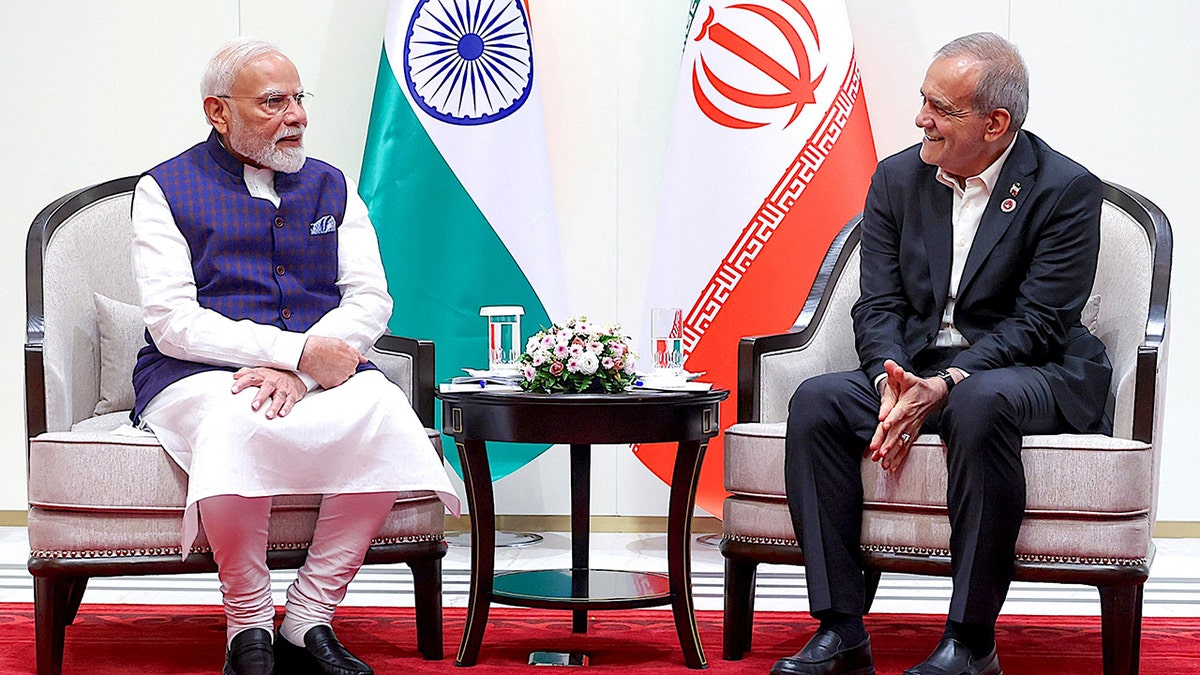
During the Shanghai Cooperation Organization (SCO) Summit in Kyrgyzstan, Indian Prime Minister Narendra Modi held a meeting with Iranian President Masoud Pezeshkian. It marked their first interaction since conflict erupted six months ago. Pezeshkian requested Modi to leverage India’s connections to diffuse tensions and promote dialogue, expressing gratitude for India’s support. Modi emphasized New Delhi’s desire to nurture its long-standing friendship with Tehran and diversify bilateral trade.
Senior Fellow Sadanand Dhume remarked that Modi’s actions conveyed to the domestic audience that India is not yielding to U.S. pressure. Previous sanctions have already diminished India-Iran relations significantly, making the balance between the U.S. and Iran unviable.
U.S. Secretary of State Marco Rubio responded to Modi’s meeting by asserting that no nation should facilitate Iran’s evasion of sanctions. Any country aiding Iran’s revenue generation could face further sanctions. Discussions with global partners persist to prevent Iran from developing a nuclear weapon.
Trade between India and Iran has fluctuated, with a sharp decline since its 2018-19 peak. India’s exports to Iran focus on goods with humanitarian exemptions like pharmaceuticals. Iran is a key market for Indian rice, with exports worth over $383 million in six months.
India resumed importing Iranian crude oil after a brief sanction lift by the Trump administration, facilitating Iranian shipments valued at $707 million. However, India has come under scrutiny with the U.S. sanctioning India-based companies and nationals connected to Iranian trade.
The Treasury Department provided a timeline for countries to cease Iran-related activities before penalties take effect. The UAE’s suspension of dealings with Iran has further impacted Indian exporters.
U.S. measures have not targeted India’s broader commercial ties with Iran thus far. Iran threatens serious consequences for nations complying with U.S. policies. India’s interest in Iran extends beyond trade, involving the Chabahar port for maritime routes to Russia and Europe. However, sanctions complicate India’s dealings there.
India’s high reliance on oil imports causes significant challenges, including energy disruptions, cost increases, and inflation. Despite U.S. pressure, India prioritizes core interests. For instance, India maintains ties with Russia despite U.S.-Russia tensions.
Dhume notes that India’s relationship with Russia is considerably more significant than its interactions with Iran. Higher oil prices impact India, but dependency on Iranian imports has reduced.
Targeting India regarding Tehran ties poses diplomatic risks. The U.S. needs India strategically, especially to counterbalance China. Yet, bilateral relations have strained under Trump’s second term. The latest sanctions may explore this dynamic further.
Though the U.S. holds leverage over India, particularly in trade, Dhume believes India would choose the U.S. economy over limited Iran trade ties. Washington should employ quiet diplomacy with India, a strategy that previously succeeded in discouraging Iranian oil imports.
China’s President Xi Jinping’s upcoming visit to India for the BRICS summit adds complexity. Potential participation by Russian President Vladimir Putin and Iranian President Masoud Pezeshkian further complicates the situation.
Analysts predict responses will depend on the Trump administration’s approach, whether warnings and diplomacy shift to actual sanctions. This is especially critical with India, where aggressive enforcement could strain the bilateral partnership.
“Quiet diplomacy works better with India than bluster,” Dhume clarified. “This is the key lesson from the past that the Trump administration appears to be forgetting.”
The Indian government hasn’t commented on this issue. Kyra Colah contributed to the report for Fox News.
Leave a Reply