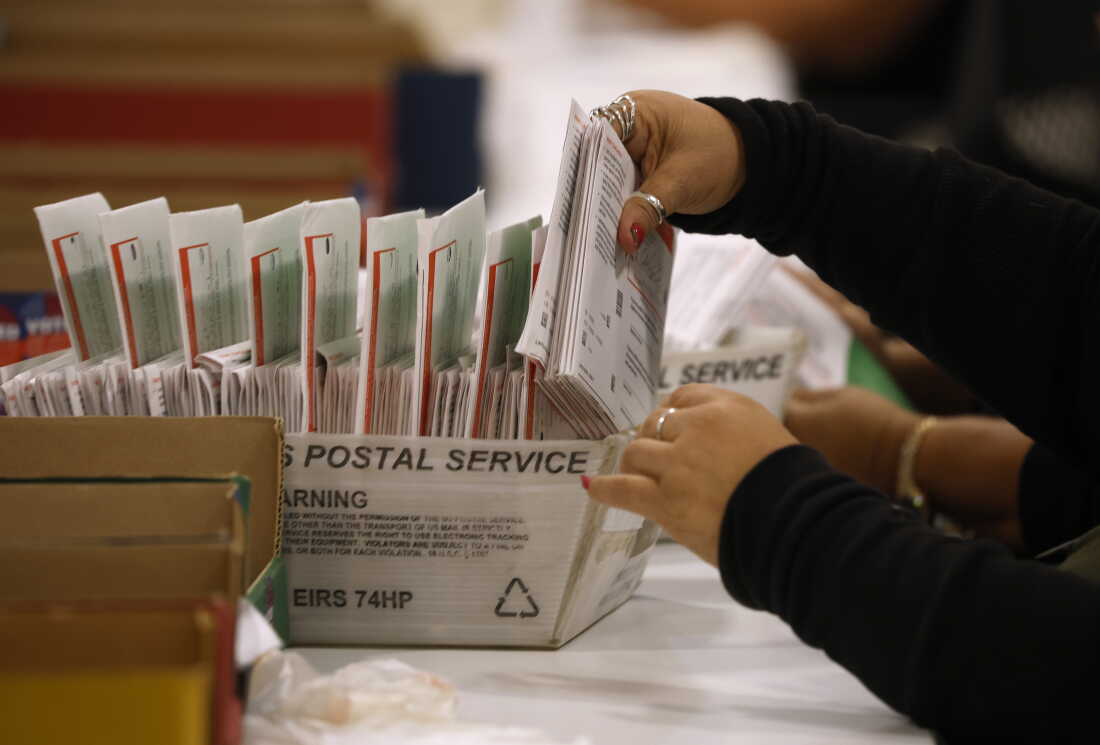
An election worker processes mail-in ballots in June in Industry, Calif. Justin Sullivan/Getty Images
The Supreme Court has been asked by the Trump administration to remove an existing block on the U.S. Postal Service’s plan concerning mail-in voting for the upcoming midterm elections. As of now, significant elements of this plan remain impeded due to a temporary restraining order issued by a federal judge in Boston.
Current Status of Mail-In Voting
Despite the U.S. Postal Service’s plan, it has not altered mail-in voting for the upcoming midterms. Important elements of the plan are currently suspended by judicial order. Eligible voters can continue to use mail-in voting as per state guidelines, with the Postal Service committed to delivering these ballots as usual.
Potential Changes Proposed by USPS
The proposed plan requires state election officials to provide lists of mail-in voters’ names and addresses to the Postal Service. It also mandates specific barcodes on mail ballot envelopes. According to USPS, ballots will not be delivered if election officials fail to meet these criteria.
Timeline for Mail-In Voting
In North Carolina, absentee ballots are scheduled for mailing starting Friday, thus initiating the voting period for this year’s midterm elections. Other states plan to distribute their mail-in ballots throughout the remainder of the month.
Feasibility Concerns of USPS Plan Implementation
According to election specialists, implementing the plan during the midterms may be unfeasible, potentially leading to substantial disruptions. A whistleblower report suggests the Postal Service has inadequately tested the online portal designed to collect mail-in voters’ details. Further claims indicate a verification policy for ballot envelopes may prevent timely delivery of ballots to many voters.
Arguments for and Against the USPS Plan
President Trump’s March executive order prompted the development of this plan, purportedly to prevent illegal voting by non-U.S. citizens. However, numerous studies reveal this issue as exceptionally uncommon. While USPS defends the plan as a regulatory measure for mail, opponents argue its illegality due to the USPS’s lack of authority over mail-in voting.
Supreme Court’s Involvement
The Supreme Court previously addressed a procedural issue related to one of the legal challenges in August but has not yet provided a judgment on the legality of the executive order or the Postal Service’s plan.
Editor’s note: USPS financially supports NPR. Edited by Megan Pratz.
Leave a Reply