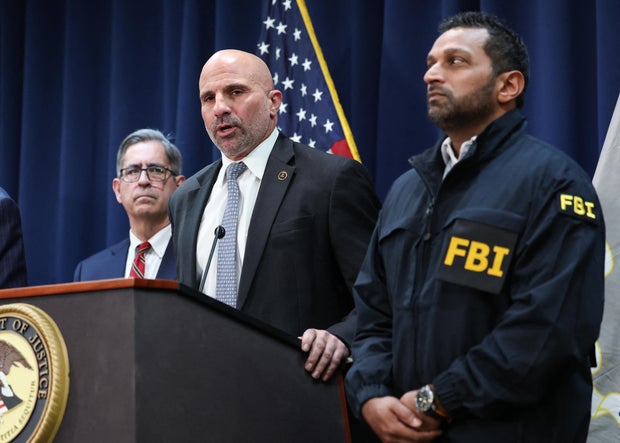
The FBI has increasingly turned to artificial intelligence (AI) to tackle complex criminal issues, involving transnational organizations and drug cartels. Deputy Director Christopher Raia shared insights with CBS News recently, discussing how AI is revolutionizing threat identification and crime fighting efforts.
Raia, a 23-year FBI veteran and recently appointed deputy director, emphasized how AI technology reduces the time needed to respond to threats from weeks to mere hours or minutes. ‘AI helps prioritize tips, allowing swift action in the field,’ he explained.
Recently released FBI data highlights a sharp decline in violent crime across the U.S., including the lowest murder rates in two decades and significant declines in aggravated assaults, rapes, and robberies. Raia attributed these positive trends to various factors, such as improved cooperation with state and local law enforcement and enhanced border security.
AI has introduced efficiency in processing vast amounts of data, previously overwhelming for analysts. According to Raia, the National Threat Operations Center uses AI algorithms to pinpoint and act on imminent threats, freeing resources to address urgent cases.
“We didn’t have the manpower to analyze all incoming tips,” Raia said.
An example of AI’s impact is the swift arrest of North Carolina resident Zachary Charles Newell, who faced charges for online threats. AI efficiently prioritized the threat, leading to quick intervention.
Addressing concerns over civil liberties, Raia reassured transparency with Congress and oversight boards, ensuring protective measures for citizens’ rights. ‘Somebody has to police the police,’ he mentioned, citing extensive document reviews submitted for oversight.
Privacy issues have been raised about data sharing from license plate readers by companies like Flock Safety. Raia defended the technology’s role in investigations, emphasizing its importance in gathering leads.
The discussion also covered initiatives against drug cartels and transnational gangs by the Trump administration. A Homeland Security Task Force, established by executive order, boosts collaboration across several agencies, strengthening efforts against these threats.
In a notable operation, 81 gang members in Puerto Rico faced charges related to drug trafficking and firearms violations as part of these combined efforts.
Leave a Reply