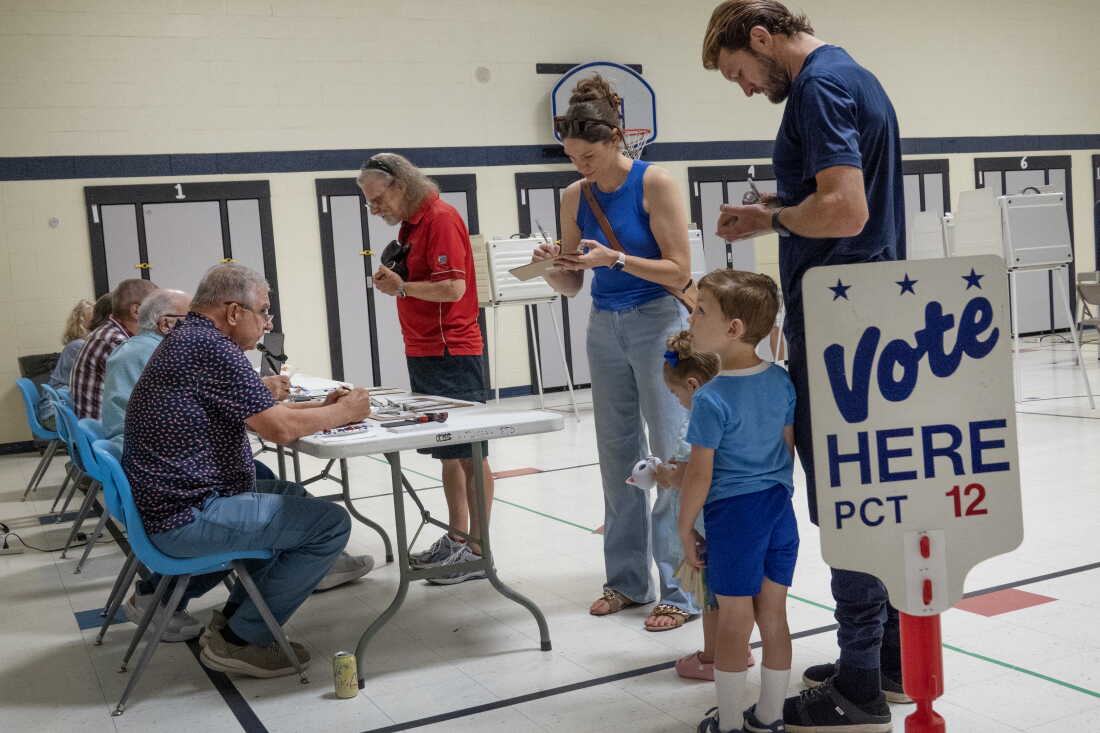
Last month, voters in Shelby, Michigan participated in polling, highlighting the ongoing process of election management by states. The U.S. has historically left the maintenance of voter lists to individual states. The Constitution entrusts states with controlling elections.
The Trump administration has initiated an unprecedented effort to create state-by-state lists of citizens eligible to vote in upcoming elections. This effort diverges from traditional election practices. A comprehensive list of American citizens has not been attempted before. Traditionally, voter list management has been a state responsibility, in line with constitutional directives.
Despite efforts to exert executive authority over elections, a project to publish these lists online has faced delays. Initially set to launch 60 days before the election, the deadline has shifted. Justice Department attorneys informed opposing counsel in lawsuits that they would now provide 48-hour notice before launching the state citizenship portal.
The executive order, signed by President Trump, tasks U.S. Citizenship and Immigration Services (USCIS) and the Social Security Administration with creating “State Citizenship Lists.” A lower court initially blocked the execution of key parts of this order in 23 states and Washington, D.C. However, a Supreme Court ruling has allowed the plan to progress.
The order requires these lists to be sent to state election officials well in advance of federal elections. Additionally, the U.S. Attorney General has been directed to prioritize legal actions against officials issuing ballots to ineligible voters. Concerns have been raised about the accuracy of these lists.
“States have an incentive to use these lists to avoid federal investigations,” stated Jules Torti from Protect Democracy. “But the data’s inaccuracy raises the risk of disenfranchisement.”
The Electronic Privacy Information Center and individual voters are taking legal action to prevent the creation and publication of these lists. They challenge a memorandum outlining the plan, asserting it violates various federal laws. Under the Privacy Act, the public must be notified and allowed to comment on new data collection purposes.
Concerns also arise due to inaccuracies in data sources such as Social Security and the SAVE data system. These systems often lack updates on naturalized citizens or those who gained citizenship as minors. Torti expressed distress over the administration’s persistence in pursuing these lists, suggesting it could cause confusion close to Election Day.
The Department of Justice and Department of Homeland Security have yet to comment on the situation. The initial portal for state election officials planned for June 30 has faced delays. Meanwhile, a domain for the citizenship lists portal was briefly visible online.
Democratic groups involved in separate legal actions against the executive order have criticized the lack of communication from the administration regarding its plans. They seek court directives for immediate updates on the implementation.
This legal conflict comes alongside Homeland Security’s efforts to analyze voter rolls for registered noncitizens. Noncitizen voting occurrences remain rare. ICE has requested information to support its fraud detection activities. The developments indicate ongoing tensions over federal involvement in state-managed elections.
Leave a Reply