The digital landscape of sports is shifting as AI insights become integral to tournaments like the U.S. Open. A decade ago, spectators with phones at tennis matches were rare, but they are now commonplace with tech advancements enhancing the viewer experience. Artificial Intelligence is playing a pivotal role in reshaping how fans and players experience the competition.
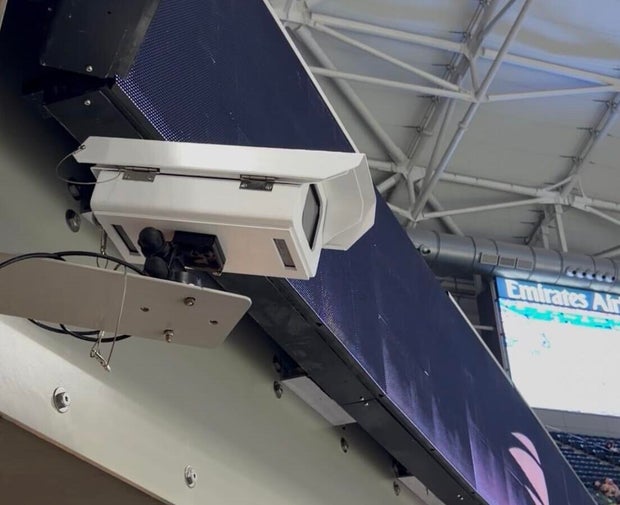
During this year’s U.S. Open, AI-generated analysis provided real-time statistics and predictions through the event app. When Coco Gauff faced Zeynep Sönmez, AI featured metrics like player performance odds and a new ‘serve quality’ metric. Cameras around Arthur Ashe Stadium captured comprehensive data, such as limb movements, which were analyzed using IBM’s Watsonx software.
Watsonx processes data points like elbow and knee flexion and wrist velocities. It produces a numerical score reflecting a player’s serve efficiency, accuracy, and consistency. For instance, Gauff’s serve quality highlighted her strategic racket preparation and knee movement during serves. IBM’s technical program director, Tyler Sidell, mentioned that over one billion data points will be collected by the tournament’s end. These insights aim to foster discussions among fans.
“There’s so much unpredictability in sports,” Sidell explained. “You can look at all the data, but anything can happen. Our goal is to provide insights while allowing fans to enjoy the dynamic nature of matches.”
Jessica Pegula, who advanced to the fourth round, uses AI to decode opponent serving patterns. She stated that understanding serve patterns is crucial since serving is one of the most controllable aspects of tennis. Despite the potential for the game’s dynamics to change, Pegula finds value in pre-match data analysis.
“You might anticipate certain strategies, but they can shift during the game. The analytics provide a mental advantage by enabling preparedness,” Pegula noted.
The ‘likelihood to win’ feature has enhanced the digital experience for fans over the past six years. This is the second year allowing real-time tracking as matches proceed, based on players’ recent performances. Coco Gauff’s win prediction started at 72% and rose with her progress in the initial set against Sönmez.
AI-generated ‘key moments’ communicate brief updates as events unfold in matches. These insights enrich spectator experiences by offering detailed evaluations of unfolding situations. A dramatic fluctuation was observed when Alexander Zverev played Lorenzo Sonego. Zverev’s match win probability initially stood at 87%, but during the fourth set, Sonego’s chance climbed to 93%, before it shifted again as Zverev mounted a comeback.
The U.S. Open app also features Match Chat, an AI assistant responding to users’ inquiries about players, matches, and venue details. For example, it efficiently locates venues for the signature ‘Honey Deuce’ cocktail.
Leave a Reply