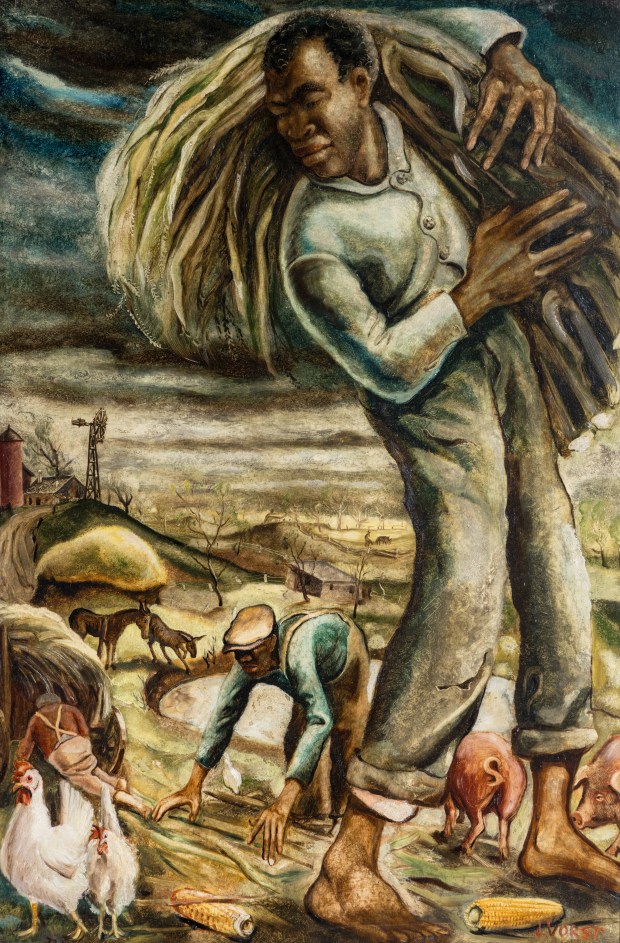
Every year, the Gallup organization surveys American workers about their engagement at work. For many years, the response has often been negative. Gallup reports that employee engagement in the U.S. has reached its lowest in over a decade. This Labor Day, many workers feel increasing dissatisfaction and pessimism.
One suggestion to boost spirits is to visit the Grohmann Museum in Milwaukee. This museum features artwork that chronicles the history of human labor dating back to the 1500s. The displays are both inspiring and instructional. Despite today’s complaints, these art pieces highlight that past workers faced far harsher conditions.
The Grohmann Museum presents the Industrial Revolution through dark paintings that vividly depict heat, noise, and pollution. The “Iron and Steel” collection showcases the hazardous environments of steel mills and foundries.
In the “Misfortune at the Mine” exhibit, viewers witness a worker being rescued after a severe accident. The “Agriculture and Construction” display reveals the immense effort involved in historic projects, like manually digging tunnels. In contrast, romanticized views of farming understate the difficult realities of the past. Brewing artwork also downplays the risks workers faced dealing with dangerous brewing environments.
Children were frequent workers, portrayed in scenes like “Potato Harvest,” where they labor beside adults. Other images feature children in urban settings working as newsboys and chimney sweeps. The artists often avoided highlighting the harsh conditions these children endured.
The museum also has an exhibit on craftsmen, featuring women in textile production and intellectual trades such as medicine. Technological advancements are prominently displayed, paralleling today’s anxieties about AI.
Fortunately, American workplaces today have moved away from those perilous, unregulated conditions depicted in the Grohmann collection. Nowadays, safety protocols are routine for high-risk jobs like mining and construction. Modern portraits in the museum show workers using safety gear, from firefighters to welders.
Historically, worker advocates achieved significant improvements such as eight-hour workdays, overtime pay, and minimum wages. Child labor is now mostly illegal. Programs like unemployment insurance act as vital safety nets. Today’s workforce benefits from past struggles for rights and protections.
Nonetheless, there are risks to these gains. The social contract emphasizing fairness is weakening. The share of wealth laborers receive has declined. Tax policies and technology have concentrated wealth among fewer, wealthier individuals. Workers report wages lagging behind inflation, and the rise of automation’s impact is uncertain. Experts have warned of AI exacerbating labor market divisions.
The Grohmann Museum, named after Milwaukee businessman Eckhart Grohmann, is located at the Milwaukee School of Engineering. The museum aims to provide students with historical context and highlights the potential impact of their degrees. The engineering curriculum emphasizes AI heavily amid major corporate investments.
“We give students an appreciation of where all this started and focus on the future,” said museum Director James Kieselburg. “We’re going to need human workers. There’s only so much we can feed into a computer.”
Like Kieselburg, we remain hopeful for the future while acknowledging that American workers’ productivity is in a fragile state. The integration of AI has not necessarily translated to increased efficiency for employees. Many express decreased enthusiasm for work and company goals.
For the first time since 2009, more employees report struggling at work than thriving. Younger workers are particularly disengaged. They feel uncared for and lack opportunities for growth. Gallup’s research highlights a desire among U.S. workers to understand their company’s direction and how it relates to their career paths.
Approximately 35% of survey participants identified improved communication as a key factor to better comprehend work expectations. Others cited leadership direction, development, or cultural recognition as helpful elements. Employers have the ability to significantly enhance employee engagement if they prioritize it.
On this Labor Day, we hope the significant progress made by American workers continues. Their contributions and achievements should be duly recognized and supported for a brighter future.
Leave a Reply