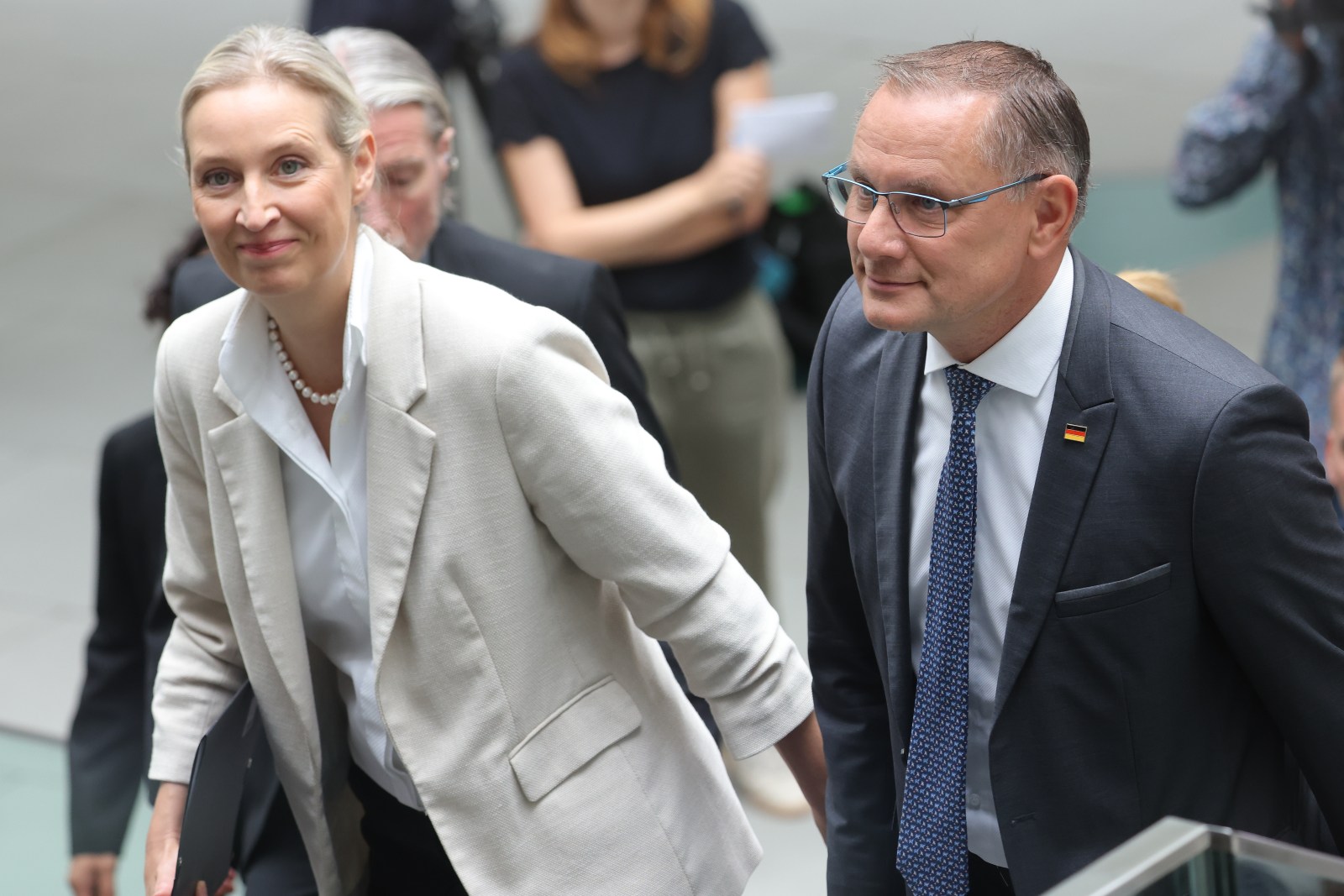
The Alternative for Germany (AfD) party recently achieved significant success, securing 44 percent of votes in Saxony-Anhalt. This positioned them well ahead of the Christian Democratic Union (CDU), led by Chancellor Friedrich Merz, which obtained 17 percent. With state elections approaching in Mecklenburg-Western Pomerania and Berlin on September 20, the AfD aims to expand its influence further.
Polling indicates that AfD is leading in Mecklenburg-Western Pomerania, with prediction markets giving them an over 80 percent chance of becoming the largest party there. The situation is less certain in Berlin, where the race is tighter. According to Louis Perron, a Swiss political scientist, this momentum marks a notable achievement for the AfD in any German state election over the past decade.
Elections in Mecklenburg-Western Pomerania and Berlin
In German state politics, the party with the most votes can form a governing coalition, usually leading with the state’s prime minister. However, major parties traditionally avoid cooperating with the AfD, practicing a ‘firewall’ to prevent them from gaining power. Despite this, the far-left BSW (Bündnis Sarah Wagenknecht), which obtained 5 percent of the vote in Saxony-Anhalt, may play a kingmaker role, possibly enabling AfD’s Ulrich Siegmund to become the first far-right state governor in Germany since World War II.
In Mecklenburg-Western Pomerania, the AfD leads with Leif-Erik Holm as their minister-president candidate. The state’s legislature consists of 71 seats, with 36 needed for a majority. Recent polling by PolitPro shows that 35 percent of respondents support the AfD, with the SPD at 30 percent, Die Linke at 11 percent, and the CDU at 9 percent. Initial data indicates that the current governing coalition of SPD and Die Linke lacks a majority, securing only 45.1 percent of the seats.
Another polling firm, Insa, showed similar findings, putting AfD at 30 percent, SPD at 23.2 percent, and CDU at 15.8 percent. The prediction market, Polymarket, gave the AfD an 82 percent probability of being the largest party. Kalshi indicated a 79.4 percent chance for the AfD, reinforcing their strong position.
Berlin Election Dynamics
In Berlin, polling across the summer reveals a fragmented political landscape. With at least 130 seats at stake and 66 required for a majority, the election could see varying outcomes. PolitPro’s data points to Die Linke slightly leading with 19.8 percent, CDU trailing closely at 19.6 percent, and AfD at 17.9 percent.
The CDU candidate is Kristin Brinker, while other prominent contenders include Steffen Krach for the SPD and Elif Eralp for Die Linke. According to Polymarket, Die Linke has a 45 percent chance to lead, with CDU at 32 percent and AfD at 17 percent. Perron suggests the previous AfD wins could motivate left-leaning voters to counteract in this election. He speculated that while public reactions from Chancellor Merz might be limited until the elections conclude, internal discussions are likely ongoing.
Leave a Reply