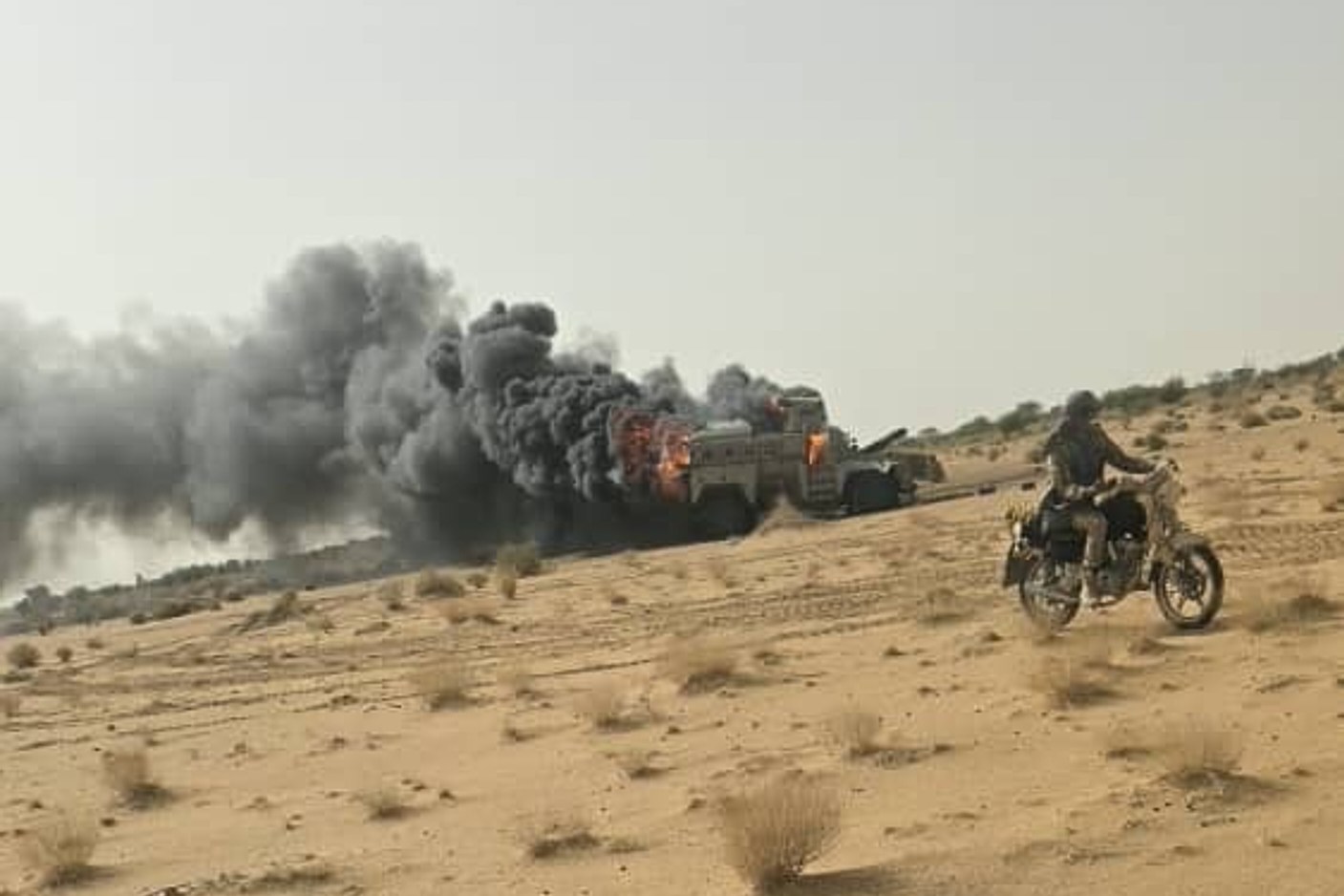
As the 25th anniversary of 9/11 approaches, the focus shifts to the Sahel region in Africa. Al-Qaeda and ISIS affiliates thrive here with little attention from the U.S. Over 59,700 people have died due to Islamist militant groups in the past decade. The Africa Center for Strategic Studies, using ACLED data, highlighted this alarming trend. The Global Terrorism Index by the Institute for Economics & Peace reported this region accounts for over half of the world’s terrorism-related fatalities.
The U.S. Africa Command (AFRICOM) identifies Africa as the new center of global terrorism. Al-Qaeda and ISIS affiliates in the Sahel and Lake Chad Basin aim to strike the U.S. and its interests, as confirmed by AFRICOM spokespersons. Experts warn that militant groups use local grievances and battlefield wins to grow their influence.
Al-Qaeda’s Resurgence
Among the groups, Jama’at Nusrat al-Islam wal-Muslimin (JNIM) is noted for its effectiveness in the Sahel. JNIM, an Al-Qaeda affiliate, intensifies its campaigns in Burkina Faso, Mali, and Niger. This threatens broader regional stability. JNIM is known for its siege and blockade tactics.
Al-Qaeda, an international entity, historically established foundations in Africa. Founded in the 1980s by Osama bin Laden, the group solidified networks in Sudan in the 1990s. The 1998 U.S. embassy bombings in Kenya and Tanzania marked their violent efforts.
Liam Karr from the American Enterprise Institute identifies JNIM as the greatest regional threat due to its support networks in neighboring coastal countries. The group collaborates with the Azawad Liberation Front and integrates other Islamist factions like Ansarul Islam. These alliances strengthen JNIM’s regional hold.
ISIS Expands Influence
While Al-Qaeda remains significant, ISIS has also expanded its footprint in Africa. Emerging from Al-Qaeda in Iraq post-2003, ISIS diverged and built its own global affiliate network. In Africa, ISIS has increased operations particularly after its defeats in Iraq and Syria.
The Islamic State Sahel Province (ISSP) is active in the central Sahel, posing challenges distinct from JNIM. While still emerging, ISSP has a cross-border presence, challenging JNIM’s dominance. It supports operations facilitating foreign fighter transit and potential attacks in North Africa and Europe.
Evidence shows ISIS-affiliated attacks in Europe link back to African networks. The Berlin and Manchester incidents are examples. ISIS also forms ties with existing groups like Boko Haram’s offshoot ISWAP in Niger and Nigeria. Smaller ISIS cells operate in North Africa, broadening their operational base.
Competition between Al-Qaeda and ISIS for influence is intense, particularly in Western Niger. Unchecked, these networks risk becoming a broader threat, as emphasized by Nsaibia. AFRICOM echoes concerns over ISIS’s ambitions, especially its West Africa affiliate aiming for coastal access, a strategic expansion.
Challenges in the Sahel
The Sahel reflects conditions akin to pre-9/11 Afghanistan. Boubacar Ba notes the region’s role as a ‘laboratory’ for militants, capitalizing on governance failures, coups, poverty, and ethnic divides. These conditions enable militant recruitment and expansion.
International interventions, like France’s Operation Barkhane and Russia’s involvement with local forces, have failed to stem violence. Ba warns of the conflict’s international dimensions.
Potential U.S. Involvement
Speculation arises over U.S. intervention under President Trump’s administration. Discussions indicate a desire for not just military action, but diplomatic efforts for stability and mineral resource exploitation.
AFRICOM emphasizes partnership in West Africa, citing successful joint operations like the one that eliminated ISWAP leader Abu Bilal al-Minuki.
William Assanvo of the Institute for Security Studies notes the U.S. has a history of engagement in the region. Past efforts like training and intelligence support aimed to counter violent extremism but met limited success.
Assanvo argues that addressing the socio-economic and political root causes is crucial. Without such efforts, military responses risk exacerbating the crisis, fueling wider insurgency, and impacting regional stability.
U.S. intervention must consider these underlying issues to avoid worsening the situation.
Leave a Reply