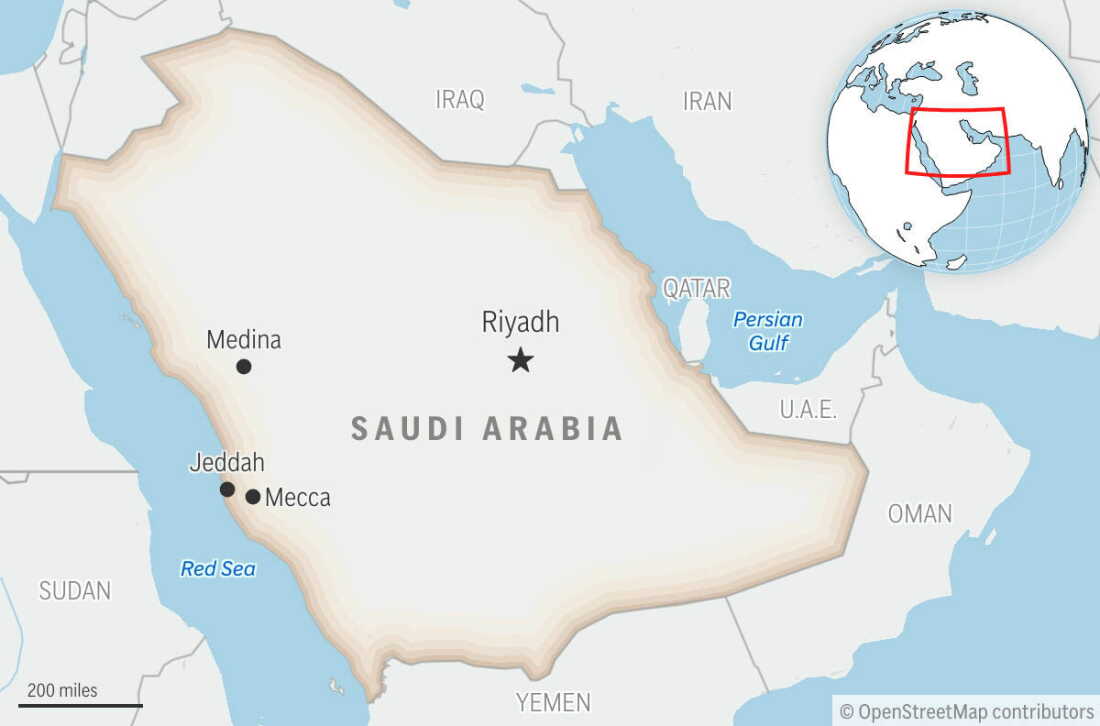
A series of Houthi attacks on Tuesday in Saudi Arabia resulted in over 70 injuries and sparked fires at various oil facilities in the southern part of the country. This incident marks a significant escalation in the ongoing conflict between Saudi Arabia, a key ally of the United States, and the Iran-backed Houthi rebels from Yemen.
Renewed Clashes
These attacks follow weeks of intensified fighting between the Houthis and the Saudi-supported Yemeni government forces, ending a four-year truce in Yemen’s civil war. The renewed conflict adds further instability to a region already affected by conflicts over the past three years, increasing uncertainty for the global economy.
The skirmishes between Saudi Arabia and the Houthis risk disrupting the Bab al-Mandeb Strait, a vital route for oil and global trade. This situation is further complicated by the Iran conflict, which has nearly stopped oil shipments through the Strait of Hormuz, a major waterway that previously handled about one-fifth of the world’s oil.
Impact on Major Oil Facilities
The Houthi attacks targeted various critical sites in the southern Saudi cities of Abha, Jazan, Najran, and Khamis Mushait, according to Maj. Gen. Turki al-Malki, spokesperson for the Saudi-led coalition in Yemen. These attacks injured 73 people, including women and children. The attacks caused fires at multiple oil facilities, necessitating a temporary suspension of operations, as reported by the Energy Ministry.
The southern region’s significant infrastructure includes a 400,000-barrel-per-day oil refinery in Jazan. The Houthis have previously attacked the Abha airport. Firefighters were actively battling the blazes on Tuesday morning. Al-Malki described the assaults as a “serious escalation” and expressed determination to retaliate, stating that the coalition would take necessary measures against the Houthi militia.
Houthi Response and Escalation
The Houthis claimed responsibility for the attacks in response to recent Saudi actions in Yemen. Brig. Gen. Yahya Saree, the Houthi military spokesperson, stated in a prerecorded video that they launched ballistic missiles and drones at several key targets, such as oil facilities and an air base in southern Saudi Arabia. He highlighted attacks on Jazan City for Primary and Downstream Industries, Aramco facilities, and King Khalid Air Base.
Nasruddin Amer, deputy head of the Houthi media office, used social media to commend the attacks, emphasizing the need for Saudi Arabia to face consequences for any aggression against Yemen. These attacks coincided with Houthi accusations against Saudi Arabia for an airstrike that hit a prison in Yemen, resulting in at least seven fatalities and several injuries.
Humanitarian Impact
The recent escalation began with a Houthi attempt to fly a plane from Tehran to Sanaa, defying the Saudi-led blockade. A coalition airstrike on Sanaa’s airport runway disrupted the flight, leading to subsequent Houthi missile and drone attacks on Saudi Arabia and a blockade of Saudi shipping in the Red Sea, breaking the 2022 truce.
This series of events has exacerbated the already dire humanitarian situation. Fighting forced about 18,500 individuals to flee their homes in Taiz and Hodeida. The International Organization for Migration noted the challenges faced by these displaced families, lacking basic necessities without knowing when or if it is safe to return.
The protracted Yemeni civil war, which began with the Houthis’ capture of Sanaa in 2014, has resulted in the deaths of an estimated 150,000 people and has periodically pushed the country to the brink of famine.
Leave a Reply