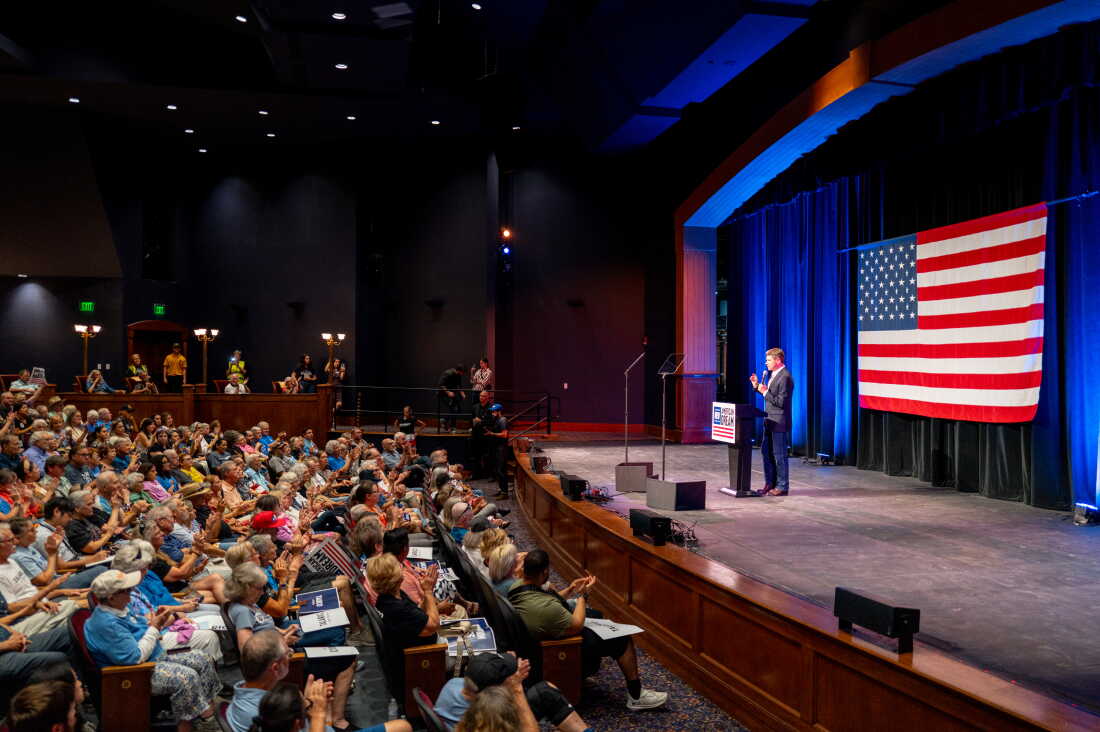
As the unofficial start of general election campaigning begins, the political scene is shifting rapidly. Democratic Senate candidate James Talarico addressed supporters during a campaign rally in Kerrville, Texas, highlighting the momentum gained by Democrats in contrast to the challenges facing President Trump’s second term agenda. Labor Day often marks the campaign kick-off, and this year is no exception. With the Election Day just two months away, significant changes in voter attitudes are influencing competitive races.
Republicans maintain slight majorities in both the House and Senate, yet historical trends suggest potential losses during midterms. Public opinion polling and primary results from 2026 indicate Republicans might lose control of Congress. Voters are increasingly concerned about issues such as the war in Iran, tariffs, gas prices, and immigration. Many feel disconnected from Trump’s priorities, including the White House ballroom construction project. His approval ratings have seen unprecedented declines.
Democrats, recovering from the 2024 election setbacks, find renewed energy among their base and independents dissatisfied with current conditions. States with mixed governance have pursued mid-decade redistricting to secure safe seats, reflecting the high stakes involved. Current polling indicates Democrats might gain control of the House, as more voters express preference for Democratic representation in Congress.
Initially, the Senate majority seemed uncertain for Democrats, particularly with expensive races in Georgia and North Carolina favoring Republicans. However, decisive battles are now occurring in traditionally Republican territories such as Iowa, Texas, Ohio, and Alaska. The possibility of Democrats taking control is bolstered by strong candidates and third-party options swaying undecided voters.
Funding and messaging are crucial factors in the midterms. Democratic candidates are outperforming their opponents in fundraising, although Republican super PACs and party committees, including Trump’s MAGA, Inc., possess substantial reserves. MAGA, Inc.’s recent $10 million ad campaign is aimed at supporting the Texas Republican Senate nominee, Ken Paxton, despite concerns from some party members about timing.
This week, Republicans are holding an unprecedented convention in Dallas to rally support and highlight their candidates, involving members of the Trump administration. Democrats face challenges with messaging, balancing improvements in voter margins with internal dissatisfaction over leadership. Their strategy involves addressing party flaws, leading to victories in gubernatorial races like Virginia and New Jersey in 2025.
Various incumbents have faced pressure from primary voters within the party, while others opt for retirement. Democratic candidates in key House and Senate races are adjusting their strategies to resonate with voters, acknowledging party shortcomings as part of their platform.
Leave a Reply