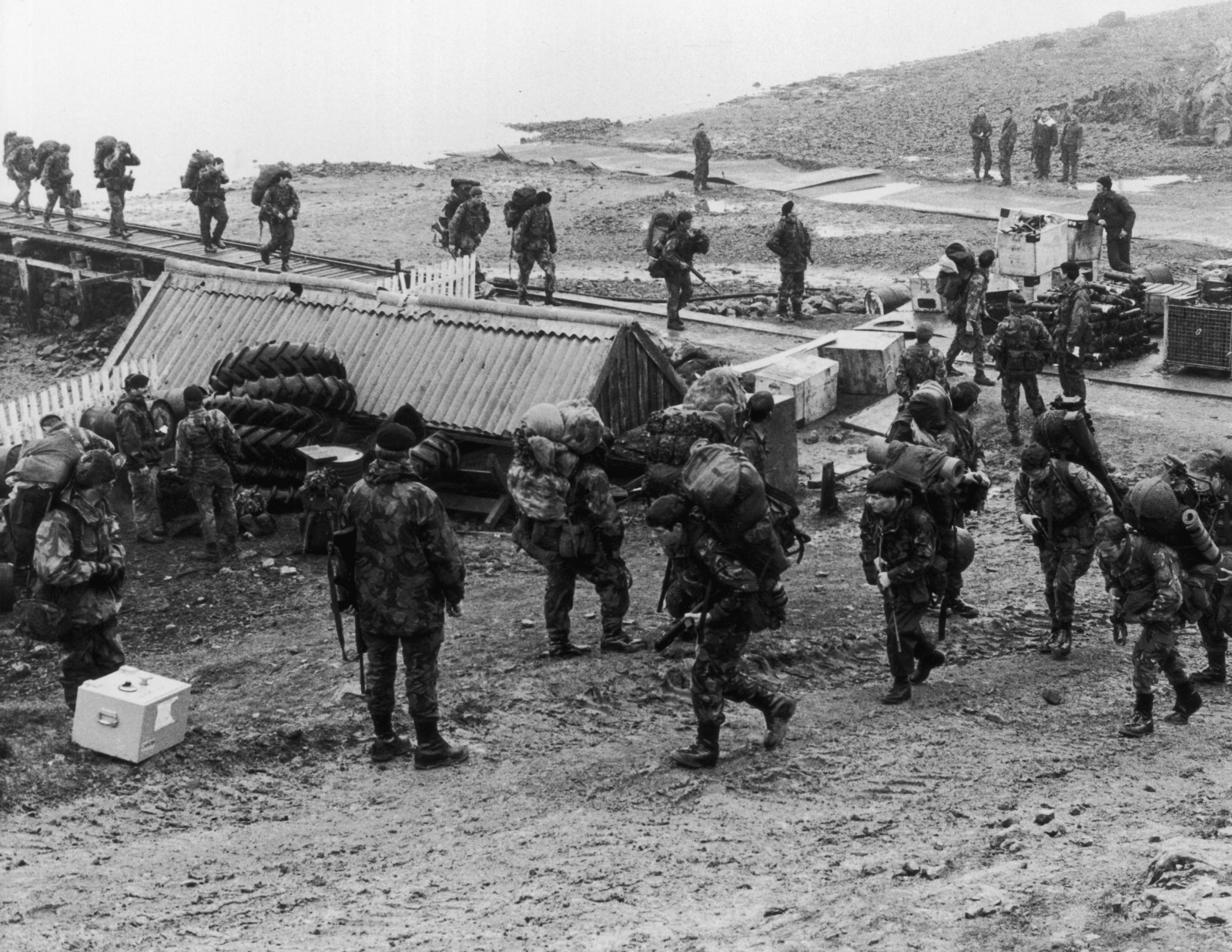
Historical Context of the Falklands
In 1774, Britain evacuated the Falkland Islands, leaving a plaque to signify ongoing British claims despite their physical absence. This action mirrored Spain’s later departure, as both nations left the archipelago marked by European notices claiming ownership. Essentially, ownership was contested in a barren land with no human habitation.
Every inhabitant arrived by boat, marking the colonial process as relatively mild in comparison to other imperial histories. Fast forward two hundred and fifty years, the islands have gained geopolitical significance, mainly as a tool for punishing Britain.
Argentina’s Recent Actions
On Monday, Argentina announced a criminal complaint against companies drilling for oil north of the Falklands, targeting Israeli firm Navitas Petroleum. Israel’s national security minister called for recognizing Argentine sovereignty, aiming to retaliate against Britain, which planned actions against West Bank settlements. That afternoon, Britain banned trade in goods from Israeli settlements.
Itamar Ben-Gvir described the Falklands as Argentine territory under occupation, proposing retaliation against London, which could benefit Argentina’s attempt to prosecute an Israeli oil project. Furthermore, the U.S. ambassador to Israel hinted at potential American responses affecting British businesses, with suggestions from officials like GOP Representative Randy Fine to halt business with British firms.
The U.S. Position
Despite these maneuvers, the U.S. has not formally recognized Argentina’s claim and maintains neutrality while acknowledging British administration. However, President Trump’s recent statements and a leaked Pentagon email suggest reconsideration of support for European territories, including the Falklands—linked to dissatisfaction with British hesitance over the Iran conflict.
Ambiguity remains the strategy, avoiding firm recognition while leveraging uncertainty against Britain. Recognition could harm relations with key allies, implying a deliberate choice to keep the stance undefined.
The Strategic Oil Field: Sea Lion
Beyond geopolitics, Sea Lion—a significant oil deposit—emerges as a central focus. Scheduled for extraction by 2028, it faces external pressures as Argentina tightens offshore regulations, targeting investors and service providers. Three major oil service companies have distanced themselves from Falklands work, signaling economic implications for Britain.
This aspect underscores the moral argument about colonialism, with actions framed as a decolonization effort. Yet, Britain acquired the islands through colonial practices distant from its territories, acknowledged by historical resolutions treating the area as a colonial situation.
Decolonization Debate
Anti-colonial rhetoric persists in Argentine politics, despite no indigenous population being displaced in the Falklands. The argument roots in historical colonial titles, with Argentina’s claim rather ironic—invoking its inherited Spanish rights over decolonization complaints.
The strongest argument involved territorial integrity, suggesting Britain severed a South American state’s piece by force. Legal parallels are drawn with the Chagos Islands dispute, where the ICJ viewed Britain’s detachment as undermined decolonization.
However, the arguments hold counterpoints: Britain detached territory from its colony in Chagos, whereas Argentina seceded from Spain. Moreover, Argentina avoids self-determination discussions at the U.N., acknowledging the local population’s overwhelming preference to remain British in 2013.
A Thought Experiment on Decolonization
Exploring broader implications of colonial claims, Argentina faces contradictions in its own history, chief among them the Conquest of the Desert. Provinces, including Tierra del Fuego, reflect past colonization impacts on indigenous populations, raising questions about consistent pursuit of decolonization principles.
In recent moves, Argentina’s policy changes have affected indigenous community protections, illustrating divergent approaches between advocating decolonization for the Falklands while dismissing indigenous land concerns domestically. Such dynamics emphasize the rhetorical nature of decolonization discourse.
Leave a Reply