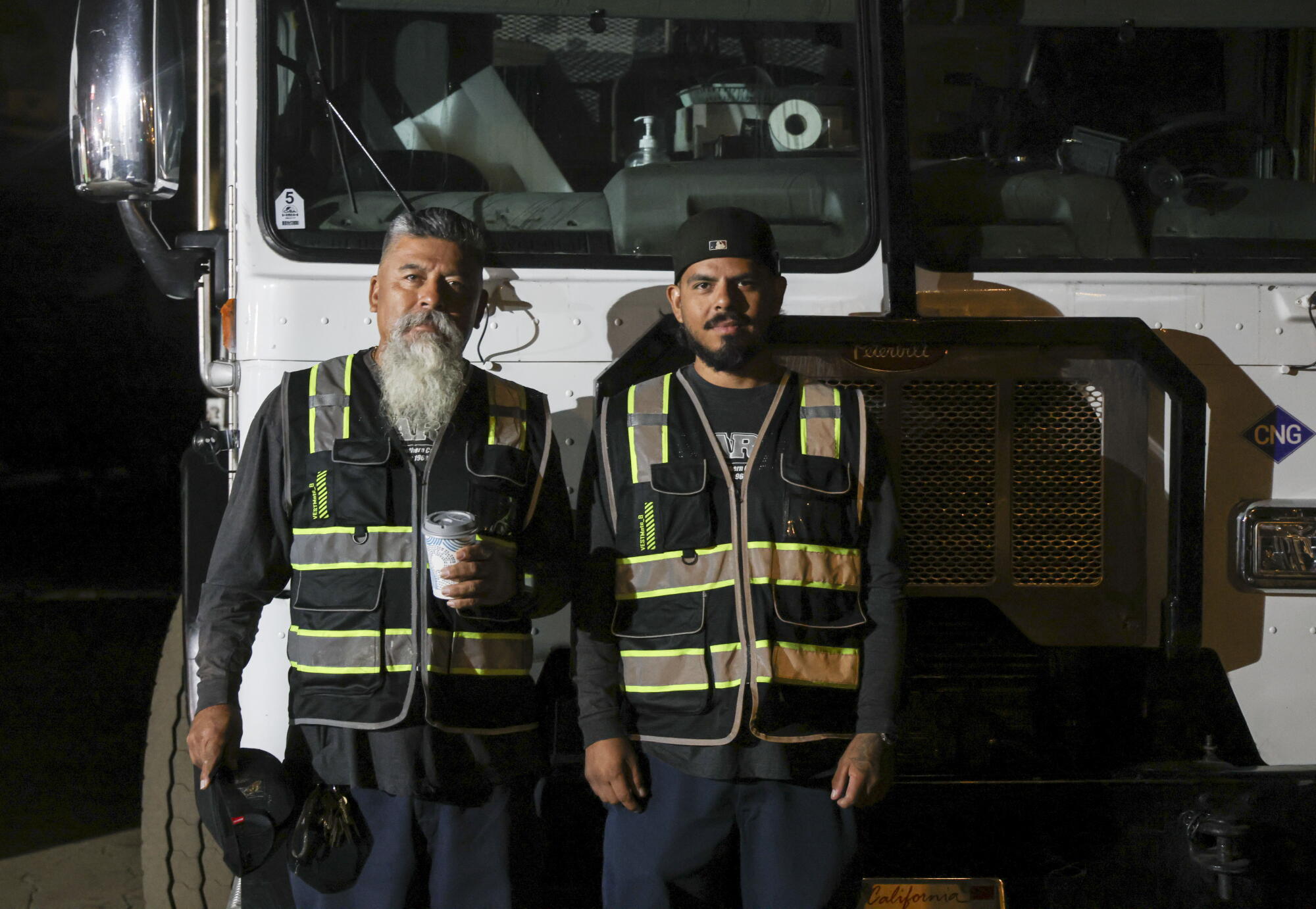
In Escondido, California, as dawn breaks, Salomon Olea begins his day with a packed lunch, a kiss for his wife, and a drive to pick up his son, Angel. Their journey takes them half an hour through deserted streets, marking the start of another 12-hour workday as commercial trash truck drivers for a private waste company.
Salomon and Angel work together to navigate the northern suburbs of San Diego, collecting recycling and trash bins from various establishments. For Salomon, 55, employment in sanitation provided stability, enabling him to buy a home and raise a family in Southern California’s safe neighborhoods.
“We’re doing the same amount of hours, taking overtime that’s available. … What are we doing wrong?”
Angel, however, faces a different reality. Despite working overtime, he feels left behind and unable to achieve the same financial independence his father enjoyed. In the past, working-class jobs allowed people to attain the American dream, but rising home prices and falling wages have changed the landscape.
Starting the Day: Salomon’s Routine
By 4 a.m., Salomon’s routine begins as he greets his son at the truck depot. The drivers gather in striped vests, sipping instant coffee and preparing for the day. Their task involves adhering to a detailed route comprised of schools and businesses, requiring vigilance in checking dumpsters for individuals attempting to take shelter.
Salomon’s son Angel recalls an incident while checking a bin at McDonald’s. His experience underscores the housing crisis affecting many people in San Diego County. The region reports that approximately 38% of households find themselves financially burdened by housing costs.
Salomon’s Endeavor for a Family Home
Salomon made the decision to purchase a house for his family, motivated by the need to provide a backyard for his son after witnessing the neighbor’s reprimand. His determination resulted in working extensive overtime, making it possible to buy a three-bedroom home for $127,000 when prices were attainable.
“The housing thing, it’s affecting everyone,” Angel said. “Some worse than others.”
Angel’s attempts at homeownership mirror his father’s efforts, yet the disparity in property prices complicates this goal. The Olea family lives with the reality of mounting costs — $2,800 monthly rent for a cramped apartment — exacerbated by unforeseen expenses.
A Struggle with Economic Challenges
Despite attempts to save for a home, the couple faces relentless economic hurdles. Medical costs and necessary vehicle repairs siphon their reserves. Angel’s family contemplates relocating but weighs longer commutes against potential savings.
At the end of an arduous workday, Salomon and Angel return home, greeted by the children who eagerly anticipate their arrival. As Salomon reflects on conversations with his son, he reassures Angel that the struggle to afford housing is widespread.
This story forms part of The Times’ initiative to address the economic divide affecting low-income workers, focusing on the solutions being pursued.
Leave a Reply