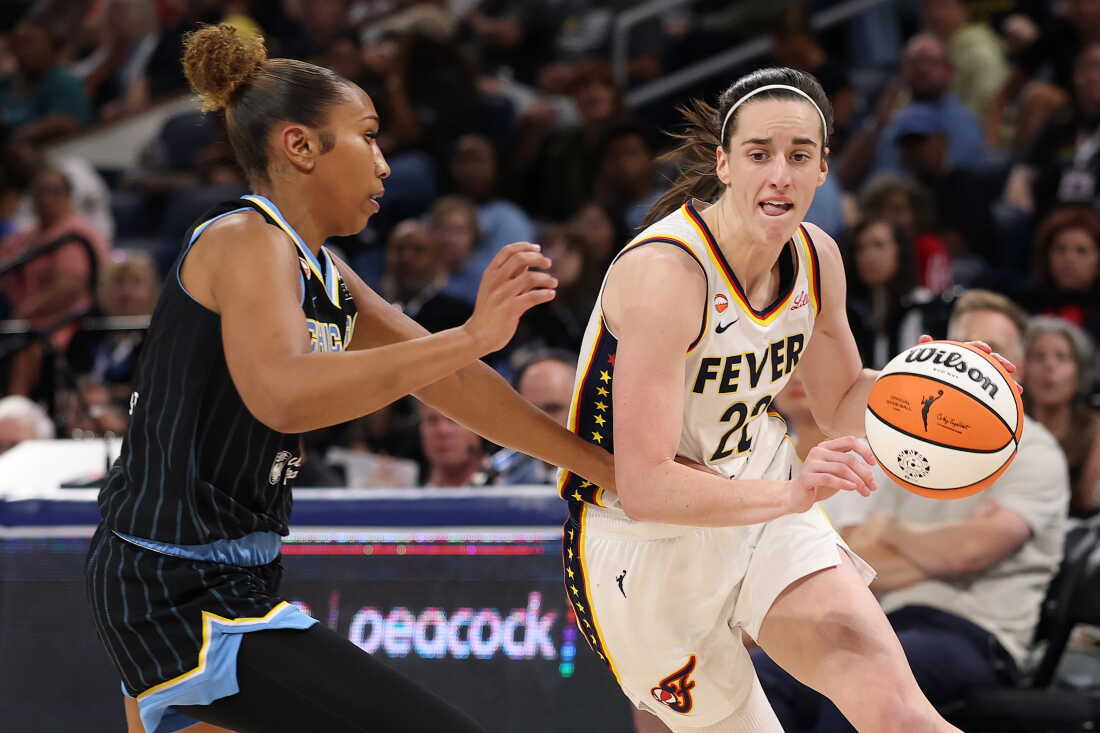
The Women’s National Basketball Association (WNBA) is experiencing significant growth in 2023. Viewership and attendance have increased, team valuations are rising, and a new $3.1 billion media rights deal has been signed. Sabreena Merchant, a journalist covering the WNBA for The Athletic, highlights the talent and quality of play in the league, describing it as the best it has ever been. The upcoming 2026 playoff field is open, with no clear title contender.
However, the league faces controversies and culture wars. Since June, Fox News has broadcasted at least 206 segments on the WNBA, often focusing on issues of race and transgender athletes. Merchant notes that the league takes on a political perspective beyond on-court events, becoming a political tool in culture wars. The Chicago Sky is taking steps to protect players off the court by consulting with national security experts, while Commissioner Cathy Engelbert plans to step down by year-end. Merchant suggests a need for a commissioner who can control the WNBA’s narrative better, to avoid its use in political disputes.
Physicality in the WNBA
The increased physicality in the WNBA has sparked discussion. Merchant attributes some objections to this physicality to misogyny. Certain individuals believe that women should be protected from physical challenges like those encountered in sports. This belief stems from skepticism about women’s participation in professional athletics altogether.
Caitlin Clark’s Impact and Concerns
Caitlin Clark of the Indiana Fever emerged in 2024 and significantly boosted the WNBA’s popularity. Her games regularly break viewership records, and she draws a strong fan following, contributing to the league’s growth. Despite her popularity, there’s controversy regarding special treatment. Allegedly, she receives favorable treatment from the NBA, something NBA Commissioner Adam Silver acknowledges publicly, though WNBA Commissioner Cathy Engelbert remains silent. Certain perceptions suggest that Black players defend Clark more aggressively due to her non-marginalized fanbase, but data indicates that she draws more fouls than other guards, implying fair play.
Transgender Athlete Debate
Sophie Cunningham of the Indiana Fever expressed opposition to transgender women in women’s sports, making her the first active WNBA player to voice such views. Her comments sparked debate about the inclusion of transgender athletes. While the WNBA has no stated policy on transgender players, there has been no historical presence of transgender athletes in the league. The NCAA also lacks integration, making the discussed issue largely theoretical.
Officiating Quality
Many players acknowledge that WNBA officiating doesn’t match the league’s playing quality. The league employs part-time officials who often work in college basketball, impacting consistency. The WNBA lacks full-time officials, leading to perceived inadequate officiating. This gap arises because talented referees from the G League often advance to the NBA, not the WNBA.
Supplementing Salaries Overseas
Before the 2026 collective bargaining agreement, the average WNBA salary was just over $100,000, prompting players to earn more overseas in countries like Russia and Turkey. This year-round competition left little time for rest and family. Star players like Diana Taurasi even earned more for not playing in the WNBA. The new agreement raises the average salary to about $600,000. A revenue-sharing component ties WNBA salaries to league revenue increases, including media and ticket sales.
Leave a Reply