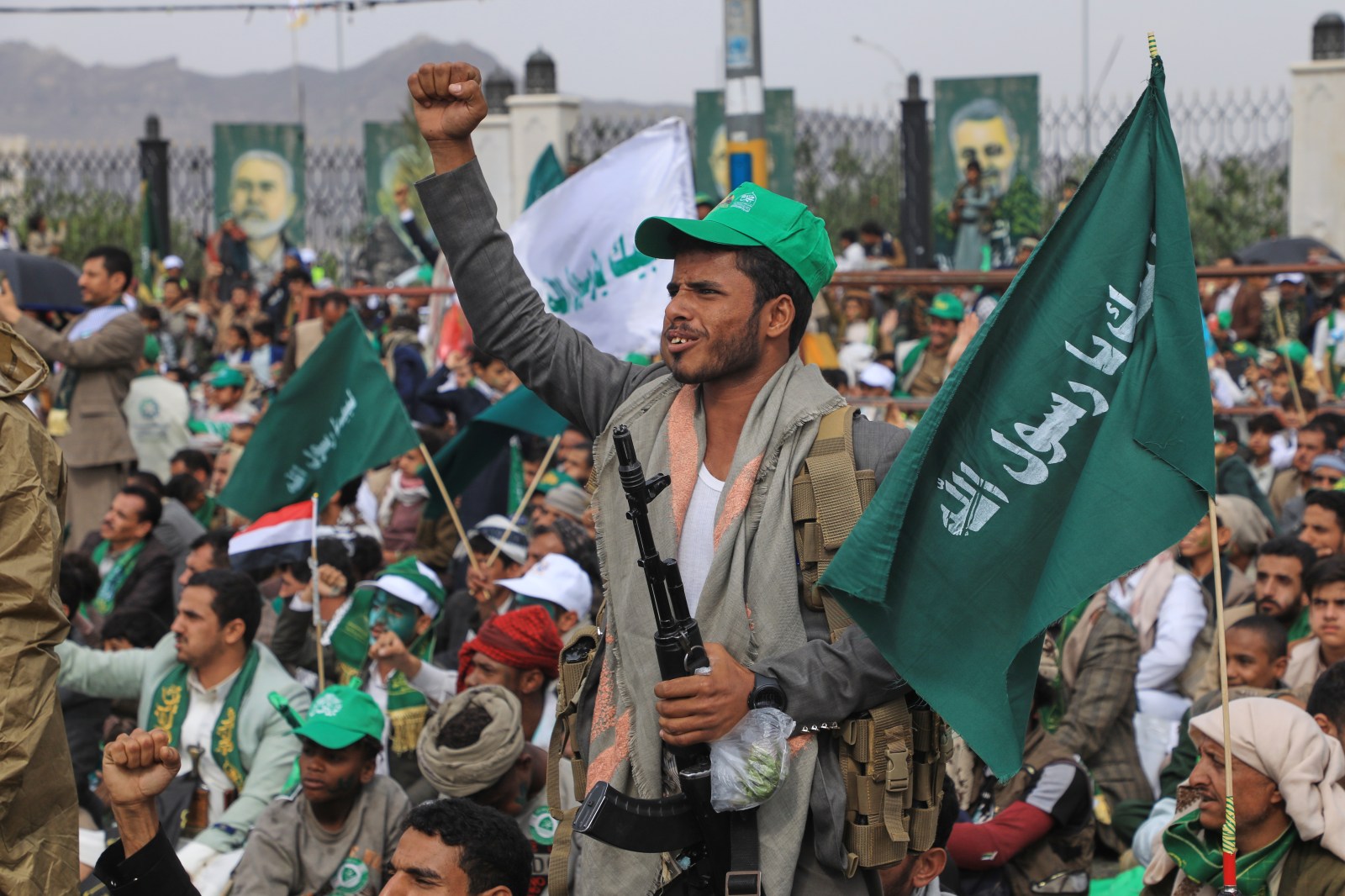
The 19th-century Prussian strategist Helmuth von Moltke the Elder famously asserted that no battle plan survives first contact with the enemy. If Iran had not already imparted this lesson to President Donald Trump, the Houthis in Yemen now ensure he grasps it thoroughly. By most conventional power metrics, Ansar Allah seems negligible compared to the major powers influencing the Middle Eastern conflict. This non-state group from one of the poorest nations stands against countries with immense defense budgets, vast economies, and nuclear capabilities.
Nevertheless, the Houthis have become adept at complicating the conflict further for the White House. This week, their rapid offensive—targeting Saudi cities and energy assets while seizing strategic territories along the Red Sea—presents another challenging equation for Washington.
One War, Two Chokepoints
For half a year, global attention centered on the Strait of Hormuz. Now, another crucial waterway demands focus. The Houthis captured the port of Mokha on the Red Sea on Thursday, advancing to Mayun Island on Friday. This volcanic island lies within the Bab el-Mandeb Strait, a significant pass that connects the Red Sea to the Gulf of Aden and through which about 12% of global trade usually flows.
Bab el-Mandeb was already precarious before Operation Epic Fury began. Between November 2023 and October 2025, the U.S. Maritime Administration logged over 100 distinct Houthi attacks on commercial vessels, affecting more than 60 nations. While the Strait of Hormuz was safe, this risk was manageable.
This situation changed as the capture of Mokha port and Mayun Island grants the Houthis a tangible presence in an area now deemed another critical chokepoint. U.S. Energy Information Administration data indicates a sharp decline in oil and petroleum-liquid shipments through Hormuz, falling from 21.6 million barrels daily in late 2025 to 4.9 million in mid-2026. Simultaneously, flows through Bab el-Mandeb increased from 5.4 million to 8.1 million barrels a day as Saudi Arabia redirected crude exports to the Red Sea.
This foothold within Bab el-Mandeb also provides Tehran a potential advantage over Washington. Last month, Iran’s Supreme National Security Council outlined the cessation of attacks on its allies in Yemen, Lebanon, Palestine, and Iraq as one of six prerequisites for reopening Hormuz completely. An Islamic Revolutionary Guard Corps spokesperson recently emphasized the inclusion of Yemen in any agreement with the United States.
Earlier this summer, Trump had the opportunity to negotiate with Tehran over a single strait; now, both must account for an additional factor. Each day, the White House’s engagement in the Middle East grows more strategically complex.
Challenges for Saudi Arabia
The Houthi progress escalates the challenges for one of the region’s significant but vulnerable participants: Saudi Arabia. Riyadh was already strained by the struggle over Hormuz. Saudi oil production fell to 6.2 million barrels a day in August, marking its lowest output since 1990, while exports marked a 13-year low.
Currently, the Houthis have targeted Abha, Khamis Mushait, Jazan, and Najran, injuring 73 individuals and igniting energy installations. Satellite images suggest considerable damage to Saudi Arabia’s East-West oil pipeline, the infrastructure crucial for circumventing Hormuz.
About five weeks ago, Riyadh entered into the Mecca Joint Defense Agreement with Turkey and nuclear-armed Pakistan—a landmark alliance formed in Islam’s holiest city. Named the Muslim NATO, this coalition shares the principle of collective defense.
However, once Houthi missiles hit Saudi cities earlier this week, Crown Prince Mohammed bin Salman reached out to Washington instead of Islamabad or Ankara. He requested the U.S. President to conduct retaliatory actions against Houthi positions. Trump refused but agreed to supply Riyadh with intelligence and targeting information, as reported by Axios.
This event does not nullify the Mecca pact. Given that it’s under 40 days old, Turkey and Pakistan are not automatically compelled to attack the Houthis. Support may come in the form of intelligence, logistics, or ammunition, and Saudi Arabia must specify the aid it requires before its partners act. Yet the Houthis demonstrated that, in a crisis, Riyadh quickly turns to its Atlantic ally, even as it advocates for greater regional security autonomy.
Leave a Reply