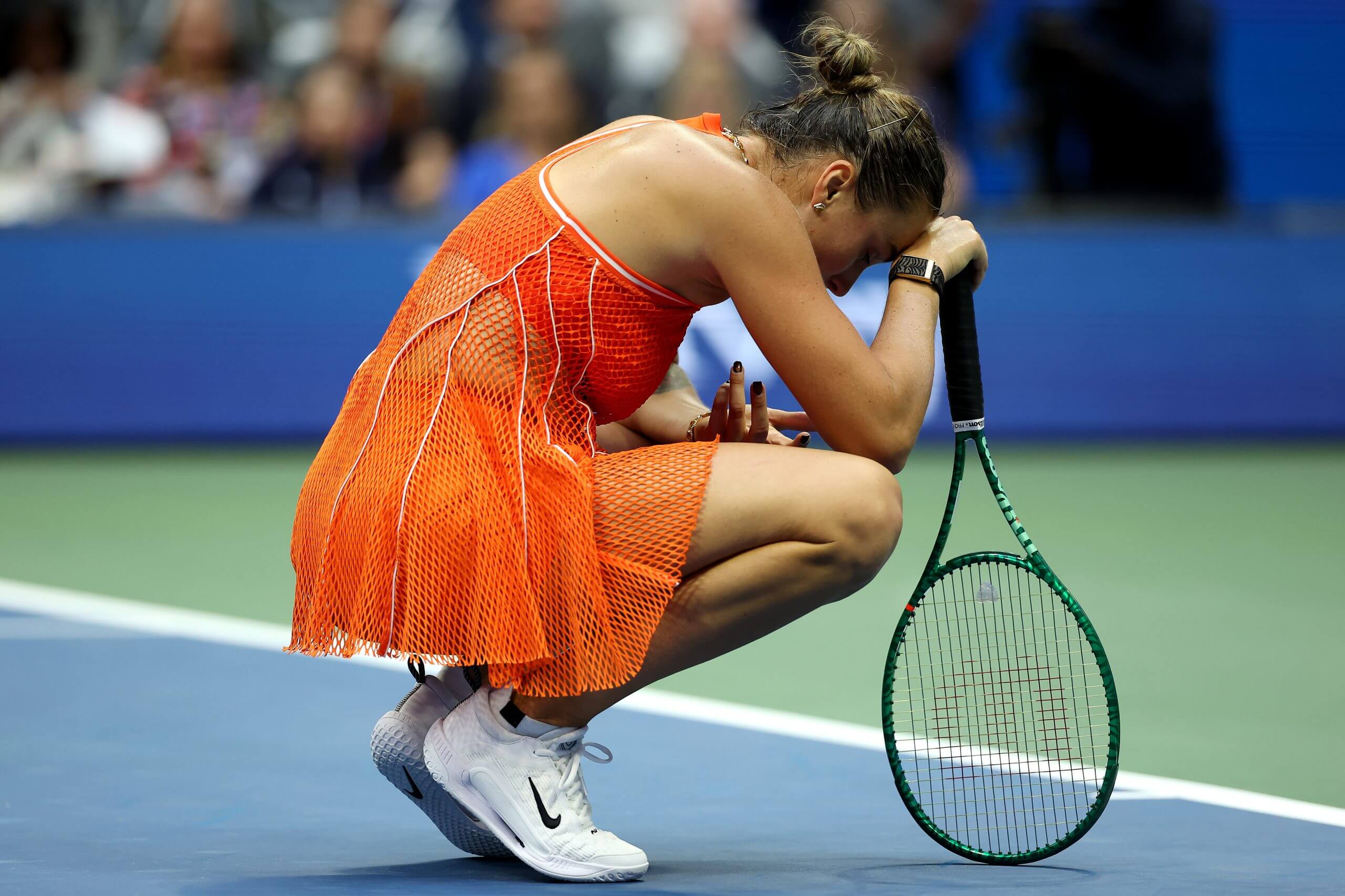
Aryna Sabalenka found herself without a Grand Slam title in 2024 for the first time since 2022. Following a fourth-round loss to Naomi Osaka at Wimbledon, Sabalenka, in a BBC interview, acknowledged the players who surpassed her in tournaments this year. She then added, ‘Let’s see if they can do it consistently.’
As a four-time Grand Slam winner, Sabalenka understands the demands of remaining at the top in women’s tennis. The sport thrives on young, ambitious champions and requires unwavering focus nearly year-round. Reaching the pinnacle is only the beginning.
The 28-year-old from Belarus, once celebrated as a ‘good world No. 1,’ will see U.S. Open champion Elena Rybakina take over her top spot. Such compliments suggest a player fulfills expectations by avoiding losses to lower-ranked opponents and consistently performing in semifinals and finals.
Sabalenka has upheld these expectations and more. She has refined her powerful game, enhancing her net play and adding variety. This year, she reached two Grand Slam finals, including the Australian Open, and claimed victories at Indian Wells and Miami.
Alongside her athletic achievements, Sabalenka secured new endorsement deals with luxury brands, became engaged, and got a dog. However, her stronghold on the sport has weakened. Despite her emotional volatility on court, her consistency is noteworthy. She aimed for a third consecutive U.S. Open title, a feat only accomplished by Serena Williams and Chris Evert.
During the tournament, Sabalenka became the first player in the Open Era to reach eight consecutive Grand Slam finals on hard courts. Nevertheless, her Grand Slam finals record stands at 4-5. She ends the year without a major title, and loses her No. 1 ranking held since October 2024 due to no apparent flaws in her playing.
Sabalenka noted the mental and physical challenges of maintaining top performance. She remarked, ‘Probably [people] don’t understand how hard it is mentally and physically to keep up the level.’ She also acknowledged her struggles to remain disconnected from the pressures of being No. 1.
Her defeat was evident on Saturday; unable to leverage Rybakina’s poor serving start, she never found her rhythm. Sabalenka expressed her frustration physically, breaking a racket and hitting herself on the head during the match.
In her post-match speech, Sabalenka, emotional yet composed, congratulated Rybakina while reflecting on her performance. Tired from the season and her time in New York, she lacked the focus and energy needed to defeat Rybakina.
Sabalenka’s post-match media interactions were largely formulaic. However, she was pleased to notice crowd support during her U.S. Open finals absence of American opponents and acknowledged this moment.
Discussing her anticipation of losing the No. 1 title, she remained optimistic, viewing her 99-week tenure as a significant accomplishment. Responding cheekily, she said, ‘Let’s see if Elena can beat me in that.’ Facing the upcoming changes, Sabalenka’s seasoned perspective continues to shape her journey in the sport.
Leave a Reply