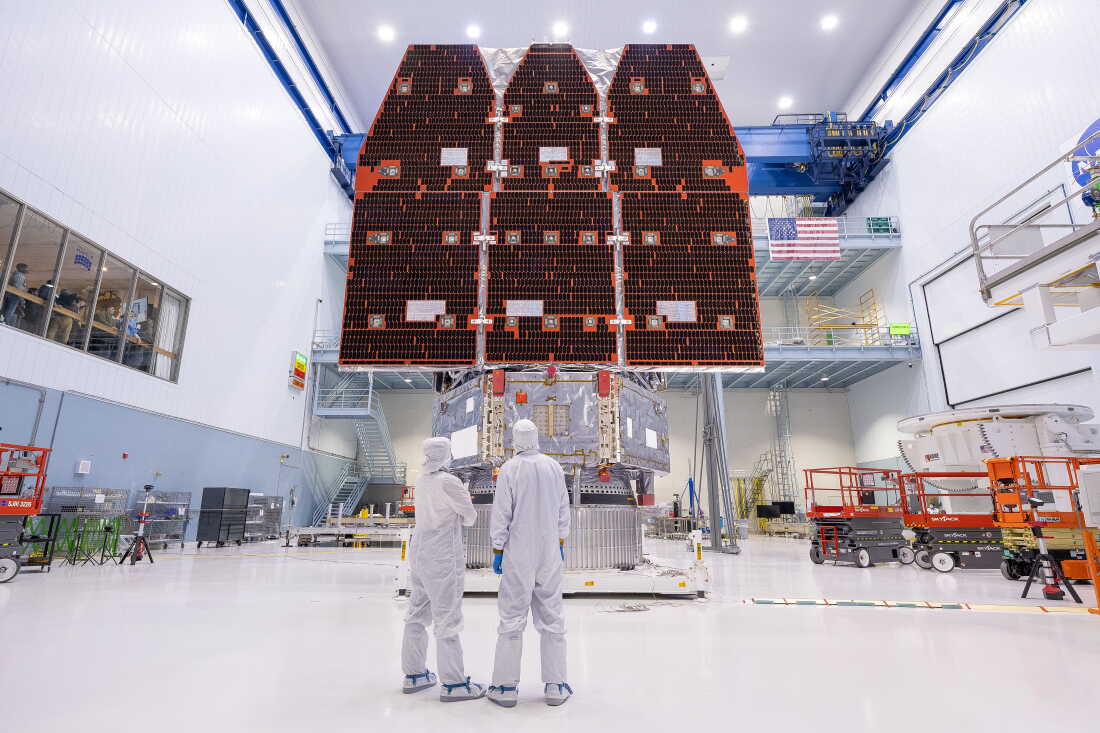
Technicians are scheduled to connect the inner and outer segments of NASA’s Nancy Grace Roman Space Telescope in 2025 at the Goddard Space Flight Center in Maryland. This crucial stage follows the telescope’s launch from Kennedy Space Center last month, which had engineers on edge due to the significant expectations resting on the mission. The telescope is tasked with gathering unprecedented information on the universe’s expansion and detecting hidden planets.
Years of preparation and a $4 billion investment culminated in this launch. However, even the slightest oversight could jeopardize the mission’s success, especially since teams at Goddard faced unstable conditions. NASA’s management swiftly relocated scientists from various labs at Goddard over the past year, affecting the Roman telescope project. Engineers resorted to using lower quality tools because better equipment was misplaced during these moves.
Additionally, a radio communication lab lost almost all its equipment, hindering its ability to test Roman’s antenna. Seven current and former NASA scientists and engineers at Goddard expressed that the relocations led to a loss of specialized workspaces and critical equipment, impacts they could not speak of without fear of retribution.
Internal documents revealed that NASA’s management justified these moves as cost-cutting measures. The relocations were part of a broader plan to reduce maintenance expenses, but workers argue that these decisions are undermining NASA’s mission. Goddard previously played a pivotal role in building spacecraft for the U.S.’s space endeavors, a capacity now compromised.
Enabling such high-stakes projects require tailored facilities, like clean rooms used in 2024 to assemble the Roman telescope. Engineers, including Jack Kiraly from the Planetary Society, voiced concerns about the increased risks posed by compromised conditions, highlighting the billion-dollar taxpayer investments involved.
One engineer cited complications with launching the GRITSS satellite, rushed due to inadequate preparation facilities at Goddard. Scientists anticipated the satellite’s vital role but emphasized its untested capacity to fulfill objectives due to disrupted communication testing.
The relocations, conducted during a government shutdown, deprived engineers of their equipment and unique facilities, preventing mitigation of losses. Engineers shared frustrations over barred recovery of valuable materials and facilities, noting instances of mishandled equipment auctions.
Barbara Thompson from NASA’s Center for HelioAnalytics described seeing equipment and materials unnecessarily discarded as unethical, knowing taxpayer dollars funded those resources. Reports indicated that significant equipment was auctioned off, including items restricted due to national security concerns. Despite auction checks and procedures, these proceedings remain controversial.
NASA’s equipment donations, often unconsented by scientists, further complicated operations. A radio communications lab’s equipment was given to Capitol Technology University without prior knowledge, leading to disputes about its rightful use.
This situation emerged amidst a drastic federal workforce reduction. Goddard experienced significant staff cuts by 2025, leaving it ill-equipped to fulfill its mission. As more scientists leave, concerns grow regarding NASA’s capability to maintain past standards.
In light of potential future budget reductions, NASA’s ability to conduct large-scale missions is uncertain. Engineers, once vital to building propulsion systems, now pack labs unsure of their role in future projects.
Leave a Reply