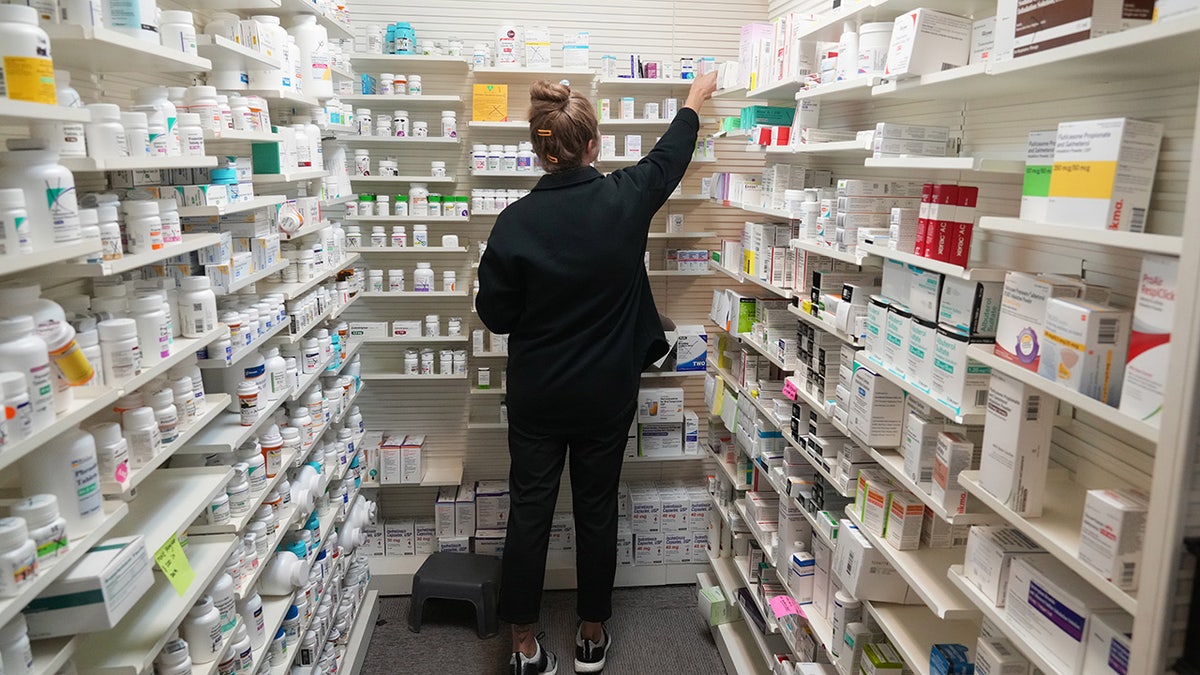
The United States currently produces around 3% of the world’s active pharmaceutical ingredients, while China produces 45%. A Johns Hopkins study indicates that China provides over 60% of the key components needed by American manufacturers for antibiotics. This situation extends beyond a mere trade imbalance and impacts national sovereignty.
The wellbeing of the U.S. military, government officials, children, and citizens depends on an adversary who might manipulate not only the availability and accessibility of crucial medications but also their safety.
Decades of offshoring have diminished the American industrial base, resulting in the loss of important manufacturing jobs to other countries. In 1981, the United States contributed 25% of global pharmaceutical ingredients, but today, nearly half of the market is under China’s control. This dependence threatens national governance. A country that cannot produce its own antibiotics or control adversary-sourced chemicals is at a disadvantage.
The Council on Foreign Relations calls this situation a “pharma choke point.” The dependency is deep and extends from generics to advanced biologics.
China has shown willingness to manipulate supply chains, as evidenced by actions with rare earths and defense-critical materials. The Chinese Communist Party might treat medicine supplies similarly during a crisis, jeopardizing public health.
Additionally, the same networks distributing Chinese precursors to American pharmacies also fuel the fentanyl pipeline through Mexico. Research highlights an adaptive supply chain where Chinese suppliers and Mexican cartels work together. This system delivers chemicals cheaply and efficiently across borders, creating significant impact in U.S. regions such as the Midwest.
Congress has started to address this issue. The BIOSECURE Act, passed in December 2025, limits federal procurement from certain foreign companies. Previous executive actions also targeted the synthetic opioid supply chain with tariffs. These measures matter, but more action is needed.
Legislation alone cannot establish manufacturing facilities or create jobs domestically. Investments in domestic production are essential to reduce reliance on China and secure supply chains. Ohio serves as an example, developing into a semiconductor manufacturing hub by leveraging investment and a skilled workforce. CNBC recently named Ohio as the top state in the U.S. for business and infrastructure.
Developing domestic pharmaceutical production offers two benefits: it ensures job security and alleviates defense vulnerabilities.
The health of the nation depends on not being limited by an adversary’s decisions regarding medicine supply.
The U.S. must prioritize building manufacturing plants, repatriating jobs, and achieving medical independence. Failure to act now could result in severe consequences if adversary nations exploit shortages in critical medicine supply.
Securing borders from dangerous chemical imports and ensuring military readiness with homegrown pharmaceuticals are key objectives. Addressing these challenges involves domestic capacity building, making pharmaceutical independence a national goal.
Tricia McLaughlin formerly served as Assistant Secretary for Public Affairs at the Department of Homeland Security during the Trump administration.
Leave a Reply