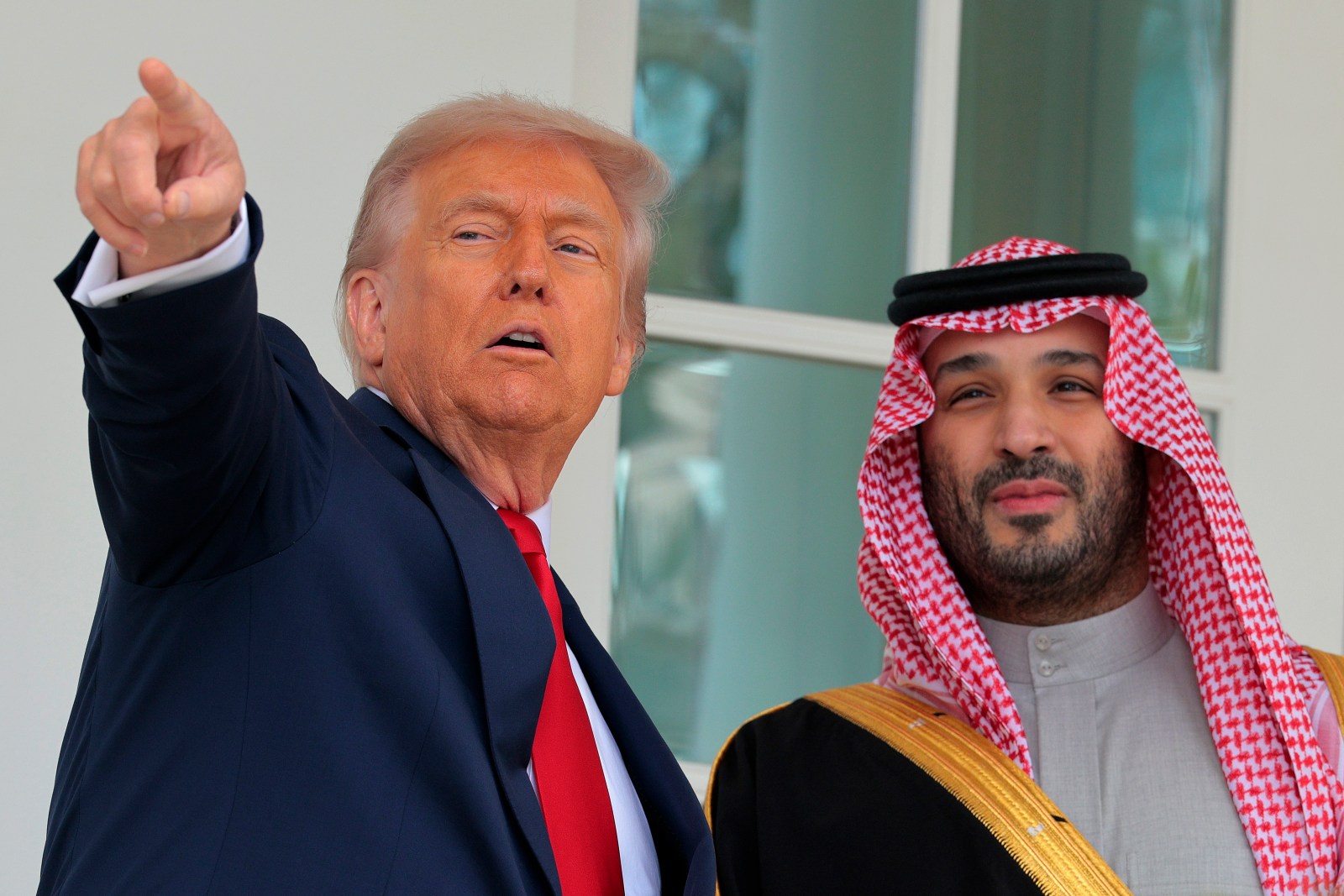
The White House’s recent approval for selling advanced F-35 fighter jets to Saudi Arabia highlights President Donald Trump’s strategy to redistribute the burden of Middle East deterrence to regional partners. This action represents a significant shift in U.S. foreign policy, and its risks are manifold.
Shift in Military Alliances
This decision requires congressional approval, and the jets’ delivery will take years, delaying immediate effects on the region’s economic challenges such as rising oil and gas prices. The conflict between the U.S. and its Middle East allies against Iran and its coalition exacerbates these issues.
Critics, including Israeli officials, express concerns over the potential impact on Israel’s Defense Forces’ superiority. The fear of U.S. military technology exposure to foreign powers, such as China, complicates the deal dynamics, considering China’s relationship with Saudi Arabia.
Strategic Partners in a Complex Region
The sale signifies a period of uncertainty for Washington and Riyadh, with Saudi Arabia facing significant conflict with Yemen’s Iran-aligned Ansar Allah. Former Saudi diplomat Saad Abdullah Al Hammad highlighted this sale as transformative for traditional security alliances, particularly as the U.S. reduces direct military support to Riyadh in the Yemeni conflict.
This new approach aligns with Trump’s policy of empowering allies with advanced defensive capabilities rather than direct engagement. Saudi Arabia, under Crown Prince Mohammed bin Salman, seeks more autonomy in its defense apparatus, addressing the variance stemming from shifts in U.S. administrations.
Saudi Arabia has historically maintained strong ties with the U.S. post-World War II but is diversifying through relationships with China, Russia, and a mutual defense pact with Pakistan and Turkey. The F-35s will provide the Royal Saudi Air Force with modern capabilities to counter regional threats such as missile and drone attacks.
Challenges to Israel’s Military Edge
For Israel, Saudi Arabia’s acquisition of F-35s challenges its qualitative military edge, a sensitive issue within U.S.-Israel relations. The U.S. sold its first F-35s to Israel in 2010, which have since been a cornerstone of its regional military strategy.
While Israeli Prime Minister Benjamin Netanyahu initially showed conditional acceptance of Saudi’s F-35 ownership tied to diplomatic relations, this has not materialized. The sale proceeds amidst broader geopolitical shifts, including Turkey’s controversial efforts to obtain F-35s, which Israel views critically.
Economic and Geopolitical Stakes
The F-35 deal impacts not only military dynamics but also economic and diplomatic engagements. Observers believe that as Trump drives a burden-sharing agenda, Saudi Arabia may lean towards diplomacy to navigate relations with Iran and its allies.
Ansar Allah’s readiness for escalation underscores the complexities facing Saudi Arabia. Meanwhile, some voices, like former U.S. State Department official Annelle Sheline, advocate for diplomatic resolutions to avoid prolonged conflict.
As tensions drive U.S. fuel prices higher, energy market disruptions compound difficulties, with refined products particularly vulnerable due to regional instability. Amy Myers Jaffe, energy expert at New York University, points to these challenges impacting consumer prices.
Nevertheless, Al Hammad asserts that Saudi Arabia prioritizes deterrence and crisis management. Riyadh’s preference for stability ties into its developmental goals under Saudi Vision 2030, which requires an environment conducive to investment, rather than one marred by conflict.
Leave a Reply