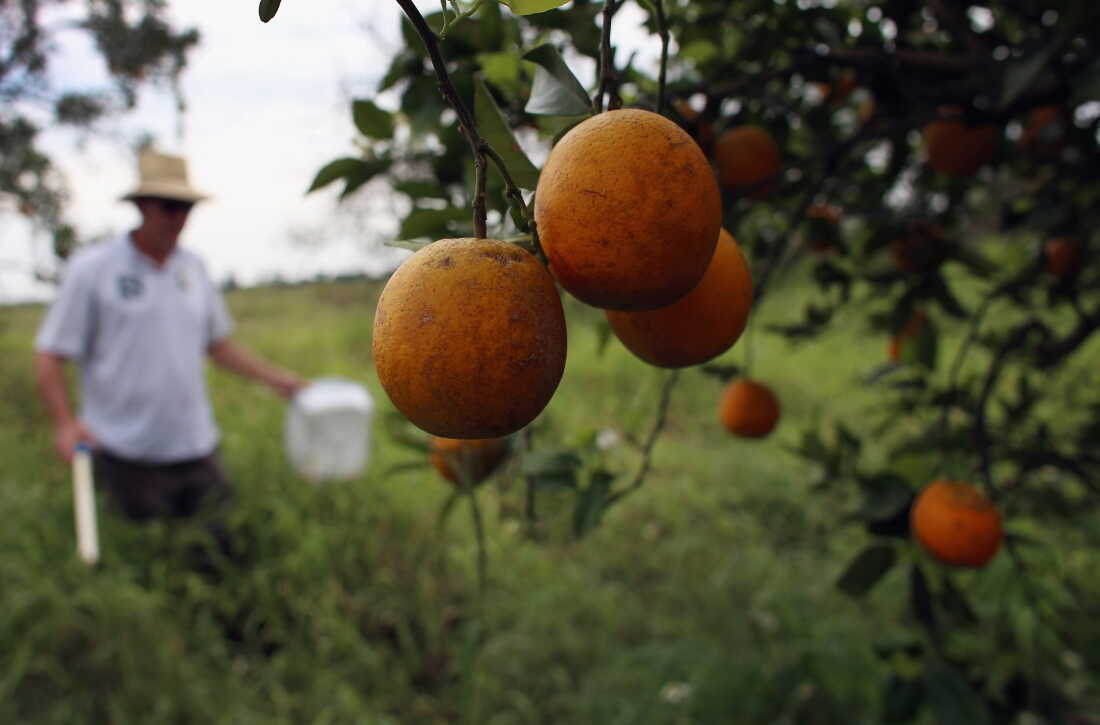
In Florida, citrus growers plant new trees modified through gene-editing technology. These modifications aim to combat the deadly citrus greening disease. This disease has significantly reduced Florida’s citrus production, despite past efforts involving tents and sprays to guard trees against infection.
The Environmental Protection Agency approved these genetic modifications earlier this year. Growers now hope that these changes will preserve tree health.
The Impact of Citrus Greening
Citrus greening arrived in Florida in 2005. A small winged insect, the Asian citrus psyllid, spreads the disease. It weakens a tree’s immune system, leading to bitter and discolored fruit. Infected trees typically die within a few years, and currently, there is no cure.
Ron English’s citrus business in Valrico, Florida, suffered devastation due to greening, closing in 2015. Before the disease hit, Florida citrus growers shipped about 300 million boxes of fruit each season, according to Matt Joyner, CEO of Florida Citrus Mutual. This year, that number dropped to slightly over 15 million boxes.
Innovative Gene-Editing Approach
Soilcea, a Tampa-based company, used CRISPR gene-editing to develop a rootstock called CarriCea T1, resistant to greening. This advancement allows the tree’s immune system to function properly, reducing reliance on insecticides. CEO Yianni Lagos emphasized the importance of the rootstock in combating the bacteria. He noted that yellowing leaves, the first sign of infection, indicate that half the root system is already compromised.
Ron English showcases test field results with CarriCea T1 rootstock in Thonotosassa, Florida. Trees with this rootstock display taller and greener growth. English compares them to unmodified counterparts, highlighting the size difference and yellowing leaves due to disease.
Waiting for Long-Term Results
The true test for CarriCea T1 lies in future fruit production, which takes years to assess. Lagos explained that although current data is promising, the long-term performance of a 10-year-old tree remains uncertain.
Leave a Reply