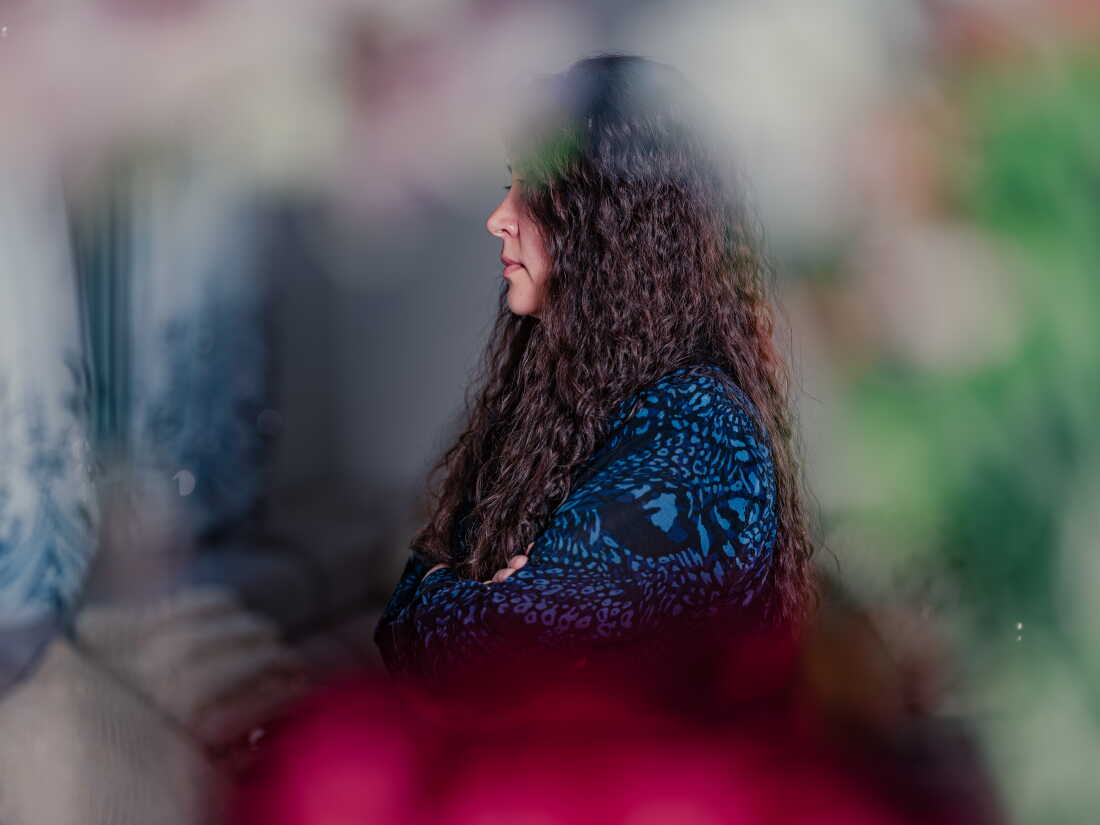
When Afghanistan came under Taliban control in 2021, 33-year-old S. was among those who escaped. S. has three children, but only her youngest managed to leave Afghanistan with her and now lives in California. Her other two children, a daughter, 14, and a son, 9, remain in Kabul. To protect her family still in Afghanistan, S. requested NPR to use only her first initial.
In Fremont, California, a dozen men and women gather every other Thursday. They share mixed immigration statuses at the Afghan Coalition, a non-profit aiding Afghan immigrants and refugees in integrating into American life. Some attendees have resided in the U.S. for years and hold citizenship, while others are recent arrivals waiting for green cards. Their meeting focuses on staying safe from U.S. immigration enforcement, not hate groups or Islamophobia.
Freshte Ahrar, a case worker with the Council on American-Islamic Relations, conducts a “know-your-rights” session. She explains search warrants, the right to remain silent, and answers questions about immigration agents asking for phone passcodes. “No one is safe,” Ahrar warns. “Not U.S. citizens, not green card holders, no one.”
Fremont, known as “Little Kabul,” has attracted around 100,000 Afghans over the years. Jane Tyska’s photograph highlights this multicultural community, reinforced by historical migration waves. Altogether, they have established shops and community spaces, contributing to California’s cultural mosaic.
Immigration policies have triggered fears among U.S. Afghan communities since Trump resumed office. Hours after his inauguration, Trump ordered more stringent immigrant and refugee vetting. A subsequent travel ban restricted entry for nationals from multiple countries, including Afghanistan, and terminated Temporary Protected Status for Afghans. This policy shift, following the 2021 evacuations, affected many who fled Taliban rule.
The suspect in a November 2025 incident, Rahmanullah Lakanwal, was linked to the shooting of two National Guard members near the White House. The Trump administration’s response was a comprehensive examination of Afghan nationals who entered the U.S. under the Biden administration. USCIS paused all immigration requests concerning Afghan nationals. This has fueled anxiety within the Afghan community.

The Trump administration has seen a rise in U.S. Immigration and Customs Enforcement detentions, from about 39,000 in January 2025 to approximately 67,000 in July 2026, as reported by the U.S. Government Accountability Office. Immigration attorneys are assisting Afghans facing visa revocations and suspended immigration applications, a situation fueled by the administration’s evolving policies.
In Fremont, a city offering a mild climate reminiscent of their homeland, Afghans have found a community. Amidst cultural establishments like mosques and bakeries, a quiet unease prevails. Ahrar’s sessions teach attendees to handle situations ranging from traffic stops to airport screenings. “If questioned about political or religious views, don’t answer,” advises Ahrar. In extreme cases, like arrest, staying calm and calling for legal assistance is crucial.
This climate of fear affects those who fought alongside Americans against Taliban forces. Some, like Ahmad, fled Afghanistan after dedicating years to U.S. Embassy work in Kabul, where he promoted democratic values and education. Now in Concord, California, Ahmad teaches “know-your-rights” sessions, helps immigrants, and lives in immigration limbo, fearing potential scrutiny from ICE.
Ahmad questions his future; his immigration status remains uncertain despite his contributions to society. “What if my current status isn’t approved? What if someone knocks on the door?” he questions, living with a constant underlying fear.
Responding to inquiries, a Homeland Security spokesperson mentions that those legally residing and not breaking laws have nothing to fear. However, the absence of systematic vetting during the Biden-era parole program has added to community concerns.
The story of S., who left her elder children behind during a chaotic airport situation, reflects both the opportunities and challenges faced by Afghan-refugee families. Her youngest child now attends kindergarten separated from siblings, whom he only sees through video calls.
S.’s story exposes the dichotomy of her experiences in Afghanistan and the U.S. As a child, she admired the U.S. troops who encouraged her education. Now, after working with the U.S. as a linguist on drug and smuggling investigations, she feels betrayed. Trying to reunite her family under current immigration restrictions adds to her distress.
Despite her ongoing struggles, including years of legal battles to bring her children to the U.S., S. remains resolute. “I’m not going to give up,” she insists. But the absence of her children is irreplaceable, creating emotional challenges amid the fight to reunify. Her past allies in the U.S. now represent a government she no longer trusts.
Leave a Reply