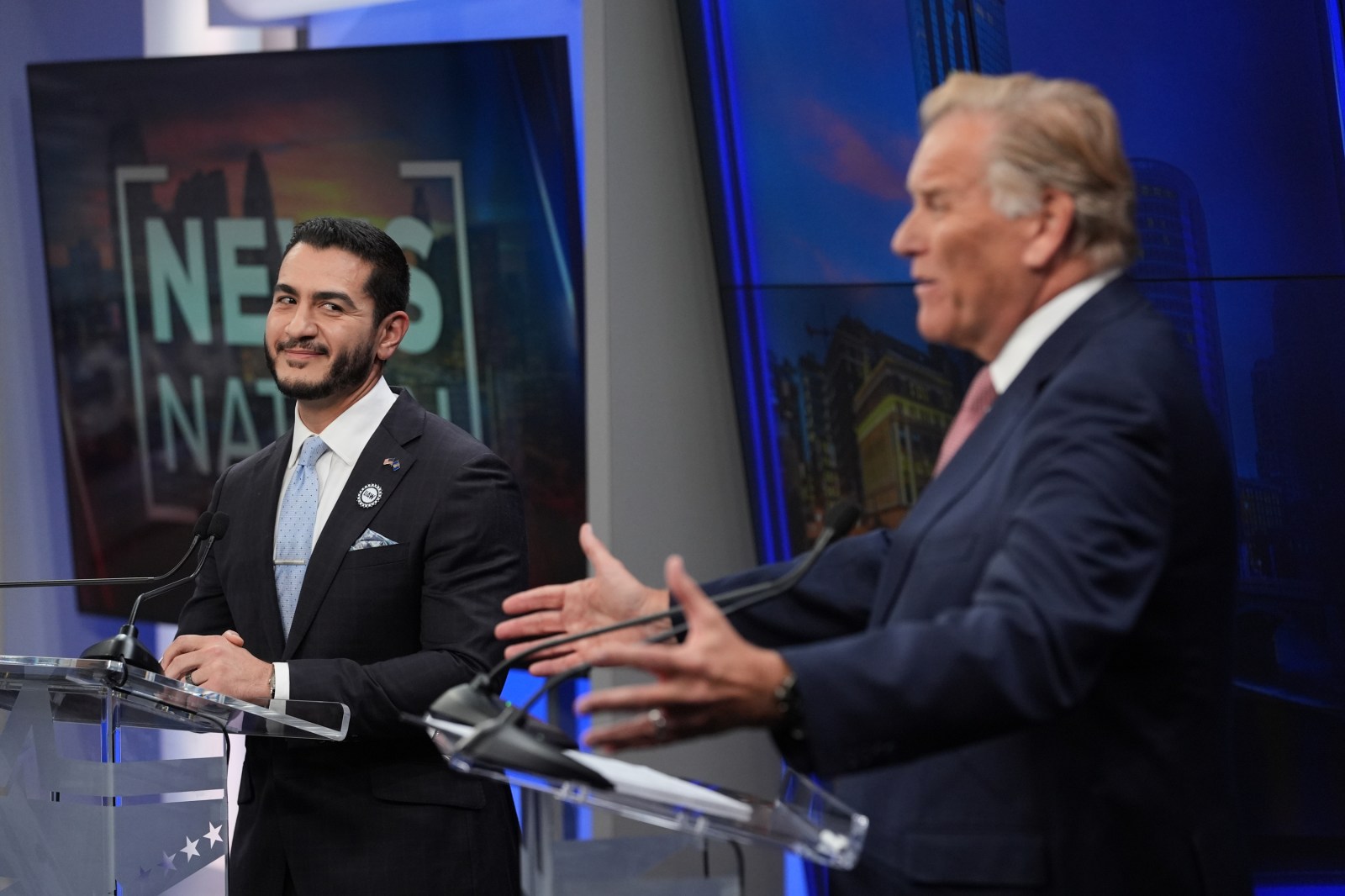
Republicans are aiming for a significant victory in Michigan, where the Senate seat has been under Democratic control since 1979. With the election date set for November 3, the contest between former Representative Mike Rogers and Democrat Abdul El-Sayed is highly competitive. The seat became available when Democratic Senator Gary Peters chose not to seek a third term. Democrats have maintained this seat since Carl Levin defeated Republican Senator Robert Griffin in 1978, with Levin serving for 36 years before Peters took over in 2015.
A win for Rogers would also break a long losing streak for Republicans in Michigan, as the party has not won a Senate race in the state since Spencer Abraham’s victory in 1994.
Polling and Race Dynamics
El-Sayed holds a slight edge in several polls conducted this month, though most remain within the margin of error. The Cook Political Report classifies the race as a Toss-Up. Both parties view it as crucial for determining control of the Senate.
Rogers, who came within 20,000 votes of defeating current Senator Elissa Slotkin in 2024, has President Donald Trump’s endorsement and faced no primary opponents. El-Sayed, a progressive figure and former public health official supported by Senator Bernie Sanders, narrowly defeated Michigan Representative Haley Stevens in the Democratic primary.
Newsweek requested comments from both campaigns via email.
Latest Polls
Recent polls between late September and early October show El-Sayed leading by one to seven points. An InsiderAdvantage poll conducted on October 9-10 found El-Sayed at 48% and Rogers at 46% among 1,200 likely voters, with 5% undecided. A Wedgewood Polls survey conducted just prior recorded El-Sayed at 53% versus Rogers’ 47% among 607 likely voters.
Other surveys placed the race within the margin of error. Quantus Insights had El-Sayed leading 48% to 47% among 744 likely voters polled on October 5-6. YouGov, polling a larger sample of 3,947 likely voters from September 22 to October 4, found a similar one-point gap.
Mitchell Research & Communications polled 682 likely voters on October 1, showing El-Sayed at 46% and Rogers at 41%. Third-party candidates accounted for 7%, while 6% remained undecided. El-Sayed’s largest lead came from a Z to A Research poll, which was sponsored by Rust Belt Rising, a Democratic group, showing him ahead 49% to 42%.
Earlier polls showed different results. One poll conducted before the primary for the Michigan Education Association and Business Leaders for Michigan had Rogers leading El-Sayed 48% to 41% among voters certain to vote, whereas Stevens led Rogers by 2 percentage points.
Historical Context and Party Dynamics
At the presidential level, Michigan swings between parties, favoring Trump in 2016 and 2024 and Biden in 2020. Senate races have consistently favored Democrats for nearly 30 years. Republicans see Rogers’ previous close race against Slotkin as a sign of potential victory, with Trump, Senate Majority Leader John Thune, and the national party backing him early on.
The Democratic primary presented another opportunity for Republicans. Although many in the party supported Stevens, El-Sayed’s win created a divided coalition. Some Jewish community members have voiced concerns over his past comments on Israel.
Republicans have targeted El-Sayed with an ad campaign, highlighting his Muslim faith and characterizing him as radical. Senator Tim Scott, chair of the National Republican Senatorial Committee, called El-Sayed “dangerous” and unfit for office. Trump’s remarks at a recent debate intensified these attacks.
El-Sayed responded by stating these attacks target a broader community and highlighted his U.S. birth and Egyptian immigrant roots. Sanders defended him, criticizing Republicans for focusing on his faith instead of policy issues.
Rogers has begun distancing from the White House on some issues. In September, he advocated for ending the ongoing conflict with Iran and criticized Trump’s tariffs against Canada.
El-Sayed countered by associating Rogers with the Trump administration’s policies, particularly on economic issues affecting Michigan.
Recent Developments
Rogers and El-Sayed faced off in their first debate on October 8 in Grand Rapids. Both candidates frequently interrupted each other, continuing even during commercial breaks.
Rogers maintained his stance on Iran and tariffs with Canada. Later, he voiced opposition to the administration’s tactics on immigration enforcement in Minnesota, where protests turned violent.
El-Sayed faced questions concerning his position on Israel, indicating he opposes using U.S. tax dollars to support warfare abroad. He labeled comparisons with Hasan Piker, known for controversial statements, as unreasonable.
Rogers, in conversation with Ben Shapiro, called El-Sayed anti-American. Meanwhile, El-Sayed counters Rogers’ increased attack by intensifying outreach efforts, despite being outspent in advertising.
Democratic leaders are beginning to unify around El-Sayed. Governor Gretchen Whitmer and Representative Alexandria Ocasio-Cortez have joined his campaign efforts. Former President Barack Obama plans to rally for El-Sayed in an upcoming Detroit event.
The Stakes in Michigan
In the 2026 midterms, the Senate balance could shift. Republicans currently hold a 53-47 majority, with Vice President JD Vance casting tie-breaking votes. Democrats aim to gain four seats to seize control.
While targeting Republican seats in Maine, Ohio, North Carolina, Alaska, and Texas, Michigan remains a key focus for Democrats. Losing here raises the need to flip additional Republican-held seats, making the task more challenging.
A Rogers victory provides Republicans with a strategic advantage, allowing for potential losses elsewhere without sacrificing majority control.
Michigan voters will decide on November 3. Absentee voting is already underway, and in-person early voting begins statewide on October 24.
Leave a Reply