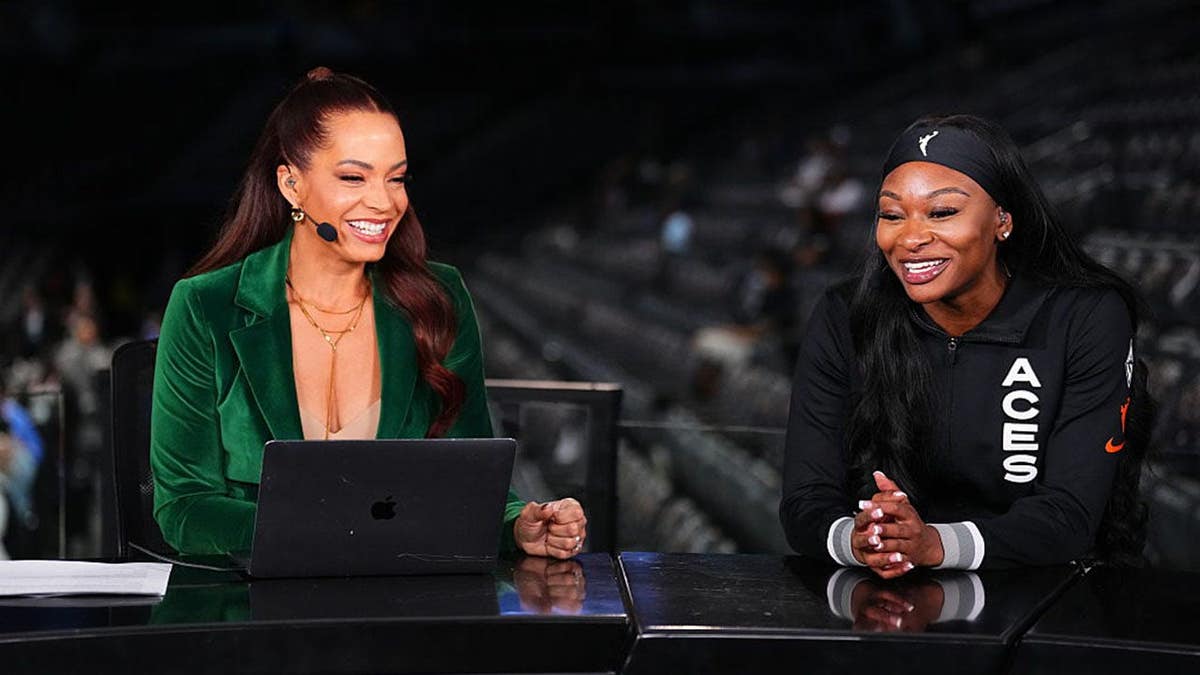
Former ESPN anchor Elle Duncan has sharply criticized the ongoing discourse about the WNBA, describing it as ‘toxic as hell’ and alleging that Black women are specifically targeted in this environment. During a discussion with Front Office Sports, Duncan said, “It feels like open season to dunk on Black women because we do not have protection. Because no one cares. Because we are low-hanging fruit.” She further classified Black women as one of the most marginalized groups, aside from transgender individuals.
Duncan accused some of using Caitlin Clark’s success as a way to undermine Black and queer women in the sport. “It’s twofold for them—so you get to lift this one person up, and you get to, ultimately, reduce everybody else that isn’t her to nothing,” she stated. However, Duncan did not present examples to substantiate her claims about the broader treatment of Black women in the WNBA.
Many dispute Duncan’s narrative. Despite her assertions about a lack of protection, her career at ESPN suggests otherwise. She was hired by ESPN even after a DUI arrest in 2013. Duncan has used her platform to speak on social issues, calling for actions such as moments of silence and criticizing legislative policies. These actions did not lead to disciplinary actions from ESPN, which suggests a level of protection and privilege in her role.
After ESPN, Duncan was hired by Netflix to head its sports broadcasts, showcasing continued professional opportunities. This scenario raises questions about the claims that Black women lack protection, especially within a league predominantly consisting of Black athletes.
Incidents involving WNBA players, such as A’ja Wilson and DiJonai Carrington, further challenge the narrative of lacking protection. Wilson faced no suspension after confronting a fan, and Carrington avoided discipline despite on-court altercations. The media, often sympathetic to Black women during controversies, also supports this perceived protection.
An all-Black female panel on ESPN’s WNBA show has faced criticism for treating Clark differently than Black players, displaying potential biases in media coverage. Duncan’s past actions have not helped in reducing the toxicity in covering the WNBA. Her comments have often escalated racial tensions, framing the success of Clark, a White woman from Iowa, as a manifestation of white privilege.
Instead of acknowledging Clark’s fame as beneficial for women’s basketball, the narrative painted it as problematic. By labeling her fanbase as racist, the divisive environment continued. Critics argue that Duncan and others like her have played a significant role in poisoning the dialogue surrounding the WNBA.
The ongoing discourse around the WNBA has unfortunately become entwined with themes of race, privilege, and social dynamics, obscuring the league’s achievements. By presenting Black women as victims, some believe Duncan is trying to rewrite the narrative to fit a particular viewpoint. This, they say, clouds the larger issue at the heart of the community’s discourse.
Leave a Reply