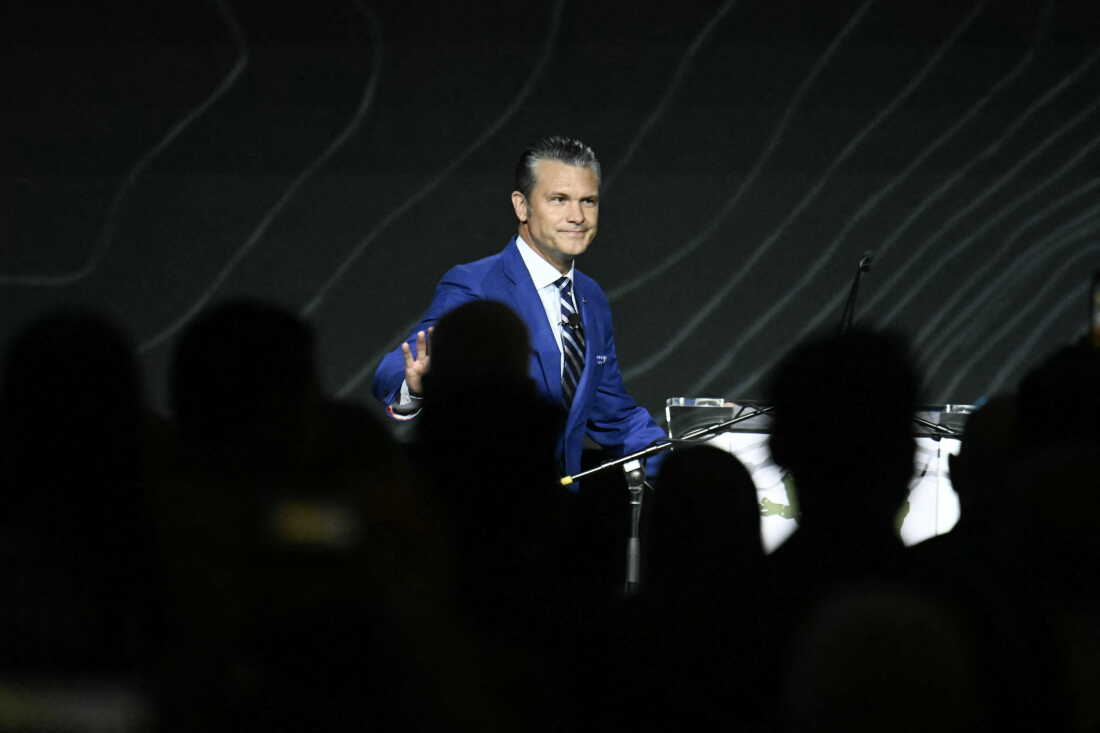
Defense Secretary Pete Hegseth recently discussed the potential live broadcast of the execution of Nidal Hasan, convicted for the 2009 Fort Hood attack. During the Association of the United States Army’s 2026 Annual Meeting in Washington, D.C., Hegseth suggested that making the execution public might deter future crimes.
Hasan, a former army major, is scheduled for execution on December 3. In 2009, he killed 13 people and injured 32 others at Fort Hood. Hegseth proposes the execution be livestreamed, stating the importance of understanding the serious consequences of such actions.
“We’ll make sure that people can watch it, that it’s public, because people need to realize there are serious consequences for these types of things,” Hegseth conveyed in an interview.
Despite the proposal, the idea has sparked significant debate. President Trump indicated they are considering it, whereas Vice President JD Vance expressed he wouldn’t watch it. Some religious scholars express concern about the societal impact of making executions public.
Religious Context and Criticism
Hegseth’s religious affiliations draw criticism from some circles. Julie Ingersoll, a religion professor, expressed concern that public executions push the boundaries of acceptability. She noted that the idea resonates within certain religious groups, like the Communion of Reformed Evangelical Churches (CREC), to which Hegseth belongs. This group holds strong views on implementing the death penalty based on biblical texts.
Matthew Taylor, a scholar at Georgetown University, described Hegseth as a religious extremist with goals aligned with Christian nationalism. These include advocating for ideas outside mainstream American values.
Archbishop Timothy Broglio, representing Catholics in the military, condemned the proposal, urging any Catholics involved to withdraw from participation.
Religious Implications and Potential Bias
Hegseth’s ideas have raised questions about potential bias, particularly concerning Hasan’s Islamic faith. Joshua Salaam from the Association of Muslim Chaplains speculated that his religion may influence the decision to undergo such a public execution.
Ingersoll mentioned the blend of Hegseth’s religious motivations with his hostility towards Islam. The broader concern is the impact of religious beliefs in shaping Pentagon policies.
Cultural and Historical Context
Hegseth’s past involvement and interest in the Crusades reflect his perspectives on the clash between Western Christianity and Islam. Critics argue that this historical ideology drives his current decisions.
Among the initiatives associated with Christian nationalism, dominionism emerges as a core concept. This idea suggests a religious mandate to govern society according to biblical principles, raising concerns about conflicts with American democratic values.
Political and Social Reactions
The revival of public executions, while controversial, finds some support in right-wing circles. Charlie Kirk, a hard-right activist, advocated for televised executions as a means of raising public funds, aligning with transgressive interests in certain conservative groups.
Taylor suggests Hegseth uses his position to test ideologies and influence societal norms towards extremist visions. He worries about the precedence that such ideas can set within American culture and the military.
Public and Moral Concerns
The broader societal impact of these proposals raises moral concerns. Salaam emphasizes the adverse effects public executions could have on the nation’s moral fiber, questioning its promotion as suitable viewing for society.
Leave a Reply