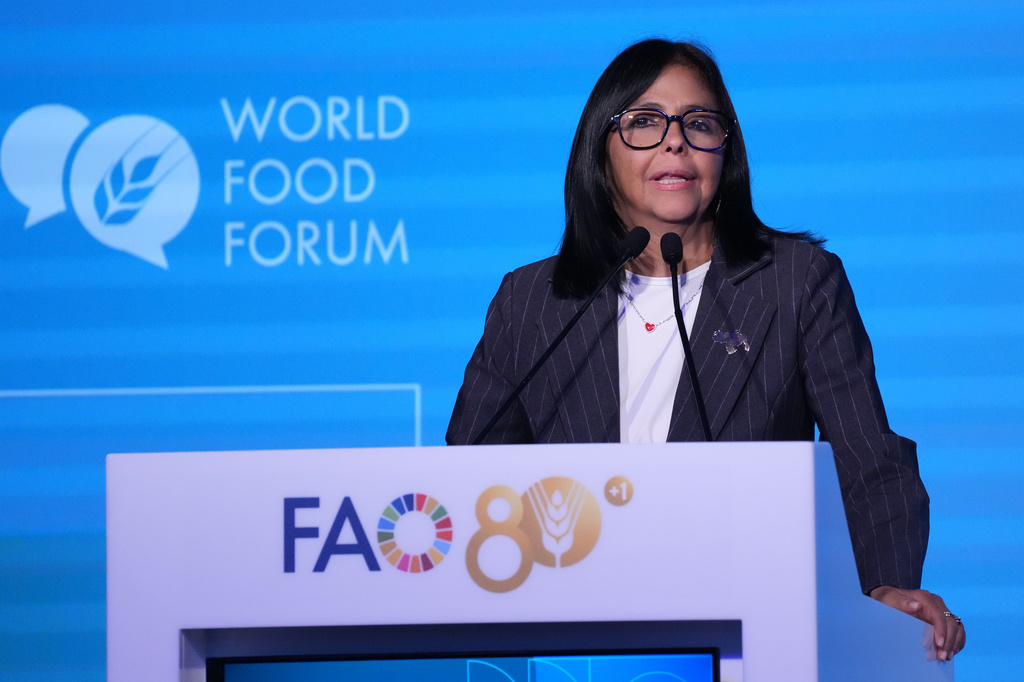
Delcy Rodríguez, acting president of Venezuela, spoke at the World Food Forum 2026 in Rome on October 12. The largest armed forces in Venezuela today aren’t Venezuelan. They’re Colombian ELN and FARC dissidents, who dominate the border area. To finance their operations, these groups exploit Venezuela’s minerals and sell them to Chinese buyers, earning substantial profits.
Over 56,000 people have fled to escape the violence. Secretary of State Marco Rubio, speaking in Barranquilla, Colombia, emphasized that these “terrorist organizations … operate with impunity.” They cross into Colombia to commit crimes and return to Venezuela to hide.
The U.S. administration needs to pressure corrupt Venezuelan officials who protect these terrorists. America must act against the government of interim President Delcy Rodríguez. Rubio’s statements highlighted a need for clarity from an administration that has previously seen Rodríguez’s government as a security partner instead of a threat.
Venezuela’s cartels, such as Tren de Aragua, benefit significantly from gold and critical minerals. In southern Venezuela’s Orinoco area, officials and military leaders collaborate with terrorists, cartels, and “sindicatos.” They receive bribes for trading permits, fuel, and equipment access.
These groups are unrestricted in extracting minerals like tin, rare earths, and coltan, necessary for various advanced technologies. Most of these minerals are not heading to the U.S. Rather, Chinese buyers purchase them at high prices.
Armed groups smuggle these minerals to ports for shipment to China. Some use the port of La Guaira where corrupt officers provide false export documents. Most minerals travel through the Colombian border in official vehicles or canoes, bribing military officials.
Every shipment sold by Venezuelan criminal groups to Chinese buyers increases China’s mineral processing influence, threatening America’s economic security. American investment opportunities are lost if U.S. policy continues to ignore Venezuela’s official corruption and terrorist links.
U.S. regulations encouraging investment worsen the problem. Sanctions allow U.S. companies to buy Venezuelan minerals, assuming legitimacy. But the market is filled with illegally mined resources. Funds from these licenses likely support criminal groups, disguising terror financing.
The Treasury Department even exempts U.S. banks from certain regulations in Venezuela, acknowledging the economy’s opaqueness. However, U.S. businesses remain hesitant. A deal was negotiated to bring Venezuelan gold to the U.S., yet links to gangs deter refiners from buying the gold, benefiting criminals.
Significant U.S. investment remains unlikely under current conditions. The administration’s policies favor Delcy Rodriguez’s regime, inadvertently aiding Chinese buyers and criminal groups. Bribery flourishes as illicit mining funds regional terrorism.
Washington must decide: continue supporting the Rodríguez regime, which shelters terrorists and allows minerals to go to China, or target Venezuela’s corruption directly. As Rubio stated, this situation cannot persist unchecked.
Josh Birenbaum is deputy director of the Center on Economic and Financial Power at the Foundation for Defense of Democracies. Cristina Vollmer Burelli founded SOSOrinoco, an advocacy group that opposes illegal mining in Venezuela.
Copyright 2026 Nexstar Media Inc. All rights reserved. This material may not be published, broadcast, rewritten, or redistributed.
Leave a Reply