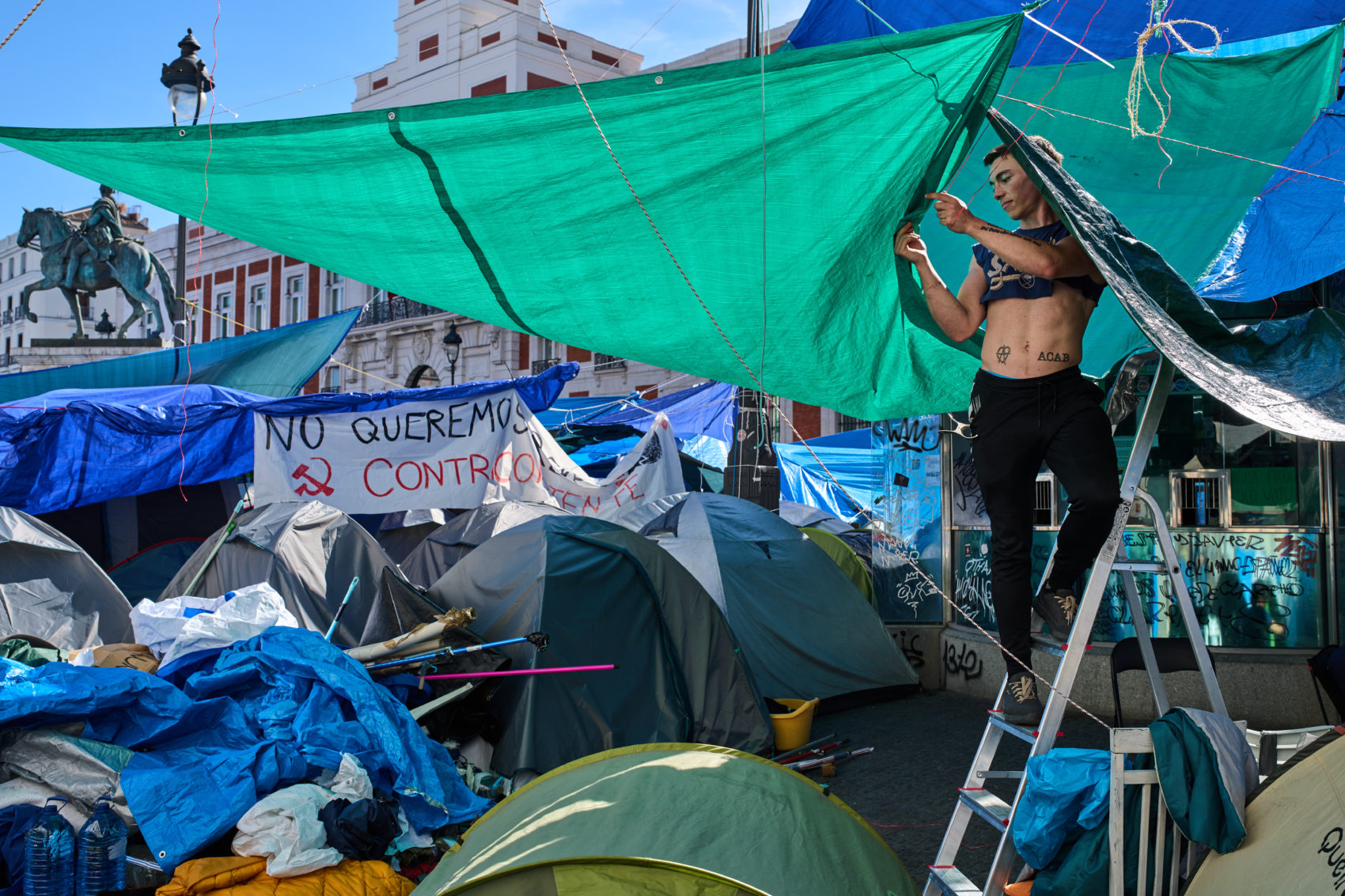
Rising fuel costs, concerns about schools, declining public services, and a housing crisis have led to widespread protests in Europe this autumn. Across France, Italy, and Albania, protests have resulted in arrests, looting, and violence. In Spain and Portugal, people have set up tent camps to protest high rental and housing costs.
Surge in Protests in Major European Cities
Citizens have gathered in the streets for weeks, expressing frustration and uncertainty. According to María Silvestre, a sociology professor at the University of Deusto in Spain, these protests arise when certain situations converge, igniting public discontent.
As major cities turn into protest hotspots, some European countries prepare for crucial elections. France, Italy, and Spain are close to key electoral moments, with far-right parties gaining ground in Germany. Meanwhile, Europe faces challenges in its Ukraine support amidst rising tensions with Russia.
Protests and Political Responses
U.S. politicians have also weighed in on the unrest. President Donald Trump attributed the chaos in France to immigrants on his Truth Social platform. However, French police have not linked the violence to immigrants.
Educational Discontent in France
French high school students staged protests demanding better educational resources. These demonstrations expanded as labor unions joined in. While many protested peacefully, recent unrest led to over 2,400 arrests, with looting and rioting occurring in cities like Paris and Marseille.
French President Emmanuel Macron condemned the violence. He committed to holding individuals accountable for damages and preserving the Republic.
Protests Over Housing Costs in Spain and Portugal
In Madrid’s Puerta del Sol, tents protest the high cost of housing, exacerbated by the eviction and death of an elderly woman. This prompted the Spanish Socialist government to propose housing reforms, aiming for a November election after lacking parliamentary support.
Similar protests emerged in Lisbon, Porto, and Barcelona. In Spain, minimum wage barely covers rent, causing financial strains on young people.
Italy Faces Untenable Costs
In Italy, the Italia in Piazza movement demands better jobs, healthcare, education, and housing. With inflation at 4.2%, protestors in Milan and other cities clashed with police, resulting in arrests and injuries. A permanent mobilization is now planned.
Broader Anti-Government Movements
In Albania, protests have called for Prime Minister Edi Rama’s resignation. Allegations of government corruption, linked to a controversial tourism development, fuel the movement.
In Serbia, university students have been protesting against former president Aleksandar Vucic’s expected return to power. These students aim to bring attention to corruption and challenge political status quo.
The turmoil across multiple European countries signals widespread dissatisfaction with current socio-economic conditions and political leaderships. Many of these protests highlight demands for reforms and accountability.
Leave a Reply