The global helium supply is under severe strain following Iranian strikes on a key gas facility in Qatar, compounded by the effective shutdown of the Strait of Hormuz. This has left numerous industries grappling with the repercussions as the conflict shows no signs of abating.
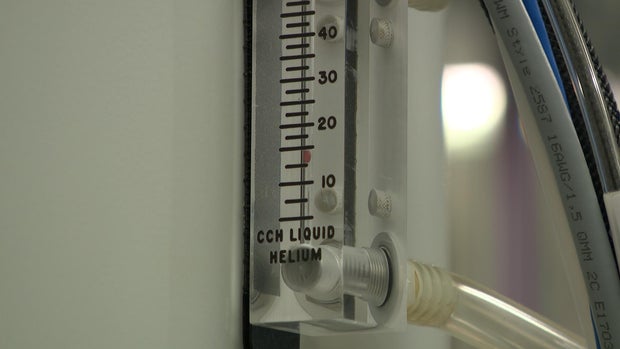
Helium is often linked to party balloons and altered high-pitched voices, yet it holds substantial importance in various sectors. This finite natural resource plays a crucial role in modern technology. Without helium, the production of smartphones, cars, MRI machines, and even missiles would be impossible. According to Cliff Cain, president of a helium exploration firm, extracting and transporting helium demands maintaining a temperature of 452 degrees below zero Fahrenheit during transit. Once released into the atmosphere, helium is lost forever.
Cain highlighted the vulnerability of the supply chain, emphasizing that helium extraction is concentrated in a few regions: Algeria, Poland, Russia, Qatar, and the United States, with the bulk supplied by the latter two. “If there’s a breakdown in any of these locations, the entire supply chain risks unraveling,” he cautioned.
The Impact of the Iran Conflict on Helium
The closure of the Strait of Hormuz stranded a third of the world’s helium reserves in the Persian Gulf. An Iranian attack on Qatar’s Ras Laffan facility in March further disrupted the supply. As the largest global natural gas facility, Ras Laffan produces a significant amount of commercial helium. Post-strike, it is expected to take three years for the facility to resume full operations. Qatar, the second-largest helium producer, obtains a substantial portion of its supply from this site.
Helium exports from the U.S. have surged by 70% since the onset of the war, as reported by U.S. Census Bureau data. However, the U.S. cannot continue to compensate for the shortage indefinitely. The prolonged conflict with Iran increases strain on the global helium supply.
Rich Brooke, a former executive at a major helium supply company, confirmed that helium prices have tripled since the conflict began. Countries like South Korea, Taiwan, and Singapore have turned to the U.S. for helium. Brooke warned that predicting the situation in the Strait of Hormuz would provide clearer insights into the future of helium supply, but acknowledges the uncertainty that remains.
Helium’s Role Beyond Entertainment
With the war ongoing, the Pentagon has requested defense contractors to significantly boost their production of certain weapons. Cain flagged concerns, remarking, “Modern warfare relies on helium. Production of munitions, fiber optics, and electronics all require helium. The absence of helium complicates military advancements.” In scientific settings, like Joe Sachleben’s lab at the University of Chicago, helium is indispensable. Used in nuclear magnetic resonance machines, helium aids in research for breast cancer and Alzheimer’s treatment. To stabilize magnets at critical temperatures, Sachleben must regularly use significant helium quantities.
The semiconductor industry consumes a fifth of the world’s helium, according to the Compressed Gas Association. At Polar Semiconductors, approximately 40-50% of chip manufacturing processes utilize helium. The company President, Surya Iyer, mentioned plans to increase production to 140 million chips monthly, driven by AI and electrification advancements.
Managing Helium Supply Challenges
Polar Semiconductors secures helium by engaging multiple suppliers, though they have faced rationing. Sachleben’s lab encountered similar restrictions, limiting them to half their previous helium allocation. This forced them to prioritize which machines to continue operating.
Despite locating a backup supplier, Sachleben received uncertain delivery commitments and worrying messages about supply depletions. “I don’t foresee a resolution to the ongoing conflict soon,” he remarked. “Even if the conflict does resolve, re-establishing supply will take time.”
Leave a Reply