From the heights of London’s Millbank Tower, the political landscape of Europe appears to be in flux. Historically the headquarters of Britain’s Conservative Party, the tower now houses Reform UK, a right-wing populist group led by Nigel Farage. This shift exemplifies a broader political upheaval across Europe, where conventional parties are losing ground to more populist formations.
Political Upheaval Across Europe
In France, Marine Le Pen’s National Rally has surged past the traditional right ahead of the presidential election. Similarly, Germany’s Alternative for Germany (AfD) has gained traction, challenging established parties like the Christian Democrats. These changes reflect a trend affecting Italy, Spain, Sweden, and other European nations.
This trend forces traditional conservative parties to decide whether to align with populist stances on immigration and national identity or risk losing voters. Steve Baker, a former British Conservative minister, highlights a realignment in politics towards identity and nationalism, overshadowing economic concerns.
The world does not work for far too many people, and almost no one is able to explain why. In that environment, someone gets the blame.
Increasingly, ethnic and cultural minorities are being blamed for societal issues.
Britain’s Political Realignment
The Conservative Party in the UK faces a challenge after its 14-year rule ended with an electoral loss in 2024. Reform UK capitalizes on discontent over immigration, claiming Conservative governments failed to control migrant numbers. A September poll indicates 44% of Britons view immigration as a significant issue.
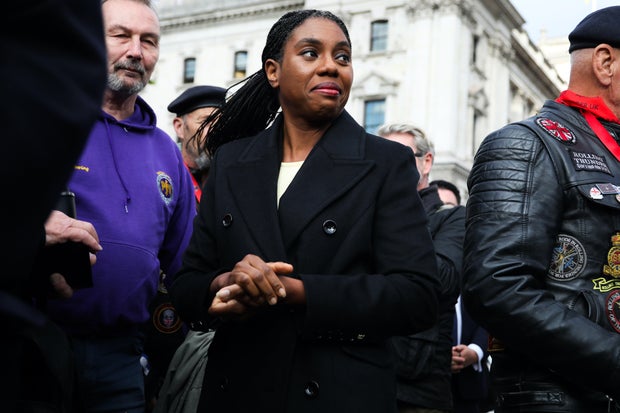
However, the debate on Britain’s right extends beyond immigration. Discussions increasingly focus on British identity and ethnicity. Conservative leader Kemi Badenoch, with Nigerian heritage, contests views that equate Englishness with ancestry alone.
Steve Baker acknowledges voter concerns about demographic changes but warns against shifting towards ethnic nationalism. Reform UK’s support has recently declined due to internal issues, but parties further to the right, like Restore Britain led by Rupert Lowe, push for stricter immigration policies.
Germany’s AfD and the Political Firewall
In Germany, historical sensitivities make the rise of right-wing movements particularly complex. Traditional parties maintain a political firewall against far-right groups like the AfD, known for nationalist and anti-democratic views. Recent electoral gains by the AfD threaten this firewall, forcing a reevaluation of political stances.
The AfD gained significant ground in the 2025 federal election, drawing support from various demographic groups. Tomasz Froelich of the AfD predicts the firewall will break if the party’s popularity continues to grow.
AfD strategies have already influenced mainstream parties to reconsider policies on migration and national interests. The CDU faced backlash and internal dissent when collaborating with the AfD on an immigration motion.
Marine Le Pen’s Transformation of French Politics
Marine Le Pen’s journey illustrates the evolution of Europe’s right-wing politics. Her National Rally party has distanced itself from extremist labels and gained traction in France. Recent polls suggest Le Pen is a strong contender in the upcoming presidential election.
The National Rally appeals to voters disillusioned by traditional parties, focusing on immigration and security concerns. Analysts like Stéphane Azihari note that fear of non-European immigration, particularly Muslim immigration, drives much of the party’s support.
While President Emmanuel Macron has adopted stricter immigration policies, the National Rally’s influence remains significant, highlighting the dilemma facing established parties across Europe: adapting to populist movements or risking voter losses.
Overall, Europe’s political landscape is witnessing a rightward shift, with far-right parties gaining influence even if they don’t achieve governance. The challenge remains how these dynamics will continue to shape policies and alliances across the continent.
Leave a Reply