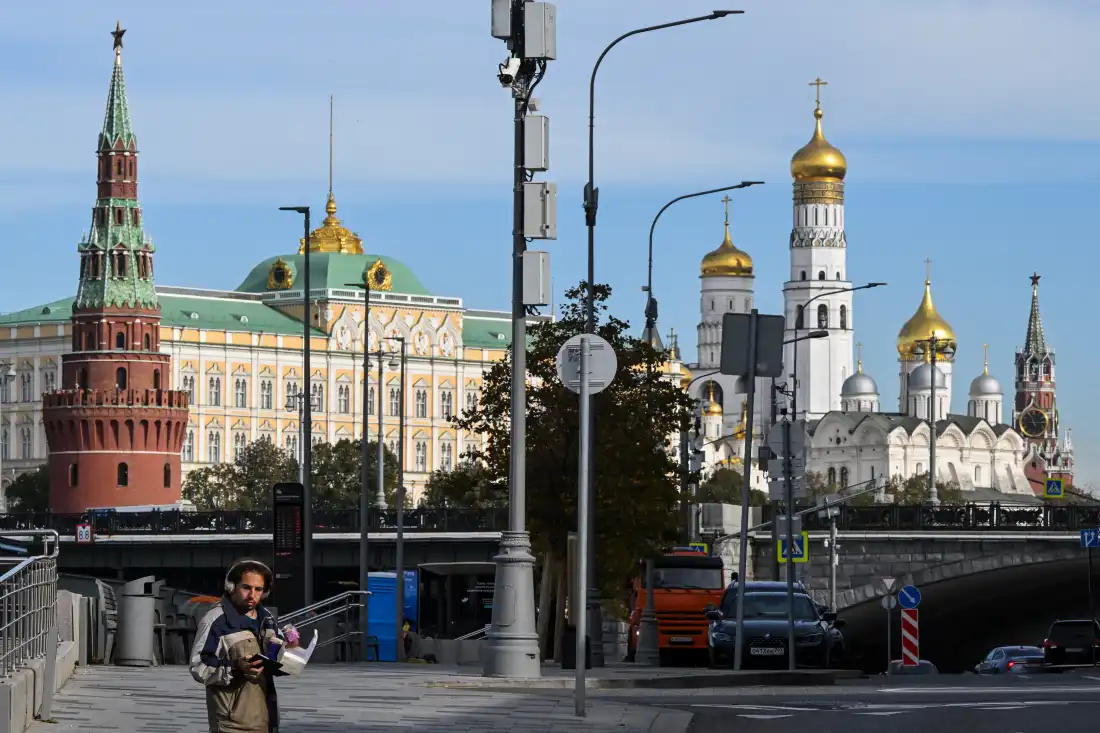
In central Moscow, a pedestrian viewed his smartphone, with the Kremlin visible in the background. This scene on October 8, 2026, highlights the ongoing activities of Kremlin-backed groups. These groups are renewing efforts to spread distrust and discord during elections in the United States and globally, according to researchers who monitor online influence.
Acknowledge Igor Ivanko/AFP via Getty Images, who captured this scene.
Russian operatives are disseminating false claims about Democratic candidates. They are using AI to create manipulated videos of celebrities and fake posts mimicking real news outlets. This aims to sway American voters as Election Day approaches.
Rep. Jim Himes of Connecticut, a key member of the House intelligence committee, shared insights with reporters. He described the situation as chaotic, with Russian operations aiming to erode trust in democracy and undermine U.S. support for Ukraine. Darren Linvill from Clemson University’s Media Forensics Hub emphasizes that Ukraine remains a primary issue for Russia.
“The main issue for Russia is and has to be Ukraine,” said Linvill.
Linvill explains that Russian tactics involve seeding false narratives on social media or fake websites. These narratives spread via state media, fake accounts, or paid influencers, hoping to gain traction. Comparatively, marketing firms pay influencers to promote products like Nike shoes, while Russians use influencers to spread misinformation.
This week, a Russian operation used this strategy against a Democratic Senate candidate. Research communities, including Linvill and others, identified the operators as Storm-1516. This group crafts fake videos featuring actors whose faces are altered using AI.
On Tuesday, fraudulent videos targeting the Senate candidate appeared on X, a platform similar to social media, posted by a recently created account. Despite being flagged for proxy use, the videos were spread by bot accounts. Within 12 hours, they were further amplified by large accounts known for sharing narratives tied to Storm-1516.
One video attracted around 857,000 views in 24 hours before the original account and some amplifiers were suspended.
In the lead-up to the 2024 presidential election, similar tactics were used. Storm-1516 released videos with baseless allegations against Democratic nominee Tim Walz, as well as fabricated incidents involving ballots for President Trump.
Linvill notes that these operations latch onto existing narratives among Americans. While persuading individuals of new ideas is challenging, reinforcing existing beliefs is more feasible.
Regarding recent activities, Russian efforts have circulated messages implying Democrats are less supportive of Israel, accompanied by accusations of corruption.
Lisa Kaplan, founder of Alethea, likened Russia’s operations to a dark money political action committee, aiming to understand whether misinformation moves public opinion.
U.S. intelligence officials confirm that Russia’s activities favor Trump and target Democrats to erode support for Ukraine. Himes and Senator Mark Warner reviewed a classified report indicating Russia’s opposition to candidates supporting Ukraine.
“There’s a robust influence environment,” Himes said, emphasizing no signs of interference in voting mechanics.
Current Russian operations also target other countries, like France and Germany. Techniques include AI-generated audio and impersonations of public figures, as detailed in a new report by Graphika.
Linvill highlights that Russia attacks themes portraying candidates as corrupt or incapable, aligning with past activities.
Kaplan from Alethea suggests that the recent focus in election messaging is to evoke anger or fear, affecting voter turnout rather than shaping opinions. Researchers predict an ongoing influx of false claims and videos, particularly around ballot processes surrounding election day.
NPR’s Eric McDaniel contributed to this report.
Leave a Reply