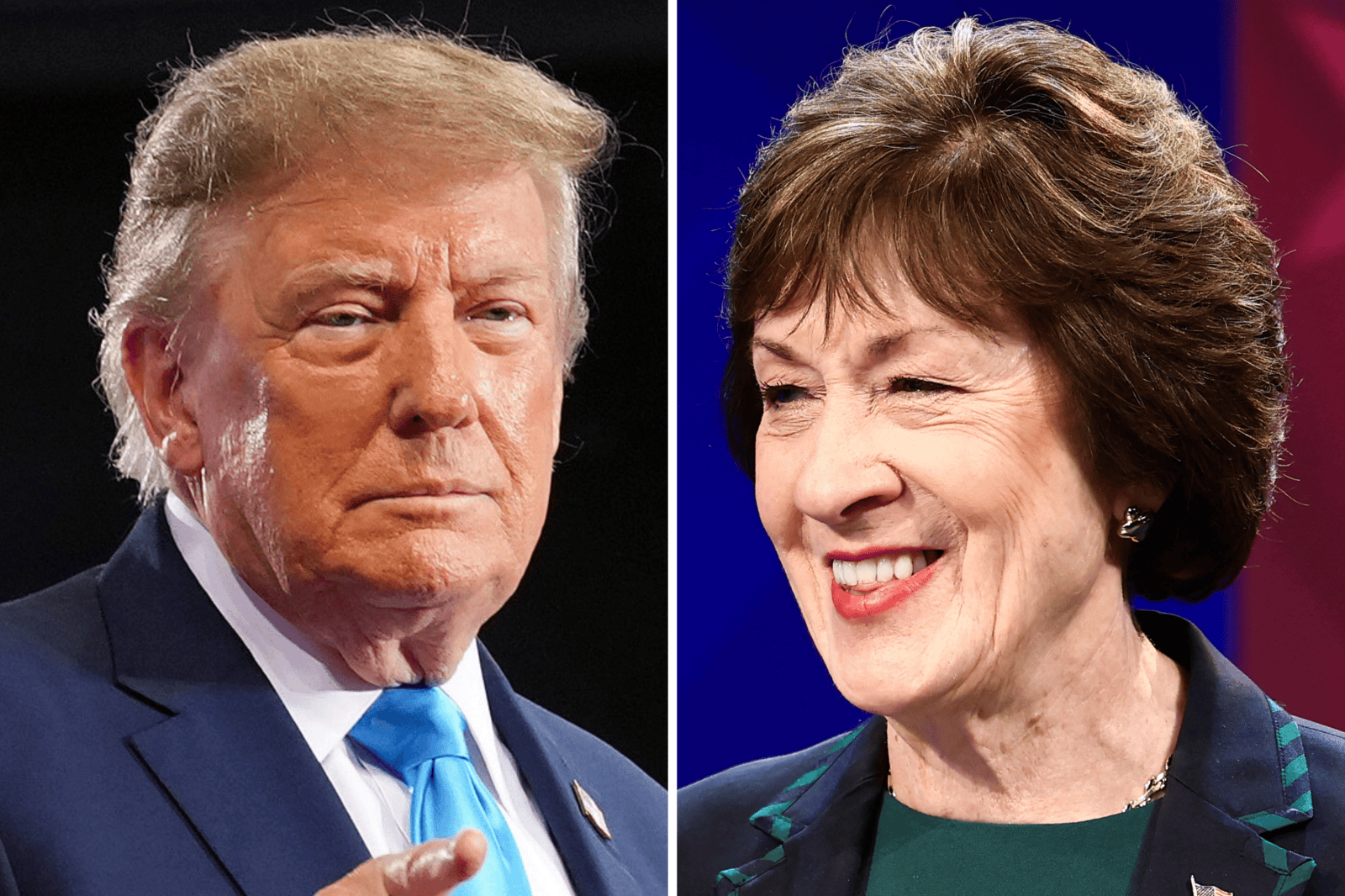
President Donald Trump has provided Republican Senator Susan Collins with timely economic support in the competitive Maine Senate race. This includes targeted assistance for the state’s lobster industry and specific tariff adjustments. These developments emerge as new polling reveals a dead heat between Collins and her Democratic opponent Troy Jackson.
A recent Fox News Poll indicated that Collins and Jackson are tied at 49 percent among likely voters. This contrasts with an earlier Marist Poll from October that showed a four-point lead for Jackson. Although the polls surveyed different groups, they both suggest a race that has become increasingly competitive.
Supporters of both candidates are resolute, focusing the election outcome on turnout and a small group of persuadable voters. Comment requests were sent to both campaigns and the White House outside regular hours for further insights.
Midterm Election Challenges
Midterm elections often pose challenges for the president’s party, with control of the Senate dependent on several close races. Collins, seeking her sixth term, faces a difficult campaign in a state where Trump is particularly unpopular. Civiqs trackers show him trailing by 32 points in Maine.
Despite this, Collins has surpassed expectations before. In 2020, despite trailing in polls, she beat Democrat Sara Gideon by nearly nine points.
Lobster and Tariff Support
Trump’s recent initiatives offer Collins new economic opportunities to present to voters. On October 23, the White House launched a national seafood strategy aimed at bolstering domestic seafood processing, reducing regulatory hurdles, and shielding American fishermen from international competition. This plan includes provisions to enhance the profitability of Maine’s lobster industry, providing over $5 billion in loans for updating meat and seafood processing facilities.
The policy introduces a voluntary “U.S. Caught Seafood” label to help consumers recognize domestically sourced products. While it does not directly lower seafood prices, its focus on Maine lobster presents Collins with tangible local success.
Additionally, a tariff modification reduces duties on Canadian imports crucial to Maine’s agriculture and businesses. Products like refrigeration equipment, machinery, and paper goods are among the items included. Exemptions are also provided for agricultural products such as blueberries and potatoes.
Collins emphasized the reliance on specialized products that are either unavailable from U.S. suppliers or too costly to replace, highlighting her plea for tariff relief. This aligns with her narrative of securing practical benefits from a president unpopular in Maine.
Conversely, Jackson criticizes the relief, attributing costs to policies initiated by Collins’ own party. Senator Ron Wyden labeled these concessions as a desperate measure to assist Collins in a tough reelection battle.
Polling Insights
The Fox News Poll conducted between October 16 and 20 involved 1,514 likely voters and has a margin of error of 2.5 percentage points. Methods included landline, cellphone, and online formats. The poll shows a close race, consistent with Marist’s earlier data gathered from 1,505 registered voters with a 3.8-point margin of error.
The RealClearPolling average from late September to late October records Jackson with a slight lead, offering Collins and Jackson room to maneuver.
Demographics and Turnout
Collins leads among independents, rural voters, and those without college degrees according to Fox News. Meanwhile, Jackson holds advantages among women, suburban voters, and college graduates. Enthusiastic voter turnout seems to favor Jackson, especially with engaged Democrat voters showing more interest in the election compared to Republicans.
Voting patterns are mixed. While early voters heavily favor Jackson, Election Day voters likely tilt towards Collins.
With 37 percent of likely voters approving of Trump’s performance, Collins still attracts support from some who disapprove of Trump. This indicates her ability to maintain a distinct political identity.
Economic concerns play a role as only a minority feel better off than they were two years ago, adding complexity to the electoral environment.
Leave a Reply