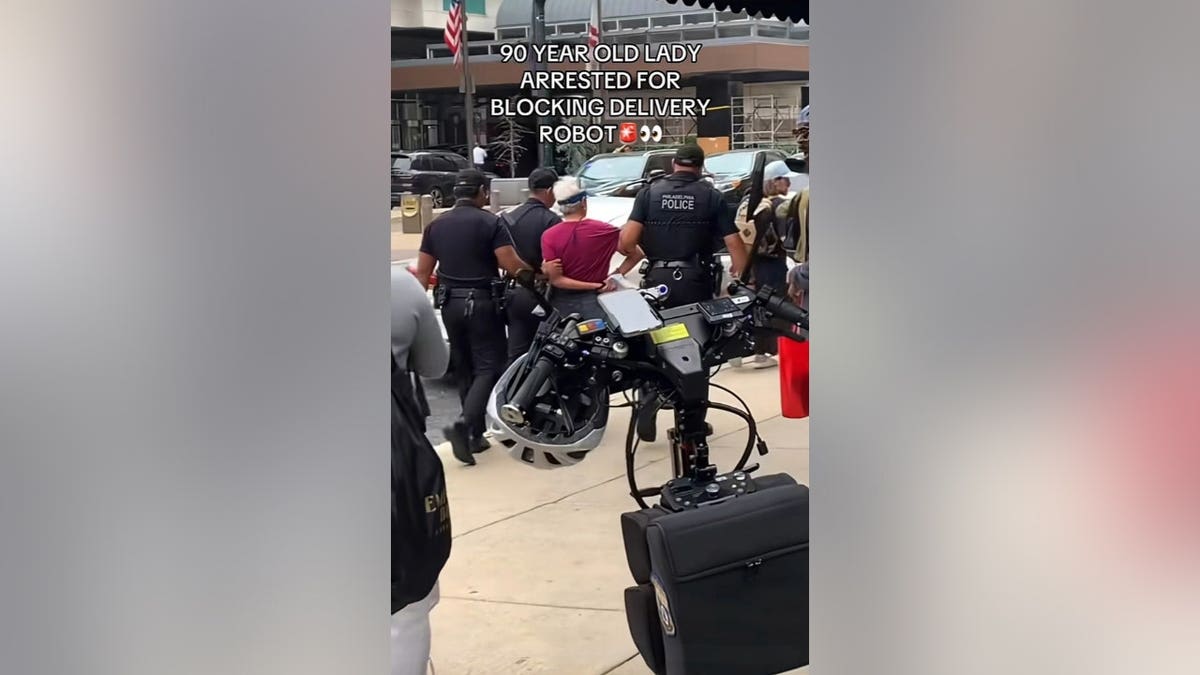
A peculiar incident unfolded recently when a Philadelphia woman blocked an Uber Eats delivery robot on the sidewalk. Carolyn Marvin, a 78-year-old retired professor, took a stand against these autonomous machines, ending with her arrest.
Protest Leads to Arrest
On October 14, Marvin positioned herself in front of a delivery robot near Reading Terminal Market. Police were called after reports of a disturbance. Despite multiple requests to move, Marvin refused, leading to her arrest and a disorderly conduct citation. This event, captured on video, gained significant online attention.
Motivations and Message
Marvin’s protest is rooted in her belief that autonomous delivery systems threaten human jobs. She argues that each robot-delivered order represents lost work for delivery workers. Despite her arrest, Marvin plans to challenge the citation and continue her protests. She encourages others to join her in advocating for human workers.
Legal Aspects of Delivery Robots in Pennsylvania
Pennsylvania law classifies delivery robots as pedestrians. These devices must yield to human pedestrians and navigate safely around them. This law challenges the assumption that delivery robots have automatic right-of-way on sidewalks.
Authorities must receive a 30-day notice before any delivery robot operations commence in an area. Municipalities have the power to prohibit robots where they may pose a hazard.
Why Companies Continue Investment
Despite criticism, companies push forward with robot deliveries. These machines, equipped with cameras and sensors, offer practical benefits, such as reducing traffic congestion. Uber Eats employs robots for short-distance deliveries, using technology developed by Avride. These robots can carry up to 55 pounds at a speed of 5 mph.
The service expanded in Philadelphia recently, indicating growing reliance on autonomous delivery. While customers enjoy convenience, the impact on human jobs remains a concern.
Community and Economic Implications
The incident raises broader questions about the future of jobs and accessibility. Robots on sidewalks potentially obstruct individuals with mobility challenges. Community involvement in decision-making about these machines’ operation is crucial.
For delivery workers, automation poses uncertain prospects. Companies need clarity on how technology will affect their roles.
Conclusion and Reflection
The arrest of a retired professor spotlighted critical issues surrounding delivery robot integration in public spaces. While convenience is undeniable, transparency regarding job implications is vital. Public discourse and policy adjustments are essential to balance technological advances with community needs.
Leave a Reply