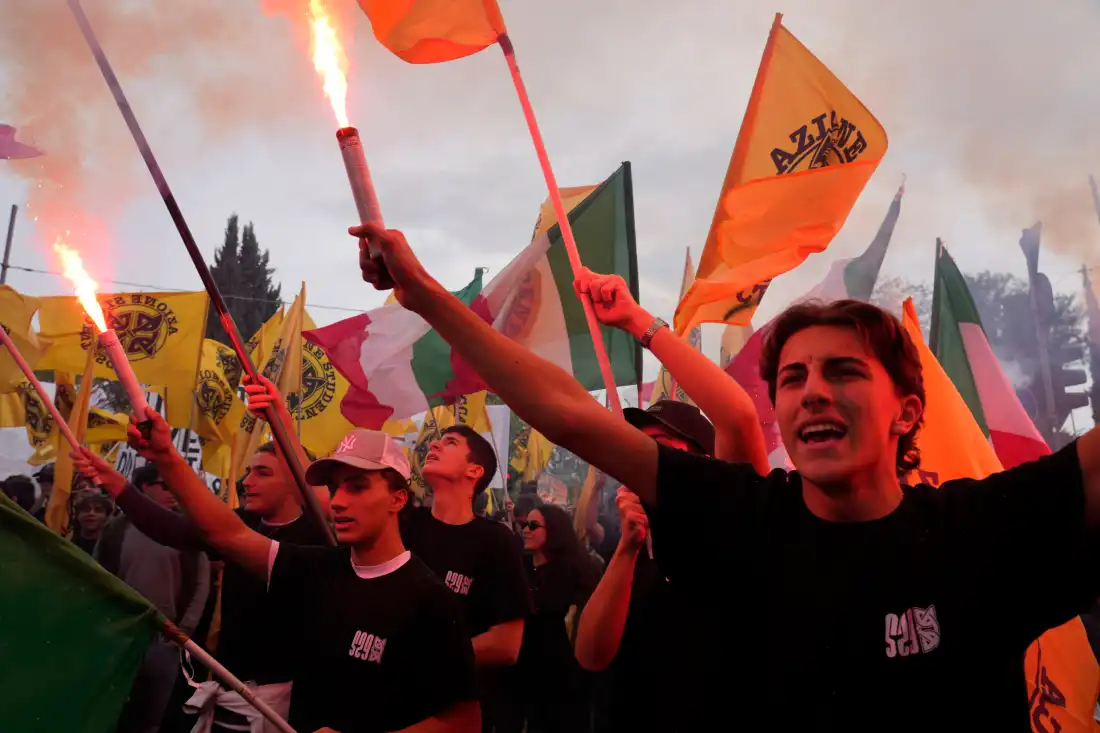
On Saturday, October 24, 2026, thousands of young demonstrators gathered in several Italian cities, including Milan, Rome, and Turin. These protests were part of a larger reaction to recent left-wing student demonstrations, under the banner ‘Unlock Everything.’ Authorities took significant steps to prevent the kind of violence that had marred previous protests by deploying a large number of police and soldiers.
In Milan, the protest remained largely peaceful, although brief clashes occurred in Rome and Turin. Authorities had prepared extensively by deploying police and soldiers, with Milan alone seeing the addition of 500 soldiers and heavy security measures, including drone surveillance and checks at railway stations. Broadcasts showed protesters in Milan dumping manure at the energy regulator’s office and burning large mock electricity bills.
Italian Premier Giorgia Meloni introduced a series of measures to address these protests. These included the deployment of additional soldiers to Milan and tougher penalties for minors involved in the violence. The decision followed reports of significant involvement from younger protesters, many of whom were detained preemptively by police.
Aside from Italy, large protests took place in other parts of Europe, such as Paris, Madrid, and Tirana. These protests spanned a broad range of issues, including education, corruption, anti-war sentiments, pensions, and housing.
The presence of soldiers and boarded-up luxury boutiques characterized Milan’s environment. However, most shops reopened by late afternoon. Police in Milan detained several minors to prevent potential violence, and officials focused on identifying those responsible for the unrest.
In Rome, security measures were heightened, with strong police presence around luxury shopping streets. Though a small group attempted to breach the Colosseum, they were swiftly removed by security. Peaceful student demonstrations stood apart, emphasizing their disapproval of violent actions seen the previous week.
Meanwhile, in Albania’s capital Tirana, protests turned violent as government buildings were set aflame, and projectiles were hurled at police. Students protested against high tuition fees and corruption, joining a broader movement against Prime Minister Edi Rama’s government. Authorities vowed to penalize those engaging in violence and called for dialogue.
In Madrid, large crowds protested to protect public pensions from privatization. Maria José Benito, a protester, expressed her concern about the potential privatization’s impact on pensions. Across the border in Lisbon, demonstrators demanded affordable housing as they opposed government measures seen as favoring landlords over tenants.
Leave a Reply