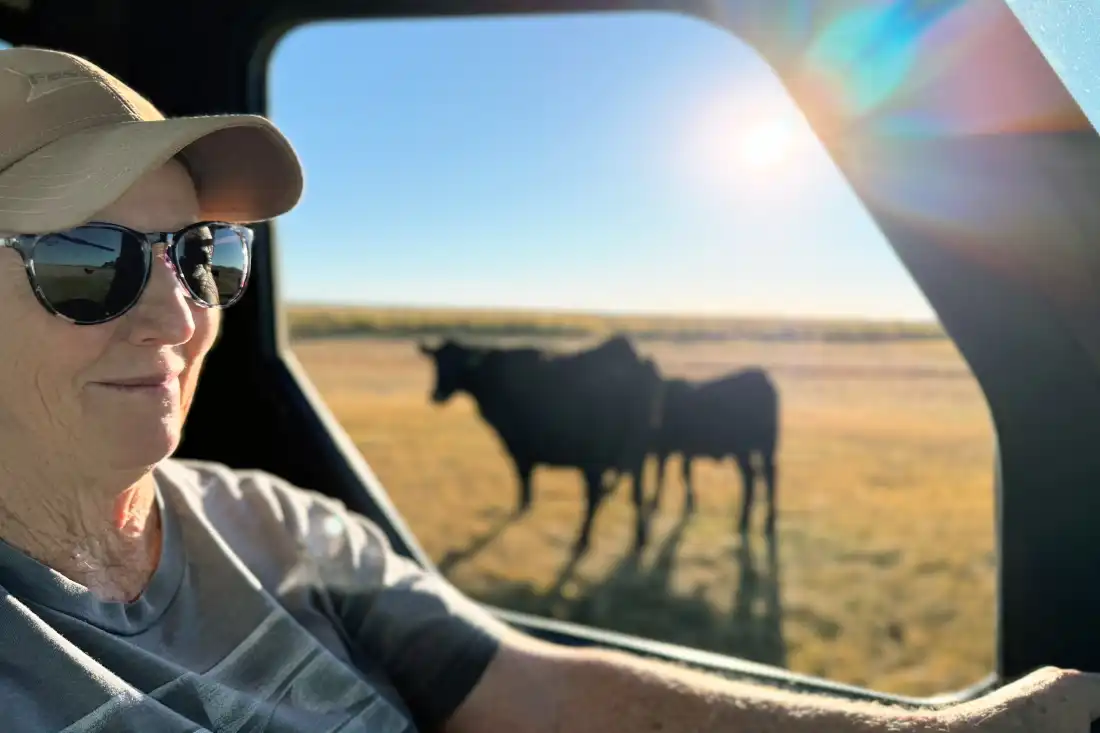
Katie Baltzor journeys on her side-by-side vehicle to watch over her black angus cattle near her home outside of Hines, Oregon. As she navigates through the land, the sight of late-blooming rabbitbrush and horses grazing on standing hay paints a serene picture of rural life.
Impact of High Diesel Prices
Diesel prices have remained near record highs, posing difficulties for cattle ranchers in western states. Despite recent actions by President Trump, these high costs add financial strain on ranchers, especially when combined with ongoing drought conditions.
In Harney County, where cattle significantly outnumber people, ranchers face numerous challenges. Katie Baltzor has experienced first-hand how increased fuel costs impact daily operations on her ranch. “Fuel costs, parts costs, everything has gone up,” Baltzor notes, emphasizing that while calf prices have increased, they have not kept pace with inflation.
Calf Prices and Ranching Challenges
Baltzor explains the difficulty of maintaining a profitable cattle ranch amidst rising costs. If all expenses go up and cattle prices remain unchanged, ranchers face a tough situation. Baltzor’s dedication to her work shines through as she reflects on the passion required to keep going despite these challenges.
Recently, Baltzor and her husband Keith moved their cattle closer to home to perform necessary checks and vaccinations. Moving cattle isn’t always smooth, as evidenced by an encounter with a confused motorist interrupting their herd.
Wildfire Disruptions
Wildfires have heavily impacted Oregon this year, causing dramatic changes in routine for ranchers like Baltzor. Typically able to range her cattle in the mountains, record-size wildfires forced Baltzor to bring her animals home earlier than usual.
Baltzor recalls extracting her cattle from dangerous areas amidst heavy smoke. “Instead of coming home the second week of September, we had to bring them home the third week in July,” she explains.
With grazing lands ravaged by fire, ranchers face shortages of grass and hay. Drought has further dried up hay meadows.
Hay Shortages and Rakebunching
Baltzor has resorted to rakebunching, a process of raking pasture hay into piles, allowing animals to graze on this resource. High diesel prices contribute to these challenges, as tractors rely on expensive fuel for harvesting hay.
Baltzor explains the economic burden of repeated haying cycles: “Each time they fill the tractor with diesel now, it’s about $300.” As a result, Baltzor assesses whether to rakebunch or fully bale hay based on the quality of the yield and diesel costs.
Long-Term Investments and Market Strategies
With beef prices high in supermarkets, ranchers can earn well from selling calves. Baltzor advises against selling all calves, emphasizing the importance of keeping heifers for future growth. “It’s two years [for a heifer to be bred and] before you have a calf,” she explains.
Understanding the long-term investment required in ranching is crucial. Baltzor notes, “It’s not that they’re going to have a calf right away. And sometimes people don’t understand that.”
Adapting to Economic Pressures
To save on costs, Baltzor and her husband have switched to gas pickups. Depending on individual ranch scenarios, factors like loans may impact profitability.
Baltzor shares her experience building their herd, stating, “It will pencil for us because we’re lucky we worked really hard not to have debt.” Though financial challenges are tough, Baltzor believes the struggle is worthwhile as it leads to appreciation.
As the season shifts towards winter, ranchers like Baltzor bear the weight of economic pressures. For many in southeast Oregon, including Baltzor, navigating through lean times demands resilience and strategic planning.
Leave a Reply