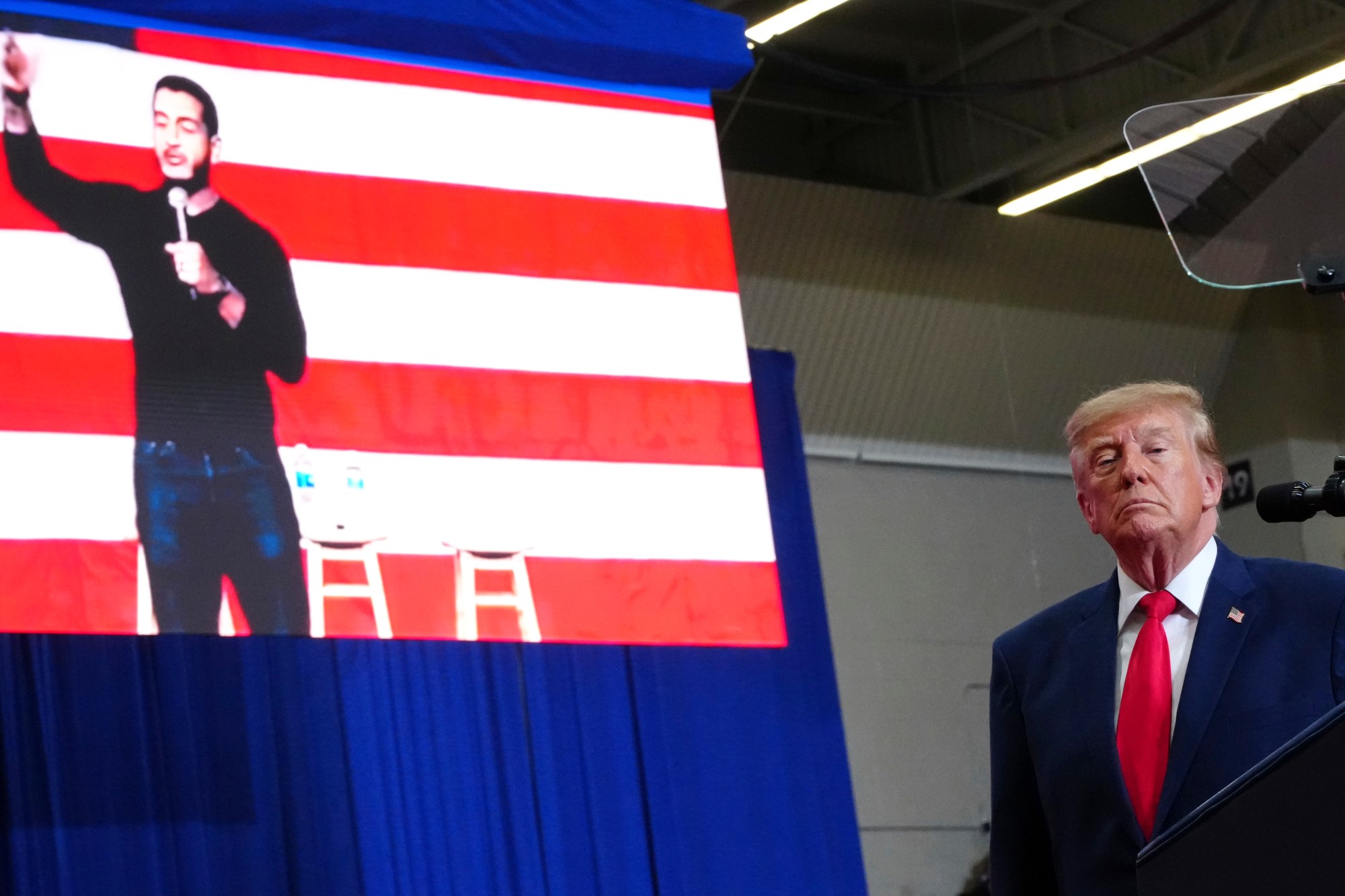
The political landscape in the United States saw heightened tensions during the midterm election cycle. In particular, the issue of anti-Arab and anti-Islamic rhetoric has gained prominence. The Republican Party, especially its MAGA faction, has been criticized for divisive comments against Arab Americans.
The rise of Michigan’s Democratic Senate nominee, Abdul El-Sayed, has brought these tensions to the forefront. As a visible figure from a minority community, El-Sayed has faced hostility, reflecting a broader trend of Islamophobia within the party.
Notably, Health and Human Services Secretary Robert F. Kennedy Jr. made contentious statements at a Michigan campaign event. He claimed that Arabs contribute little to science and literature, ignoring examples like Dr. Omar Yaghi, a Nobel laureate in Chemistry, and esteemed authors such as Adonis and Ibrahim al-Koni.
President Donald Trump has also been vocal in his condemnation. He labeled El-Sayed with derogatory terms and suggested extreme security measures against him. Even Trump’s former Michigan outreach co-lead, Bishara Bahbah, criticized these statements, emphasizing El-Sayed’s American roots.
This rhetoric isn’t limited to Michigan. In Alabama, Senator Tommy Tuberville described Muslims as ‘the enemy inside the gates,’ despite them comprising only a small percentage of Alabama’s population. Texas Governor Greg Abbott opposed a new Islamic community center in Plano, warning of a baseless threat of ‘sharia courts.’
The negative rhetoric from Republicans is prompting a significant political shift. A Washington Post-Schar School poll showed an increasing number of Arab Americans moving towards the Democratic Party. In 2024, about 50% supported Democratic candidates; now, nearly 60% do. A substantial proportion of Trump’s former Arab-American supporters are now siding with Democrats, disillusioned by the repeated hostilities.
The Arab-American community’s shift could influence key races. Michigan holds over 200,000 registered Arab-American voters. In a tight race with Rep. Mike Rogers trailing behind El-Sayed, these votes could prove crucial. The Republican approach seems to alienate, rather than win over, Arab-American communities.
For the 3.7 million Arab Americans seeking political refuge, the Democratic Party offers a more inclusive stance. The rhetoric from the MAGA movement has clarified the need for Arab Americans to reconsider their political affiliations.
Leave a Reply