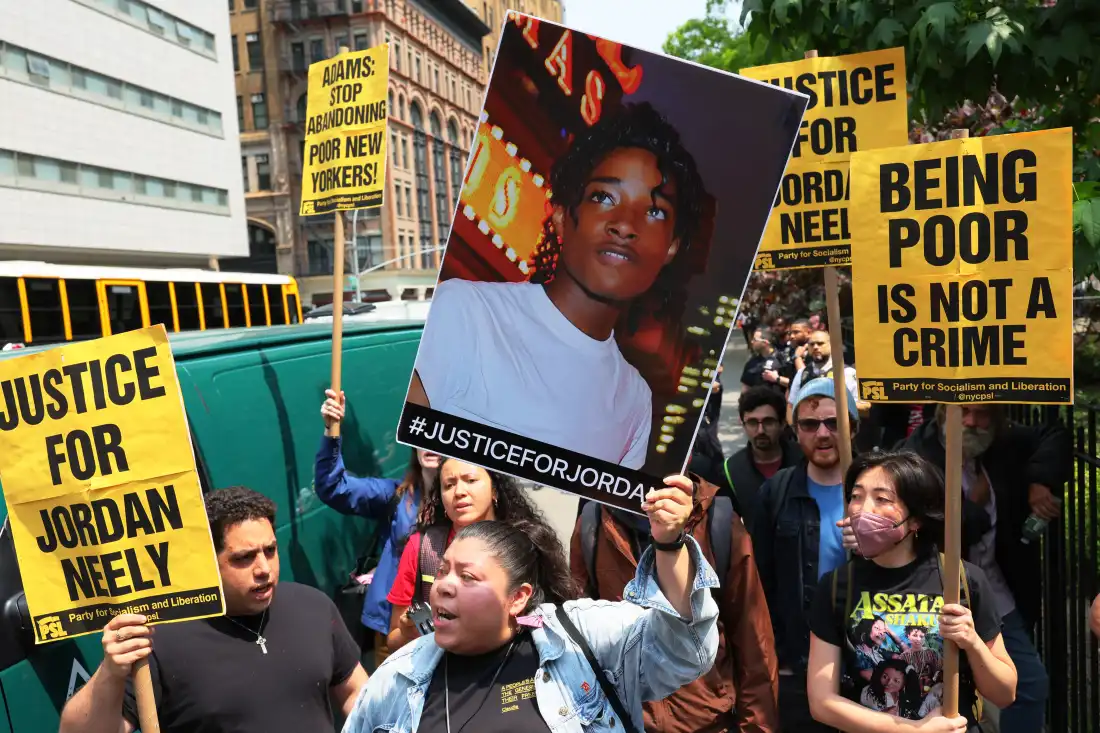
On May 1, 2023, Jordan Neely, an unhoused Black man known for his Michael Jackson impersonations, boarded a New York City subway train. That day, he was in distress, loudly voicing threats and alarming passengers. Daniel Penny, a former Marine, intervened by placing Neely in a chokehold for six minutes, leading to Neely’s death. The incident was captured on video, sparking widespread debate across the nation. Some viewed Penny as performing the duties of absent law enforcement, while others saw Neely as a victim of societal neglect.
Journalist Anand Giridharadas investigated the incident, aiming to uncover deeper insights beyond what was captured on video. According to Giridharadas, both Neely and Penny experienced a sense of abandonment. Neely, he argues, felt neglected by systems that should have supported him. Penny felt unsupported by law enforcement and the broader systems that failed Neely. Giridharadas suggests this widespread feeling of abandonment drives individuals to take drastic actions.
This pervasive sense of abandonment leads decent people to feel there are no alternatives, forcing them to act independently, often with tragic outcomes.
Jordan Neely’s History and Rehabilitation
Neely’s encounters with the police spanned over a decade. His record began with minor offenses like fare evasion and sleeping on the streets, typical challenges faced by the homeless in New York. Over time, his actions escalated; he committed more serious crimes, including assaults, leading to time at Rikers Island.
In an effort to rehabilitate rather than incarcerate him, Neely partook in an alternative program. Intended to offer restorative aid, such programs focus on addressing substance or mental health issues. Despite this opportunity, Neely vanished from a Bronx facility, later appearing at Coney Island, demonstrating erratic behavior. Outreach workers and police attempted contact but did not identify him due to administrative disconnects. Tragically, weeks later, Neely died in the subway.
Daniel Penny’s Background
Penny’s upbringing in West Islip, Long Island, mirrors the intricate relationship between this suburb and New York City. While distant from urban chaos, cultural connections remain strong due to daily commutes, despite historical white flight from city stresses. Giridharadas likens this to immigration, where origins hold complex sentiments.
When asked about his remorse, Giridharadas noticed no clear indication of sadness in Penny. Even during initial interactions documented in police bodycam and interrogations, curiosity about Neely’s fate seemed absent.
The Symbolism of Daniel Penny
Penny became popular among the right-wing MAGA cohort, his ideological stance seemingly undecipherable. Despite this, he embraced the identity and subsequent financial support. Vice President-elect JD Vance and President-elect Trump invited him to prominent events, reflecting his acceptance of this newfound role.
Controversially, Penny received a partner position at the venture capital firm Andreessen Horowitz, surprising many given his educational background. He joined their American dynamism team, focusing on national security investments, including weapons systems and drones.
The Case’s Political Echoes
Giridharadas notes that similar narratives surfaced between Penny’s case and Luigi Mangione’s courtroom discussions. Both sides argued their respective actions compensated for system failures. Rights advocates argued Mangione’s act against the burdens of a failing healthcare system mirrored Penny’s intervention due to a lack of security presence.
These instances highlight a radicalized call to action across ideological spectrums, echoed by activist Hawk Newsome’s advocacy for self-reliant communities and services.
The discussion underlines a widespread sentiment of societal abandonment, urging individuals across divides to independently rectify systemic voids.
Anna Bauman and Thea Chaloner were responsible for the production and editing of this interview. Bridget Bentz, Molly Seavy-Nesper, and Beth Novey curated the web adaptation.
Leave a Reply