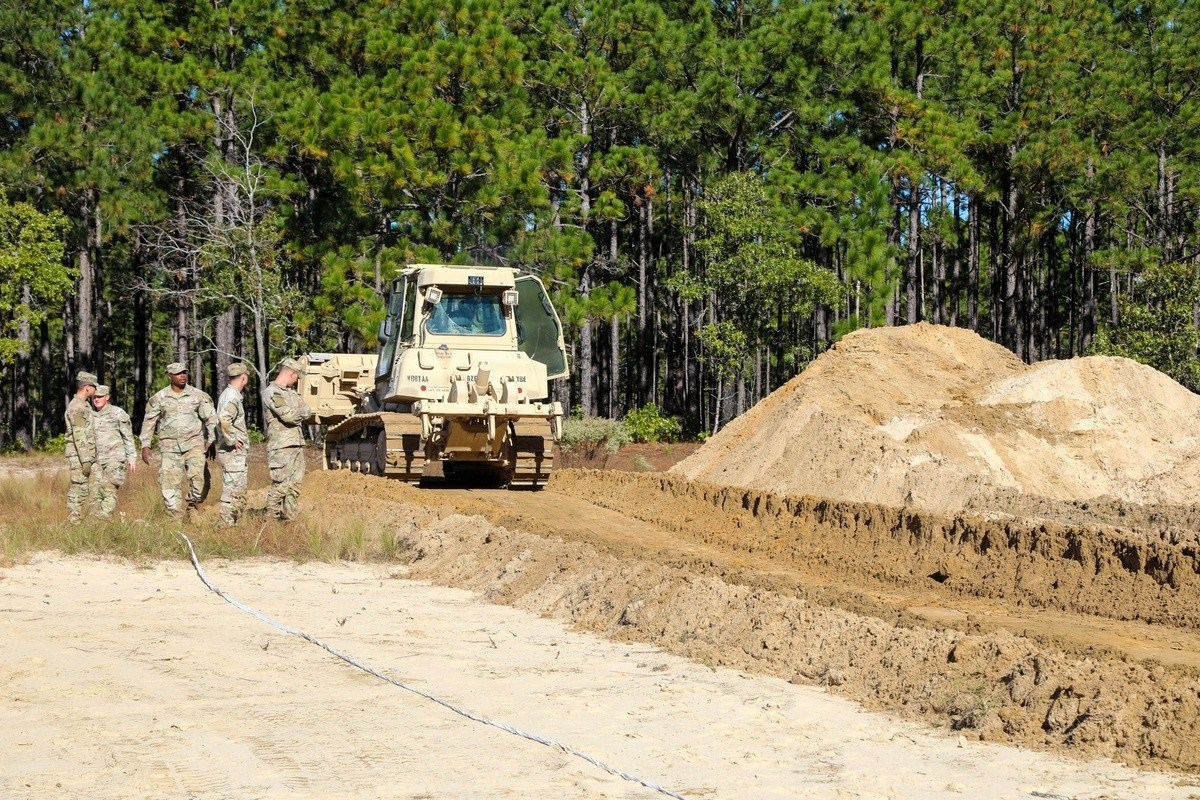
For the first time in decades, U.S. Army soldiers are training to bury fellow troops in temporary graves on a large scale. This preparation addresses the scenario where the military might face a high number of casualties in ongoing combat.
The training involves the 3rd Corps Sustainment Command and the 20th Engineer Brigade at Fort Bragg, North Carolina. Religious support personnel, including military chaplains, are participating as well. They are using excavators to test the effectiveness of these machines in preserving bodies intact until identification and repatriation to the U.S. is possible.
The U.S. Army hasn’t engaged in mass burials like this since the Korean War, as noted in an Army statement. This conflict lasted from 1950 to 1953, resulting in nearly 37,000 U.S. casualties.
In recent years, during the wars in Iraq and Afghanistan, deceased soldiers were quickly evacuated back to the U.S. instead of being buried temporarily. This shift in approach reflects the changing nature of military operations and logistics over time.
When numerous casualties occur during a conflict, existing military teams focusing on deceased soldiers’ remains face limitations. They cannot conduct individual burials or specific religious rituals for every fallen soldier, as combat continues.
Military rules emphasize that commanders at all levels must care for the fallen, ensuring proper identification later. Standard protocol for temporary internment involves five trenches accommodating 100 casualties each. In North Carolina, soldiers practiced using bulldozers and vehicles to fill plot spaces efficiently, taking about one hour and 15 minutes per plot.
The capability demonstrated means that up to 2,400 soldiers’ remains could be temporarily buried in a day, using eight bulldozers and four excavators. This procedural prowess is critical for high-intensity conflicts.
Sergeant 1st Class Delbert Ruede of the 3rd Corps Sustainment Command stressed the importance of the exercise. “This exercise allowed us to take a critical look at how we respect, honor, and systematically manage our fallen in a high-intensity conflict,” he said.
The Fort Bragg exercise was noteworthy, marking the first training of U.S. Army chaplains and religious affairs personnel in over 20 years in battlefield temporary gravedigging. The Army’s preparations aim to ensure organized and respectful care for fallen members.
Leave a Reply