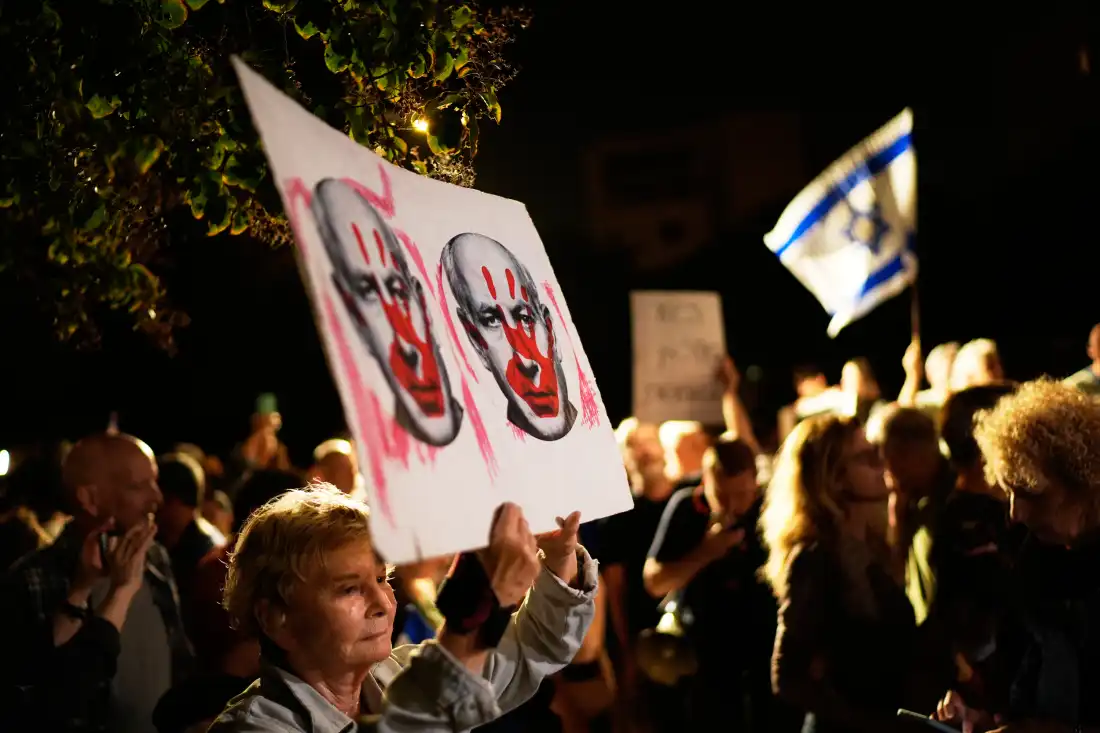
Israel’s election has resulted in a deadlock, with both Prime Minister Benjamin Netanyahu and his main competitor, Gadi Eisenkot, struggling to form a government. The final election results favor opposition parties over Netanyahu’s right-wing bloc, yet Eisenkot cannot build a majority without Arab parties’ cooperation, which he opposed during the campaign. Netanyahu’s Likud party gained the most votes, but his coalition of right-wing and ultra-Orthodox parties lacks the 61 seats needed for a Knesset majority.
How Israel Forms a Government
Israel’s president will soon consult with the leaders of each elected party in parliament. Each party will recommend a leader believed to have the best chance to form a coalition. The president isn’t obliged to choose the largest party’s leader, but rather the one most capable of forming a governing coalition. This chosen candidate has 28 days to secure the support of at least 61 lawmakers, with a possible extension of 14 days. If unsuccessful, another candidate may attempt to form a government. This process could take weeks or months, with no guarantee of success.
Potential Candidates for First Coalition Opportunity
Eisenkot is more likely than Netanyahu to receive the most recommendations for forming a coalition based on election results. However, Eisenkot may struggle to form a coalition due to his refusal to rely on Arab parties. These parties represent 21% of the population, generally identifying as Palestinian citizens of Israel. Eisenkot and his allies have expressed concerns over the Arab parties’ positions on Hamas and the Gaza conflict, hindering collaboration.
Netanyahu faces similar difficulties, as his traditional coalition partners do not provide enough seats to regain power.
Possible Outcomes
One potential outcome is a unity government between Netanyahu and Eisenkot. Although this option could involve more moderate parties and align with U.S. regional priorities, Eisenkot has consistently opposed serving under Netanyahu. Additionally, leadership and role-sharing would need resolution.
An Eisenkot government supported by Arab parties is another possibility, allowing his bloc to achieve a 67-seat majority. However, Eisenkot has consistently rejected this due to campaign promises. Arab parties could support a minority government without joining it, yet this contradicts core assurances from Eisenkot and his allies.
Another election looms as a potential outcome, though the president has urged parties to avoid this. Netanyahu might favor a repeat election if Arab voter turnout declines or if overseas liberal voters hesitate to return.
A final scenario involves persuading defectors from the opposing camp. Netanyahu would need around eight lawmakers to switch sides, while Eisenkot would need roughly 13 without including Arab parties, making it highly unlikely.
Opposition’s Potential Tactics
A parliamentary majority opposed to Netanyahu could advance legislation with assistance from Arab lawmakers. Eisenkot’s bloc considers replacing the Knesset speaker to control parliament’s legislative agenda. They also aim to establish an inquiry into failures preceding the Hamas attack on October 7, 2023. Such steps demonstrate significant parliamentary influence during coalition negotiations.
Impact of a Renewed War with Iran
Netanyahu has emphasized the necessity of completing missions against Iran, tagging it as an existential threat. Eisenkot cautions against using national security for political ends. Renewed conflict with Iran may affect legislative efforts and pressure Eisenkot to join a unity government. This mirrors Eisenkot’s previous war Cabinet participation before resigning over Netanyahu’s political motivations.
Israeli analyst Danny Citrinowicz notes that Netanyahu may have political incentives to engage in conflict during these negotiations to bolster his position. Such an emergency could prompt increased pressure on Eisenkot for a unity government.
Daniel Estrin contributed additional reporting from Tel Aviv.
Leave a Reply